Iceland daylight hours in winter, month by month
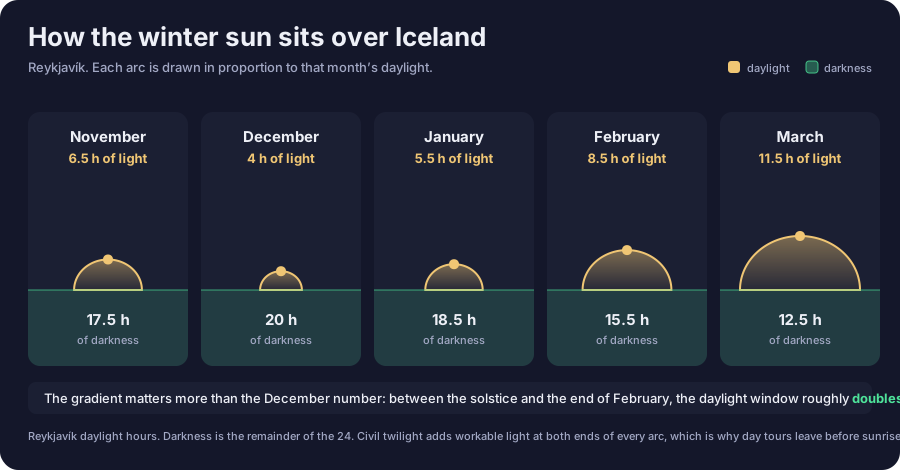
Reykjavik gets about 4 hours of daylight at the December solstice and about 11.5 by March. No, it is not dark for six months. Here is the month-by-month reality.
 Written with Björn Einarsson, Icelandic guide & winter tour specialist
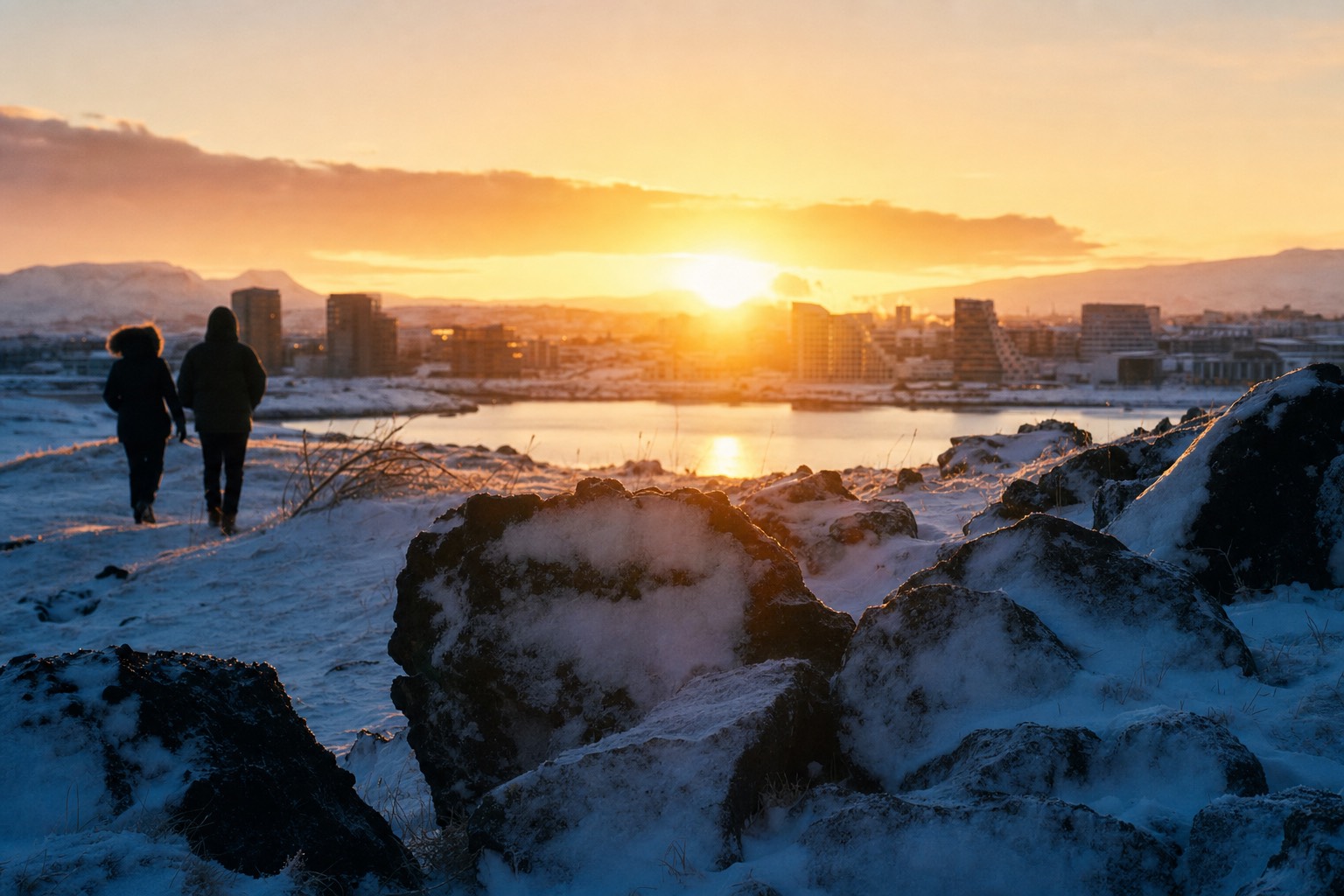
There is a moment in late December, somewhere out past Hveragerði, when the sun comes up and immediately starts going down again. It never gets overhead. It runs along the horizon at an angle, throwing orange light sideways across the snow for a couple of hours, and every photograph anyone takes that day looks like golden hour, because it is. Then it goes, and the country switches to blue and then to black, and you have the rest of the clock to yourself.
TL;DR. Iceland is not dark for six months. Reykjavík gets about 6.5 hours of daylight in November, about 4 at the December solstice, about 5.5 in January, about 8.5 in February and about 11.5 by March. The sun rises every single day of the year in Reykjavík. Sunrise and sunset are also the wrong numbers to plan with, because civil twilight either side gives you real, usable light. And more daylight means less aurora time, so the two things you came for pull against each other.
Is Iceland dark for six months?
No. That is a myth borrowed from the high Arctic. Reykjavík sits below the Arctic Circle, so the sun rises and sets every day of the year. The shortest day gives about four hours of daylight, plus twilight either side. Even at midwinter you get a long, low, orange morning rather than perpetual night.
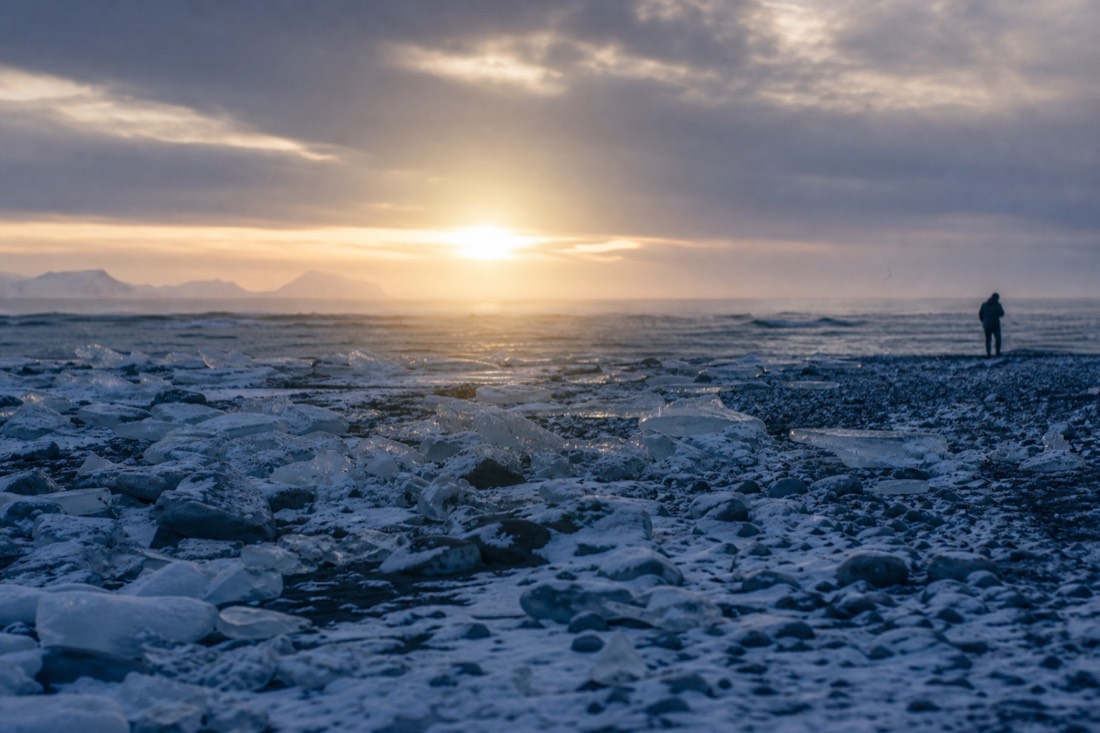
The confusion comes from polar night, which is a real phenomenon, and which happens north of the Arctic Circle. Reykjavík is not there. Neither is the South Coast, nor Vík, nor Jökulsárlón, nor any of the places a winter visitor actually goes. The one Icelandic spot that touches the Arctic Circle is the island of Grímsey, off the north coast, and almost nobody visits it in January.
What Iceland does get is an extreme swing. The summer version is the famous one, where the sun barely sets and people play golf at midnight. The winter version is the same physics running the other way: a short arc, a sun that never climbs high, and long twilights at both ends because the sun sits shallow below the horizon rather than plunging under it.
That shallow angle is the part nobody mentions. In Reykjavík at midwinter the sun does not rise, cross the sky and set. It rises in the south-east, tracks low along the southern horizon, and sets in the south-west, staying close to the ground the whole way. The practical result is that the entire daylight period behaves like sunrise and sunset in most of the world, which is why winter photography here is so good and so easy.
If the darkness is what you are coming for rather than what you are dreading, the best time to see the northern lights guide covers the aurora season, which runs from late August to late April and is strongest from October to February.
How many hours of daylight does Iceland get each winter month?
Reykjavík gets roughly 6.5 hours in November, about 4 at the December solstice, about 5.5 in January, about 8.5 in February and about 11.5 in March. January gains light quickly: by the end of the month the days are noticeably longer than at Christmas, and February feels like a different country.
Here is the whole winter laid out. The daylight column is the sunrise-to-sunset window in Reykjavík. The rest of the clock is not all pitch black, because twilight takes a share of it at both ends.
| Month | Daylight in Reykjavík | The rest of the clock | What that allows |
|---|---|---|---|
| November | About 6.5 h | About 17.5 h | Full day tours still work, ice cave season opens, aurora nights are long |
| December | About 4 h at the solstice | About 20 h | One tour a day, the shortest window of the year, the longest aurora window |
| January | About 5.5 h | About 18.5 h | Similar to December early on, distinctly better by month end |
| February | About 8.5 h | About 15.5 h | Two things a day becomes realistic again, aurora season still strong |
| March | About 11.5 h | About 12.5 h | Almost a normal touring day, ice caves closing, aurora nights shortening |
The pattern to take from that table is not the December number, it is the gradient. Iceland gains and loses light faster than almost anywhere people travel from, because the further you are from the equator the steeper the swing. Between the solstice and the end of February the daylight window roughly doubles.
That gradient is why two trips a month apart feel like different holidays, and why the answer to what you can fit in a day changes so much across the season. The winter itinerary guide works through what three, five and seven days actually buy you against these numbers, and the best month to visit in winter guide is where to go if you have not yet picked your dates.
Why are sunrise and sunset the wrong numbers to plan with?
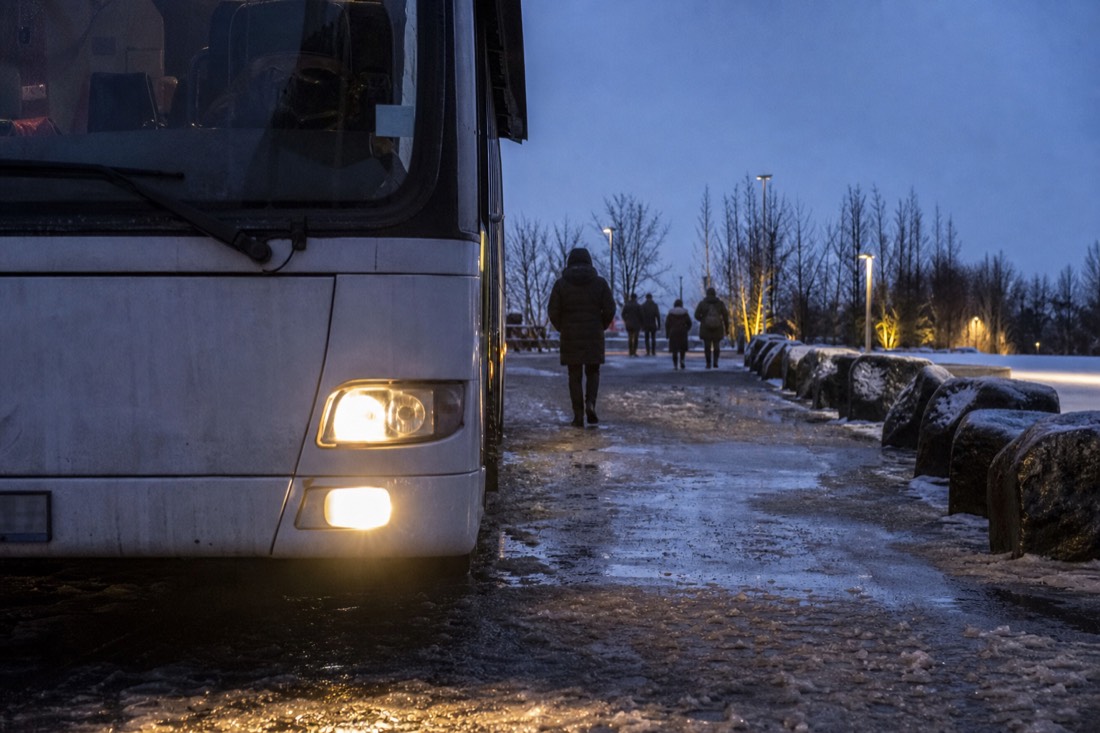
Because the usable light starts before sunrise and continues after sunset. Civil twilight, the period when the sun is just below the horizon, is bright enough to walk, drive and photograph in. Tour operators build their schedules on that wider window, which is why a December day tour leaves before the official sunrise.
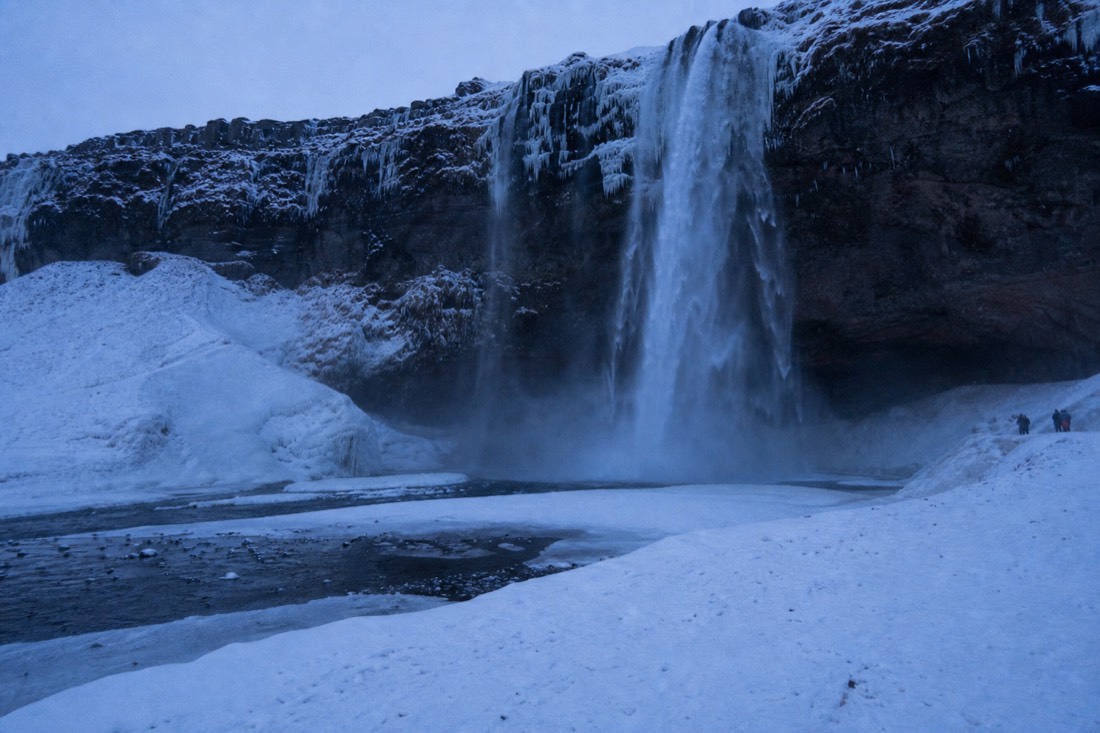
Look up daylight hours for Reykjavík and you get a sunrise time and a sunset time, and people plan as though the world switches on and off at those two moments. It does not. Before sunrise there is a long, slow brightening; after sunset there is an equally long fade. At Icelandic latitudes, with that shallow sun angle, both are drawn out.
For a traveller this changes the arithmetic in a useful direction. Add a meaningful stretch of workable light at each end of the official figure and a four-hour December day starts to behave more like a short winter day somewhere else, rather than the emergency people imagine. You can see waterfalls, walk a beach, photograph a glacier tongue. You just cannot dawdle.
It also explains something that confuses people when they read a tour description. A South Coast coach leaving Reykjavík in the dark is not a scheduling error and it is not the operator squeezing you. It is the only way to be standing at Seljalandsfoss when the light arrives, rather than driving through the good hours.
The counterpart is the evening. Twilight is when the sky is most interesting and, once it has finished, when the aurora becomes visible if it is going to. The general background on Iceland's seasonal light swing is set out by Guide to Iceland, and the official aurora explainer sits on Visit Iceland.
What does a midwinter day in Iceland actually look like?
It runs in blocks rather than hours. A long dark morning, a slow blue brightening, a short orange daylight window that behaves like a permanent golden hour, a fast fade, and then a very long night. Tours are built to put you at the best stop during the orange block.
Rather than clock times, which shift week by week through the season, think about the shape of the day. This is how I plan a December tour in my own head.
| Block of the day | Roughly how long in December | What it looks like | What tours are doing |
|---|---|---|---|
| Deep dark morning | Several hours | Night, city lights on | Pickups, breakfast, the first driving leg |
| Blue twilight | Long enough to matter | Enough light to drive and walk, blue and flat | Coaches covering the long road legs |
| Daylight window | About 4 h | Low orange sun, long shadows, best photography of the trip | The headline stops, waterfalls, beaches, glacier tongues |
| Fading twilight | Long enough to matter | Colour drains, sky often at its best | The last stop, then the return drive |
| Night | The largest block by far | Full dark away from towns | Aurora hunts, dinner, hot pools |
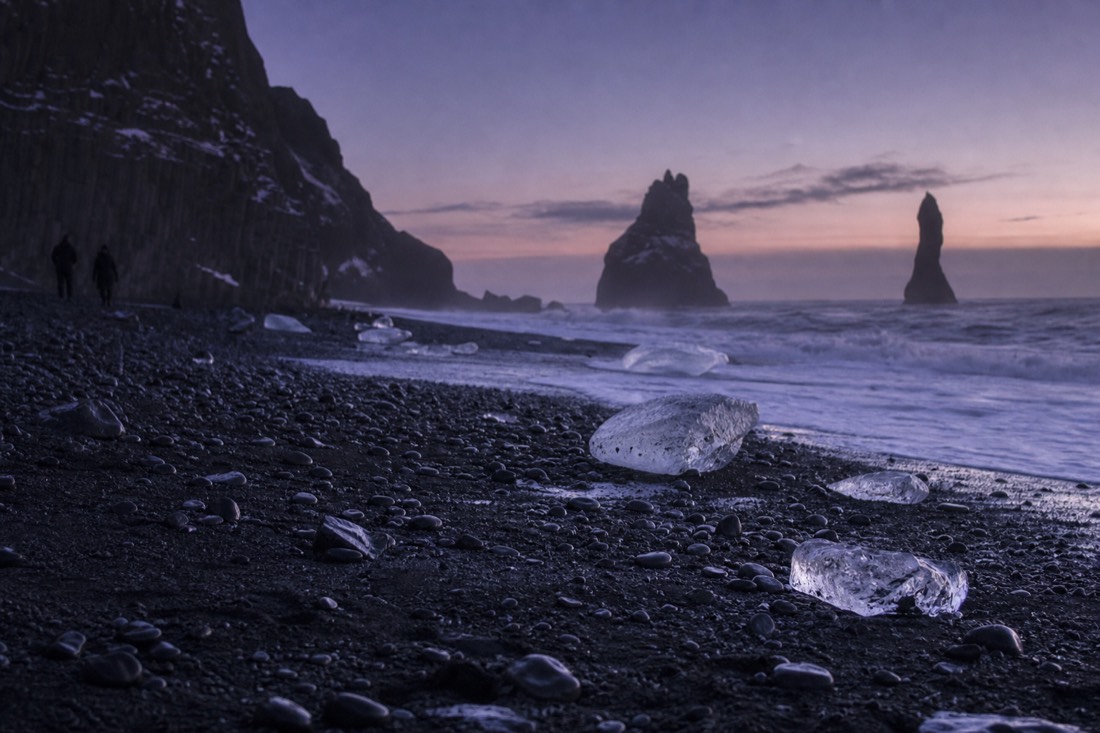
The block that surprises visitors is the last stop of the day. On a South Coast tour in December, Reynisfjara or the glacier tongue often gets visited in fading light, and it is frequently the best part of the day rather than a consolation prize. Black sand under a violet sky is not something summer offers.
The other consequence of the block structure is that lateness is expensive. Miss a pickup by twenty minutes in July and you have lost twenty minutes. Miss it in December and you may have lost a tenth of the day's usable light. Icelandic operators are strict about pickup windows for exactly this reason, not out of unfriendliness.
How do winter tour schedules bend around the light?
Daylight tours start in the dark and finish in the dark, with the stops arranged around the bright window. Aurora tours only depart once the sky is fully dark. A few experiences, the lagoons, the ice caves and the man-made glacier tunnel, do not need daylight at all, which makes them useful on the shortest days.
Not every tour is competing for the same four hours, and knowing which is which is the single most useful piece of winter planning there is.
| Experience | Needs daylight? | When it runs in winter | Winter note |
|---|---|---|---|
| South Coast day tour | Yes, for the stops | Early start, late return | 10 to 12 hours, both ends in the dark |
| Golden Circle | Yes | Morning into afternoon | 6.5 hours, leaves the evening free |
| Glacier hike | Yes, for safety on the ice | Daylight window only | Shorter departures in December |
| Ice cave | Partly, the cave is lit by daylight through the ice | Daylight window | Natural caves run roughly November to March |
| Snowmobiling on Langjökull | Yes | Daylight window | Weather-dependent as much as light-dependent |
| Silfra snorkelling | Yes | Daylight window | Two and a half hours, easy to fit |
| Whale watching | Yes | Daylight window | Runs year-round from the old harbour |
| Blue Lagoon and Sky Lagoon | No | All day and into the evening | Excellent use of a dark afternoon |
| Into the Glacier tunnel on Langjökull | No, it is man-made and lit | All year | Different thing from a natural ice cave |
| Northern lights | The opposite | After full dark | Late August to late April, strongest October to February |
Does more daylight mean fewer northern lights?
Yes, and this is the trade nobody warns you about. December gives you the longest dark window of the winter and the shortest sightseeing day. March gives you almost a full touring day and a much narrower aurora window. You cannot maximise both, so decide which one you actually came for.
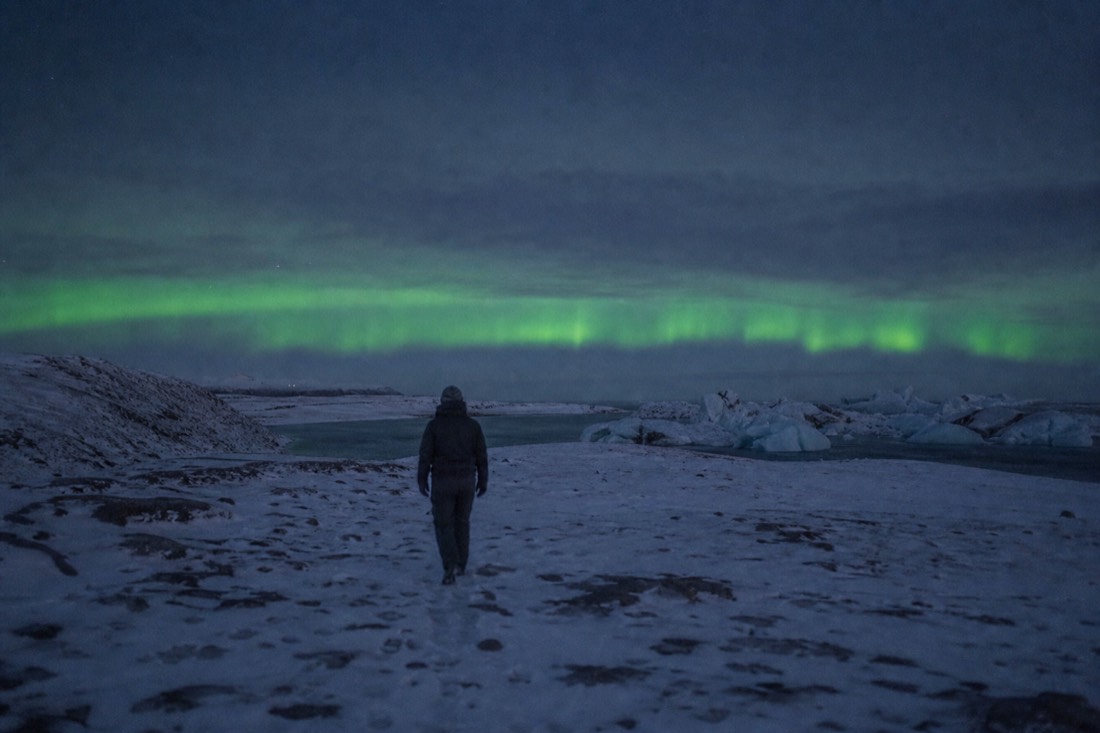
Put the two curves side by side and they cross. In December you have about four hours of daylight and something close to twenty hours of the clock left over, most of it genuinely dark. By March you have about eleven and a half hours of daylight, the nights are much shorter, and although the aurora season is still open the practical hunting window has shrunk at both ends.
There is a second effect on top of that. Aurora needs two independent things on the same night: solar activity, and a break in the cloud. Neither is bookable, and no operator can promise them. A longer dark window simply gives you more chances for both to line up, which is why a December or January trip with several nights beats a March trip with one.
None of that makes March a bad month for lights. People see excellent displays in March. It means that if the aurora is the reason for the trip, the darkest part of winter is working for you, and if the landscape is the reason, the returning light is. This is also why so many people end up choosing a guided evening rather than driving themselves: the coach goes wherever the cloud is not.
So if the lights are the point, book the sky-chasing properly. The northern lights tours page compares the real departures, and the most-reviewed of them, the Reykjavík bus tour with hot cocoa at 4.3 across 14,847 GetYourGuide reviews with a free retry night in its own terms, is available to check for your dates on GetYourGuide. For what one of those evenings is really like, what a northern lights tour is actually like does not oversell it.
What does blue hour actually give you that midday never will?
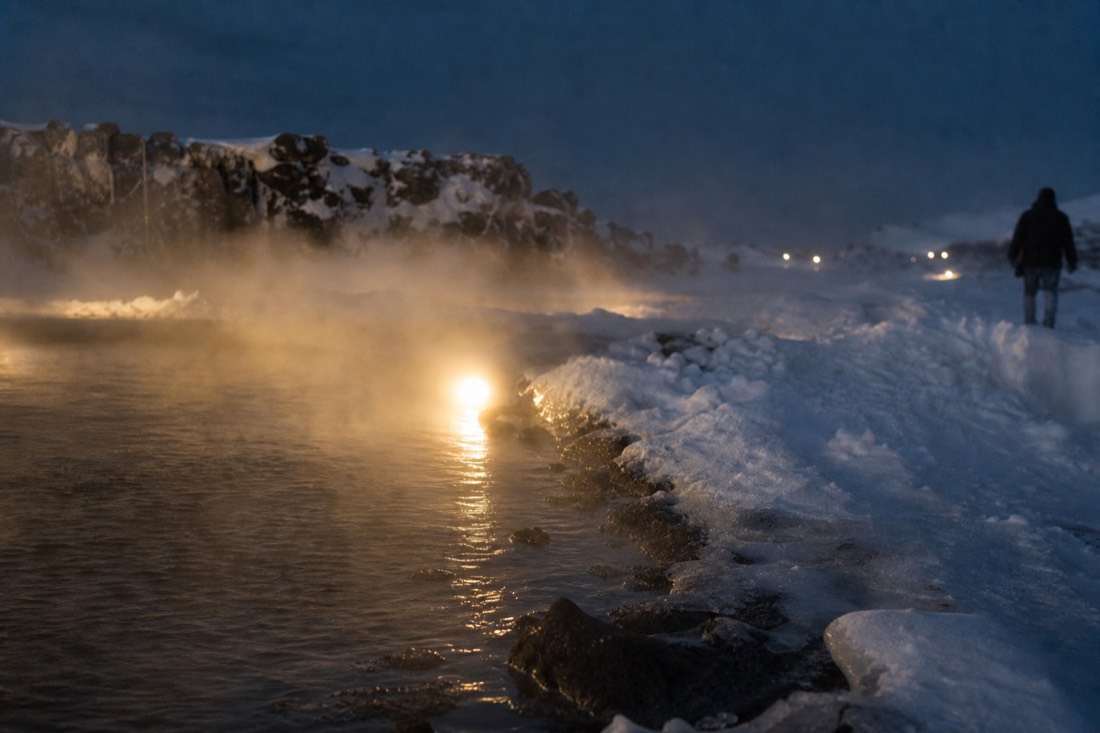
Colour and separation. In the long twilight either side of an Icelandic winter day the sky goes deep blue while snow holds the last warm light, so ice reads cyan, water reads silver and any lit window or headlamp glows orange against it. Midday flat overcast gives you none of that contrast.
Photographers who come here in summer complain about the light being relentless and shadowless. Winter hands them the opposite problem, which is that the good light is everywhere and lasts for hours instead of minutes. That shallow sun angle stretches sunrise and sunset into something you can drive between stops inside, and the twilight at either end is longer again.
The practical division is into three usable phases, and they are good for different subjects. Blue twilight before the sun appears is the quietest and the coldest looking, ideal for anything with steam, water or artificial light in it. The daylight window itself behaves as a long golden hour, with the sun low enough to rake sideways across ice, ridgelines and black sand. Then the fading blue after sunset does the same as the morning version but with more people in it and better skies.
Two things trip people up. The first is exposure: snow under blue twilight fools every camera into underexposing, so the histogram matters more than the screen. The second is expectation, because a great deal of Icelandic winter is flat grey overcast that gives none of this, and the only defence is being outside on the days when it is not. That is one more argument for booking the earliest departure available on the Golden Circle tours page rather than an afternoon one, and for reading the honest account in what I wish I knew before my first Iceland winter.
| Light phase | What it looks like | Best used for |
|---|---|---|
| Full dark | Stars if the cloud breaks, city glow on the horizon | Aurora, lit pools, long exposures from a fixed point |
| Morning blue twilight | Deep blue sky, no shadows, snow reading almost violet | Steam, geothermal areas, waterfalls, empty viewpoints |
| First light | Colour arriving low in the south-east, sky warming | Ridgelines, sea stacks, anything you want in silhouette |
| The daylight window | Low sun raking sideways, very long shadows, warm on snow | Glacier tongues, ice, black sand, the headline shots |
| Fading blue twilight | Colour draining upward, sky often at its most saturated | Reynisfjara, Jökulsárlón ice, harbours, towns |
| Flat overcast, any hour | Even grey, no direction to the light at all | Cave interiors, detail shots, close work, people |
Matching the subject to the phase is what separates a good winter photography day from a frustrating one, because in December you cannot simply come back later. There is no later.
| What you want to photograph | The light block to aim for | Why |
|---|---|---|
| Ice cave interior | The middle of the daylight window | Light comes through the roof, and there is not much of it |
| Glacier tongue or ice on a lagoon | Daylight window, low sun | Raking light shows texture that flat cloud erases completely |
| Waterfall in spate | Morning blue twilight or overcast | Even light stops the white water blowing out |
| Black sand beach | Fading twilight | Violet sky over black sand is a winter-only combination |
| Geothermal steam | Cold morning twilight | Steam hangs longest in still, cold, dim air |
| Northern lights | Full dark, well after twilight | Any residual sky brightness washes out a weak display |
| Reykjavík streets | The fading blue after sunset | Window light and street lamps balance against the sky |
How do you build a real day around four hours of light?
Work backwards from the bright window. Put one outdoor thing inside it, do the driving in twilight at both ends, and give the dark hours to lagoons, food and the aurora. In December that means a single headline experience a day. By February you can usually stack two.
Here is the shape three common winter days actually take. None of them is aspirational, they are just what fits, and the reason they look so different from a summer plan is that daylight has become the scarce input rather than energy or budget.
| Block of the day | A Golden Circle day | A South Coast day | A Reykjavík day |
|---|---|---|---|
| Before first light | Breakfast, pickup in the dark | Early pickup, first driving leg in full dark | Sleep in, this block is worth nothing |
| Morning twilight | On the road, arriving at the first stop | Still driving east, watching the sky come up | Coffee, a museum, a pool |
| The daylight window | All three or four stops, back to back | Waterfalls, black beach, glacier tongue | The one outdoor thing you care about |
| Fading twilight | The last stop, then the drive back | The final stop, often the best of the day | Harbour walk, or the drive to the lagoon |
| After dark | Dinner in town, aurora tour if the sky is clear | Long drive home, dinner late | Lagoon, dinner, aurora tour |
The Golden Circle version is the one that fits a short day best, which is why it holds up in December when the long eastern runs get uncomfortable. The Golden Circle tours sit at around 6.5 hours for the classic version, so the whole thing lands inside the usable light and still leaves you an evening. The South Coast day tours run 10 to 12 hours in winter, which means both ends of the day happen in darkness and you accept that as the price of reaching the glacier.
The Reykjavík day is the underrated one. On a short winter day the city and the lagoons absorb the dark hours without wasting anything, and a Blue Lagoon or Sky Lagoon transfer in the late afternoon is one of the few things in Iceland that is arguably better once the light has gone. Steam, dark sky, warm water. Nothing about it needs the sun.
One rule holds across all three. Never put a long drive in the last light of the day if you can avoid it, because the fatigue and the darkness arrive together and the road does not get easier. That is also the argument running through self-drive versus guided tours, and it gets sharper the closer you travel to the solstice, which is exactly what the Iceland in December guide is about.
Which winter darkness myths are actually wrong?
Most of them. The sun rises every day, December is not unworkable, more daylight is not automatically better, and darkness does not mean extra cold: Reykjavík averages around 0.5°C in January. What is true is that overcast steals more of your light than the calendar does.
The myths come from three places: photographs of the high Arctic, half-remembered geography, and people conflating Iceland with Svalbard or northern Norway. Reykjavík sits below the Arctic Circle. The sun comes up, tracks low and goes down again, every single day of the year, and the difference between the shortest day and a short day somewhere like Scotland is smaller than the internet suggests.
The one that costs travellers real money is the belief that the darkest months should be avoided. December and January are the two months with the longest genuinely dark window, which is precisely what the aurora needs, and the northern lights tours run their fullest schedules then for that reason. Trading four hours of daylight for the best chance at the thing you actually came for is a rational swap, not a compromise.
The one that costs people a good trip is the opposite belief, that darkness ruins sightseeing. It does not. It compresses it, which is a planning problem rather than an experience problem, and the compression is why an itinerary that would feel rushed in July feels focused in January. Pick fewer things. See them in better light than a summer visitor ever gets.
| The myth | What is actually true |
|---|---|
| The sun never comes up in December | It rises every day in Reykjavík, sits low, and gives about 4 hours at the solstice |
| Winter is dark all the time, so nothing runs | Day tours run through the whole season, built around the bright window |
| More daylight is always the better trip | More daylight means a shorter aurora window, so it depends what you came for |
| Darker means colder | Reykjavík averages around 0.5°C in January; the wind does the damage, not the dark |
| Daylight hours equal hours of sunshine | Much of the winter is overcast, and cloud takes more light than the calendar does |
| The aurora only appears at midnight | It appears whenever the sky is dark and the activity is there, often earlier than people expect |
| March is too bright for northern lights | The season runs into late April; the window is narrower, not closed |
| Iceland gets polar night | Polar night is north of the Arctic Circle, which Reykjavík is not |
| Every winter night is a good aurora night | It needs solar activity and a clear sky on the same night, and neither is bookable |
That last row is the one worth carrying into your planning. No operator can promise the lights, so the only real strategy is more nights rather than a better tour, and the northern lights tours page sets out which departures include a free retry night. How that stacks against the rest of the month is worked out in the best time to see the northern lights.
How should you spend the daylight you do get?
Put one headline outdoor experience in the bright window and nothing else. Move museums, pools, lagoons, meals and shopping into the dark hours, where they cost you nothing. Book the earliest departure of anything you care about, and never leave a long drive until the afternoon.
The discipline is simple: daylight is the scarce resource, so spend it only on things that require it. A glacier tongue requires it. A black sand beach requires it. A thermal lagoon, a restaurant, a swimming pool and a bookshop do not.
That single rule reshapes a winter trip. Arrive at Keflavík in the morning and the lagoon on the way into town is a fine use of a dark afternoon. Save the Golden Circle for a full window. Eat late, because you will be out until the light goes anyway.
The second habit is booking early departures. On a short day, the difference between a departure at first light and one an hour later is a meaningful share of everything you will see. Operators know this and the good ones sell out their earliest winter slots first.
And build in one flexible day. Cloud, wind and road closures are the real constraints in Iceland, not darkness, and the country runs on people checking the forecast at breakfast and changing the plan. If you want to know how we choose the tours we recommend and what we do not claim about them, the about page is straightforward about it.
From Reykjavík: Northern Lights Bus Tour with Hot Cocoa
Decide which end of the light trade you are on, then book it: the aurora night early in the trip if the dark is the point, and the earliest daylight departure if it is not. The most-reviewed run cancels free up to 24 hours out.
4 hours · English
Check travel dates with GetYourGuide below.
None of these experiences matches that choice. Adjust your preference or reset to the general recommendation.
Compare Options And Plan Your Trip
- Maximum darkness for aurora
- December and January give the longest genuinely dark window.
- The bright end, full days
- February's 8.5 hours fits the whole South Coast day.
- No daylight needed
- The man-made tunnel under Langjökull runs on the shortest day.
- A dark-afternoon lagoon
- Steam, warm water and a sky that needs no sun.
- Balanced February light
- A later start inside the usable window, 4.8 across 1,864 reviews.
Before Booking