Self-Drive vs Guided Tours in Iceland in Winter
Studded tyres are legal 1 November to 15 April and every highland F-road is shut all winter. An honest verdict on hiring a car versus booking a coach seat.
 Written with Björn Einarsson, Icelandic guide & winter tour specialist
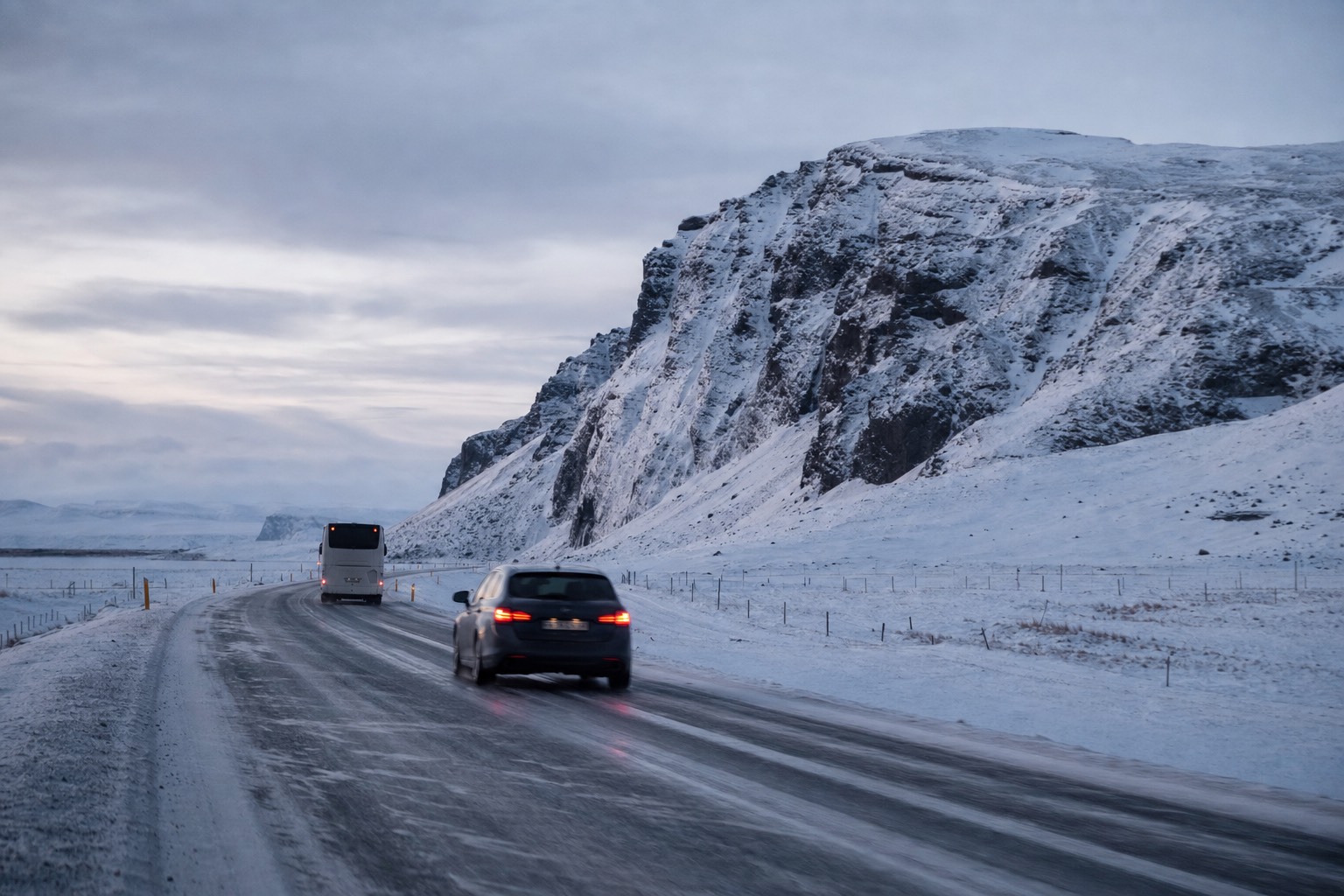
The first thing winter in Iceland takes from a hire car is usually the door. You pull up at a petrol station near Hvolsvollur, the wind is coming off the glacier at your back, you push the door open, and it goes past your fingers and stops against the hinge with a sound you feel in your teeth. That repair is not covered by anything. Nobody at the desk mentioned it.
TL;DR: Self-drive works in Iceland in winter if you have driven in snow before and you keep your days short and close to Reykjavik. Guided is the right call for the long South Coast run, anything on a glacier, and any day where the light runs out before you get home. Studded tyres are legal from 1 November to 15 April, every highland F-road is shut, and the road picture has to be checked on the morning of the drive rather than the night before. We do not sell car hire and have no reason to talk you into or out of one.
Should you self-drive or take guided tours in Iceland in winter?
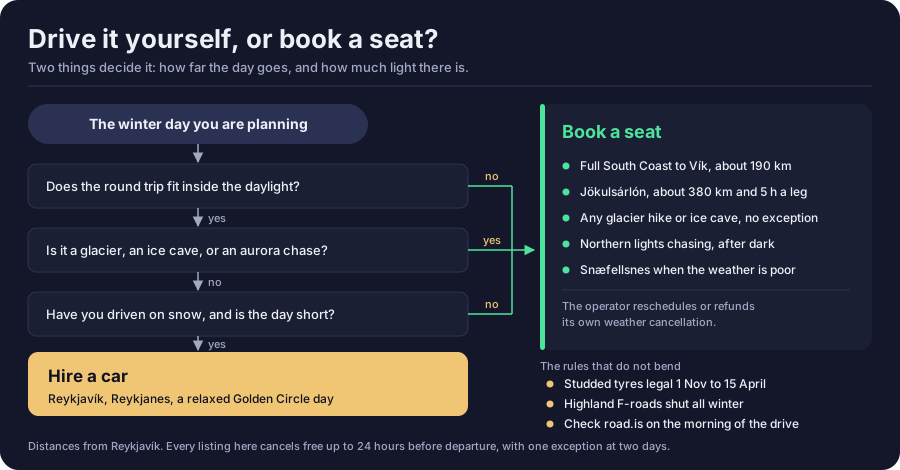
Do both, split by trip type. Hire a car for Reykjavik, the Reykjanes peninsula and a relaxed Golden Circle day. Book a seat for the South Coast, Jokulsarlon, any glacier activity and any aurora chase. The dividing line is distance and darkness, not confidence, and it catches out good drivers every winter.
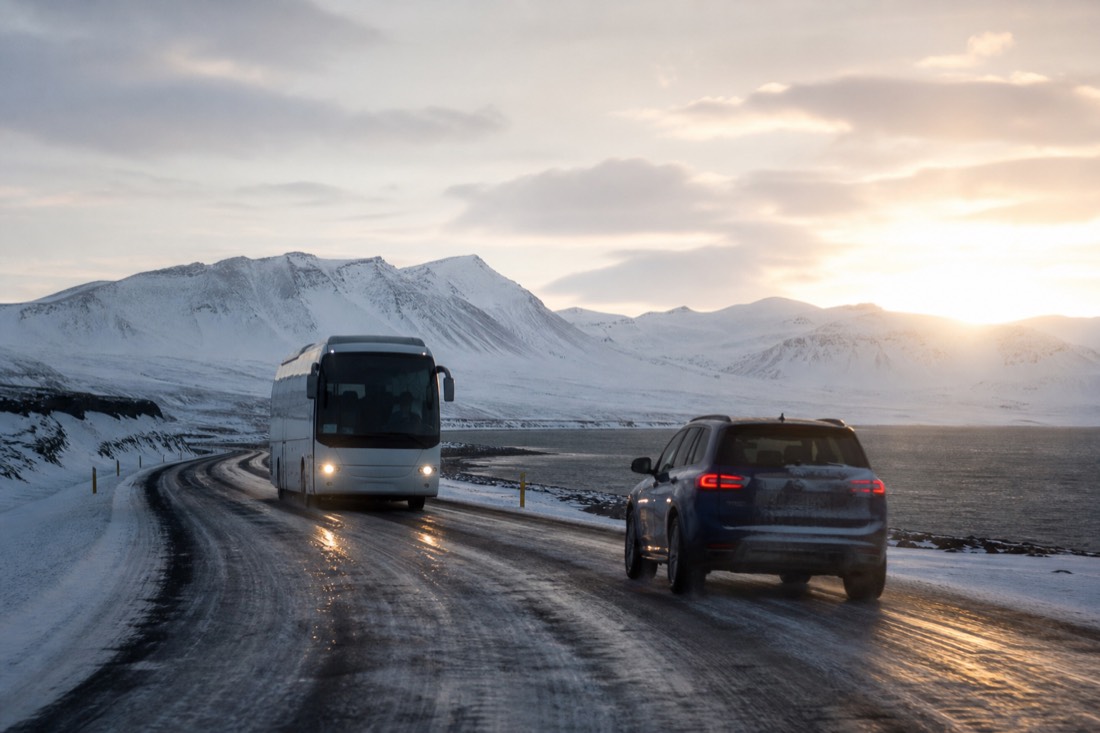
I say this as someone who drives these roads for a living and still cancels his own plans two or three times a winter. The trouble is not that Icelandic roads are technically hard. The Ring Road is a well-built two-lane road with good surfacing and sensible cambers. The trouble is that conditions change over a short distance, the wind arrives without visible warning, and the daylight budget in December is around four hours.
A hire car gives you something real: you stop where you like, you wait out a squall in a cafe, you go back to Seljalandsfoss at dusk because the light turned. A tour seat gives you something equally real: someone else drives the black ice, someone else decides whether the pass is safe, and the operator carries the cost when the day gets cancelled.
Most sensible winter trips use both. The mistake is picking one on principle. Whether guided days earn their keep more broadly is answered on are guided tours in Iceland worth it, which goes further into the value question than I will here.
Is it hard for Americans to drive in Iceland in winter?
Not because of the rules. Iceland drives on the right, signage is clear and largely pictorial, limits are posted, and cars are automatic if you ask for one. The hard part is winter itself: single-lane bridges, blind summits, gravel shoulders and crosswind that no American road teaches you.
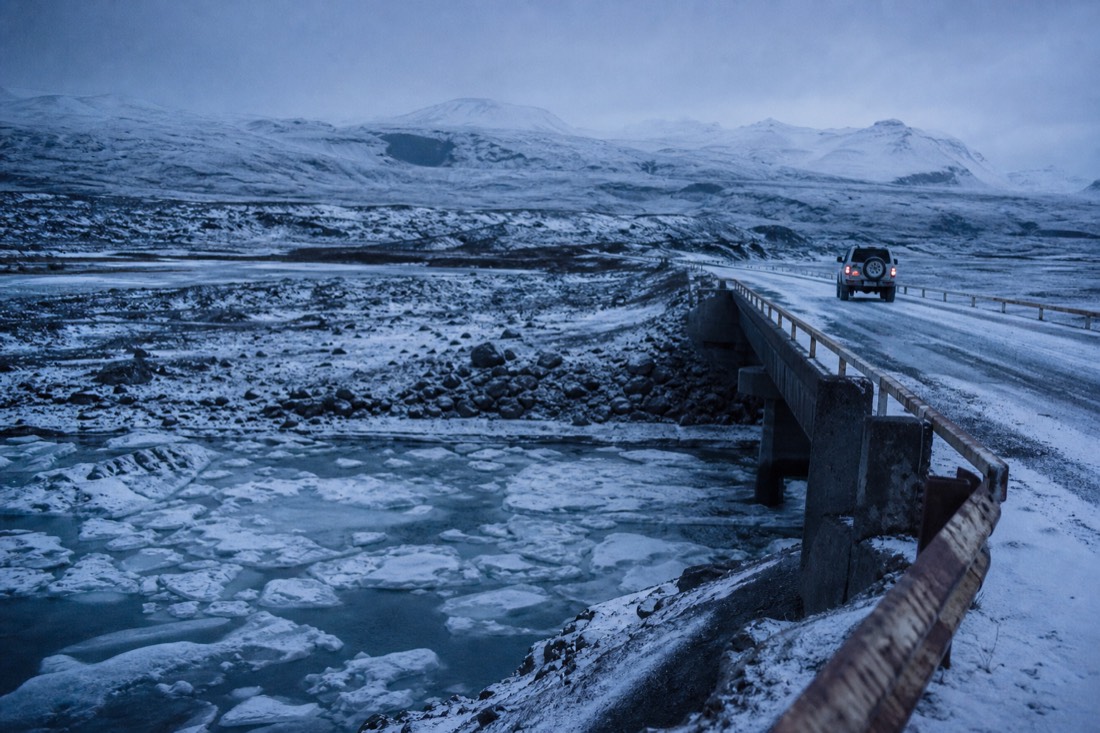
Drivers from the US, Canada and Australia adapt fast to the mechanics. There is no unfamiliar side of the road, no manual gearbox unless you book one, and no complicated urban network outside Reykjavik. What genuinely catches people out is a set of specifically Icelandic road features. Single-lane bridges are common on the South Coast and the rule is that whoever is closer goes first, which requires judging distance at speed. Blind summits, marked "blindhaed", mean exactly what they say.
The bigger adjustment is psychological. In much of North America, bad weather means slower traffic and a longer journey. In Iceland it can mean the road behind you closes and you sleep in Vik. Drivers who treat a forecast as advisory rather than instructional get into trouble, and it is almost never the ones who feel nervous.
If you have never driven on snow, winter Iceland is a poor place to learn. If you commute through Minnesota or Alberta winters, you will be fine within an hour. That single question predicts more than nationality or licence type ever does. Set your expectations for the season first with Iceland in winter, what to expect.
Is it safe to rent a car in Iceland in winter?
Yes, with conditions. Winter hire cars come on proper winter tyres, and studded tyres are legal from 1 November to 15 April. Roads are gritted and cleared quickly on main routes. Safety comes down to checking conditions every morning, turning back early, and not treating a closed road as a suggestion.
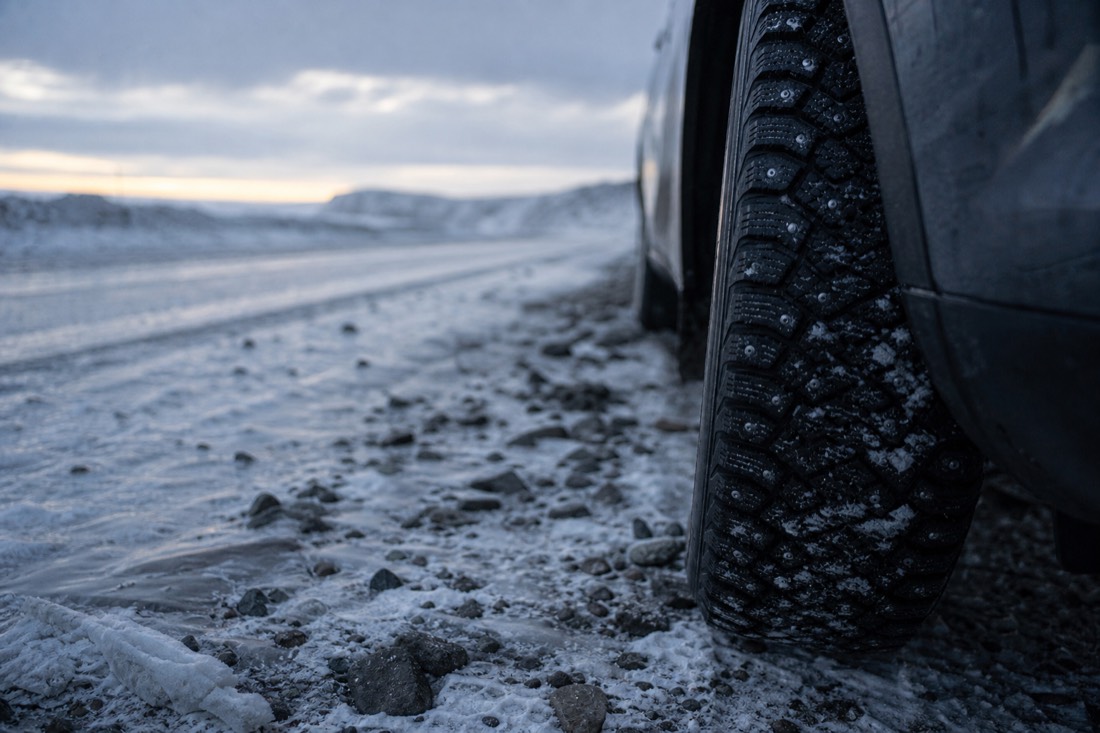
The infrastructure is on your side. Iceland maintains its main routes seriously, closes them when they are unsafe, and publishes the picture in near real time. What the system cannot do is stop you setting off into a red warning because you booked a hotel in Hofn.
Three habits separate a safe winter drive from a bad story. Check road.is on the morning of the drive, not the evening before, because a clear midnight forecast means nothing about eight in the morning. File your plans and read the alerts on safetravel.is, which is run by ICE-SAR and pairs with the 112 Iceland app. And build a day that ends in daylight, which in January means being where you are sleeping by mid-afternoon.
The parking brake habit matters too. Icelandic drivers leave a car nose into the wind where they can, and hold the door with two hands on a gusty day. It sounds fussy until you have paid for a hinge.
What car rental company should you use in Iceland?
We do not sell car hire and will not name a winner. What matters more than the brand is the contract: winter or studded tyres included, sand and ash cover added, gravel damage understood, and a clear line on what happens if a road closes. Read those four clauses and the company matters much less.
The rental question is the one where almost every page you find is written by someone earning a commission on the answer. Here is the version without that pressure. Sand and ash protection is the cover people skip and then regret, because a wind-driven ash storm on the South Coast can strip paint off an entire flank in minutes, and standard collision cover does not touch it. Wind damage to doors is usually excluded outright, which is why the door habit above is worth learning.
Size is the second decision. A small car is cheaper and easier to park in Reykjavik, and it is also the one that gets shoved sideways on an exposed stretch. A heavier vehicle sits better in crosswind. That is a real trade-off rather than an upsell.
Then there is the sum. Fuel runs roughly 250 to 300 ISK a litre, and a hire car adds parking, insurance excess and the fuel on top of the daily rate, which is why the arithmetic often lands closer to a tour seat than people expect. I have broken the whole trip down in how much an Iceland winter trip costs, including where a multi-day winter package takes both the driving and the hotel booking off your hands.
Do you need a 4x4 in Iceland in winter?
For the Ring Road between Reykjavik and Vik, no: a front-wheel-drive car on winter tyres is adequate, and tyres matter more than drivetrain. For Snaefellsnes, the north, or anywhere with unpaved sections, take the 4x4. Highland F-roads are closed all winter regardless of what you hire.
The F-road point is absolute and worth stating plainly, because visitors still ask. Every highland road is shut for the whole winter season. No 4x4, no permit and no amount of experience opens them. Anything advertised as a highland trip in January is running on a glacier or a marked winter route, not an F-road.
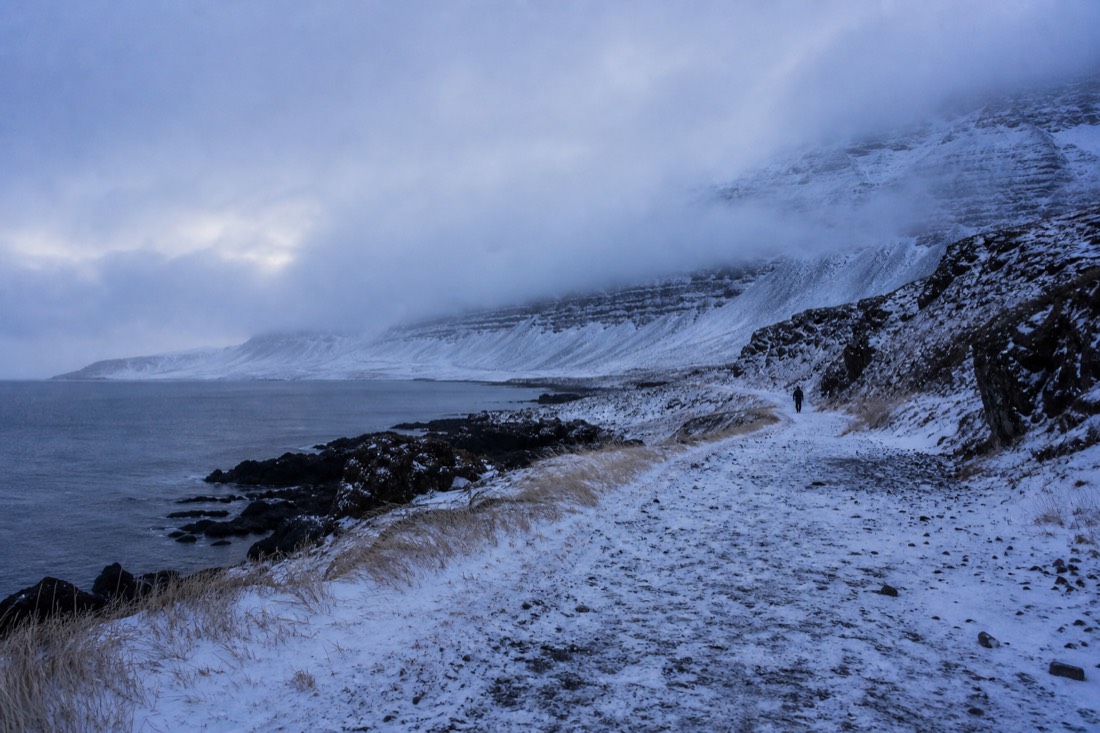
Snaefellsnes is the question I get most, and the answer is yes, take the four-wheel drive. The peninsula catches weather from three sides, the road over the pass can drift, and several of the places worth stopping at sit on short unpaved spurs. It is not that a two-wheel-drive car cannot do it. It is that when it goes wrong out there, you are a long way from help.
The same logic applies to any glacier. You cannot drive onto one in a hire car of any specification, which is why glacier hiking tours and every ice cave departure begin with a transfer in the operator's own modified vehicle. That part is never optional.
Which days should you drive and which should you book a seat?
Drive Reykjavik, Reykjanes, the Golden Circle and a short South Coast loop as far as Seljalandsfoss. Book a seat for the full South Coast to Vik, anything reaching Jokulsarlon, all glacier and cave days, and aurora nights. The rule of thumb: if the round trip exceeds the daylight, take the bus.
| Trip | Self-drive | Guided | The deciding factor |
|---|---|---|---|
| Reykjavik and Reykjanes | Good call | Not needed | Short hops, gritted roads, easy parking |
| Golden Circle, relaxed pace | Good call | Fine either way | 6.5 h guided, and you can stop where you like alone |
| South Coast to Vik and back | Only with snow experience | Better | About 190 km each way, mostly in the dark in December |
| Jokulsarlon and the ice caves | Not advisable in one day | Much better | About 380 km each way, roughly five hours per leg |
| Glacier hike or ice cave | Impossible alone | The only option | Operator transfer and permits, no exceptions |
| Snaefellsnes peninsula | 4x4 only | Better in poor weather | Exposed pass, unpaved spurs, weather from three sides |
| Northern lights hunting | Poor idea | Much better | Chasing gaps in cloud on unlit roads after dark |
| Blue Lagoon or Sky Lagoon | Fine | Convenient | Short drive, but a transfer means you can have a drink |
The South Coast is where this decision has real money in it. It is the classic full day, 10 to 12 hours with the waterfalls, the black beach at Reynisfjara and the glacier tongue, and doing it yourself in January means both legs in the dark with a car park at each stop. The South Coast day tours page compares the versions, and the most-reviewed of them is available to check for your dates on GetYourGuide, running with BusTravel Iceland at 4.8 across 12,306 reviews.
The Golden Circle is the honest counter-example. It is close, the roads are good, and a hire car genuinely improves it, though the Golden Circle day tours at 4.6 across 9,939 reviews are the better option on any morning when the forecast is ugly, because someone else decides whether Gullfoss is approachable. The classic 6.5-hour Gray Line run rates 4.5 across 5,583 Viator reviews and takes the whole decision off you.
What does Icelandic wind actually do to a car?
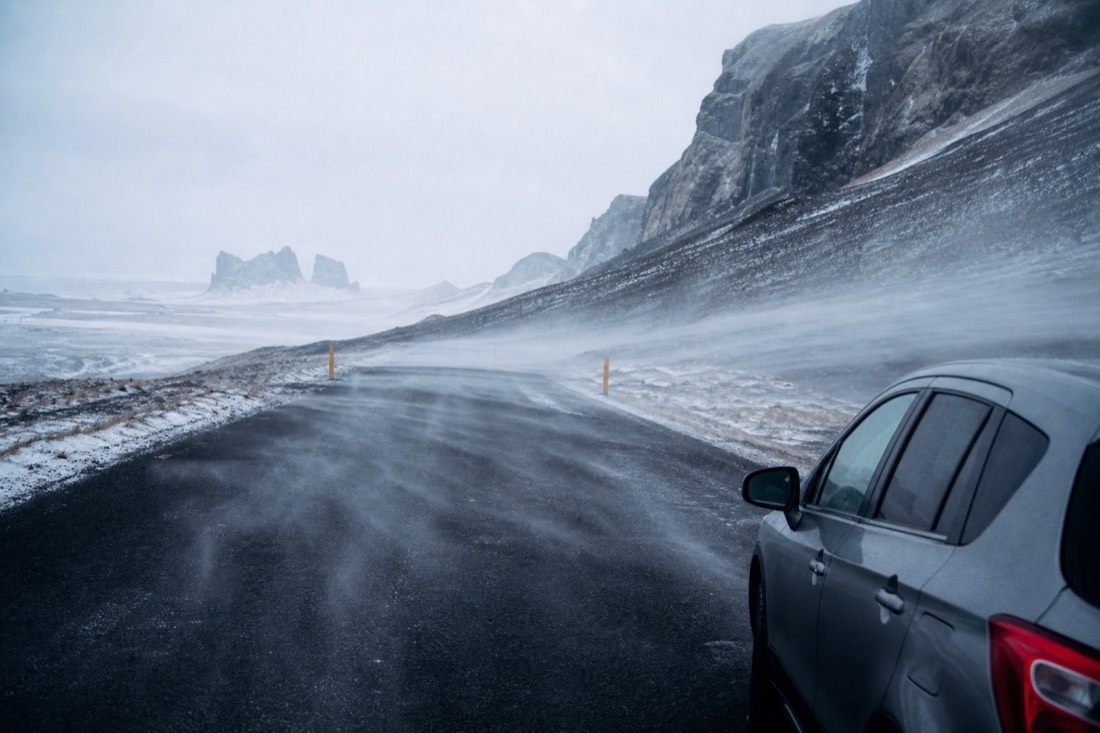
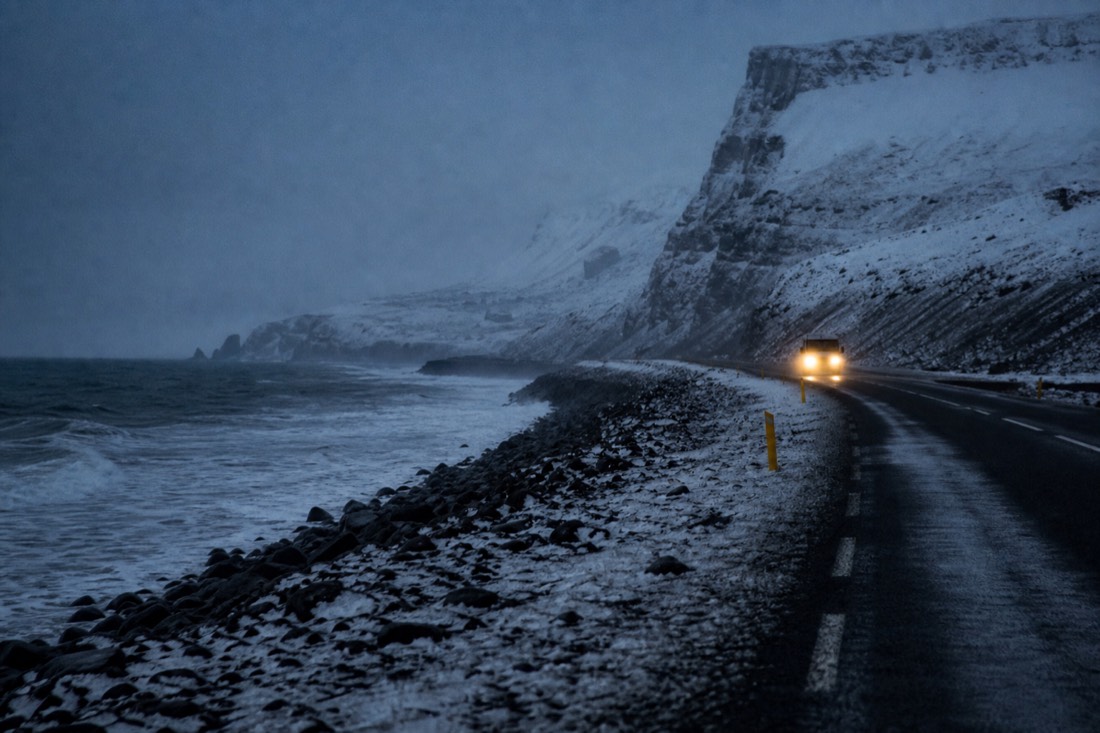
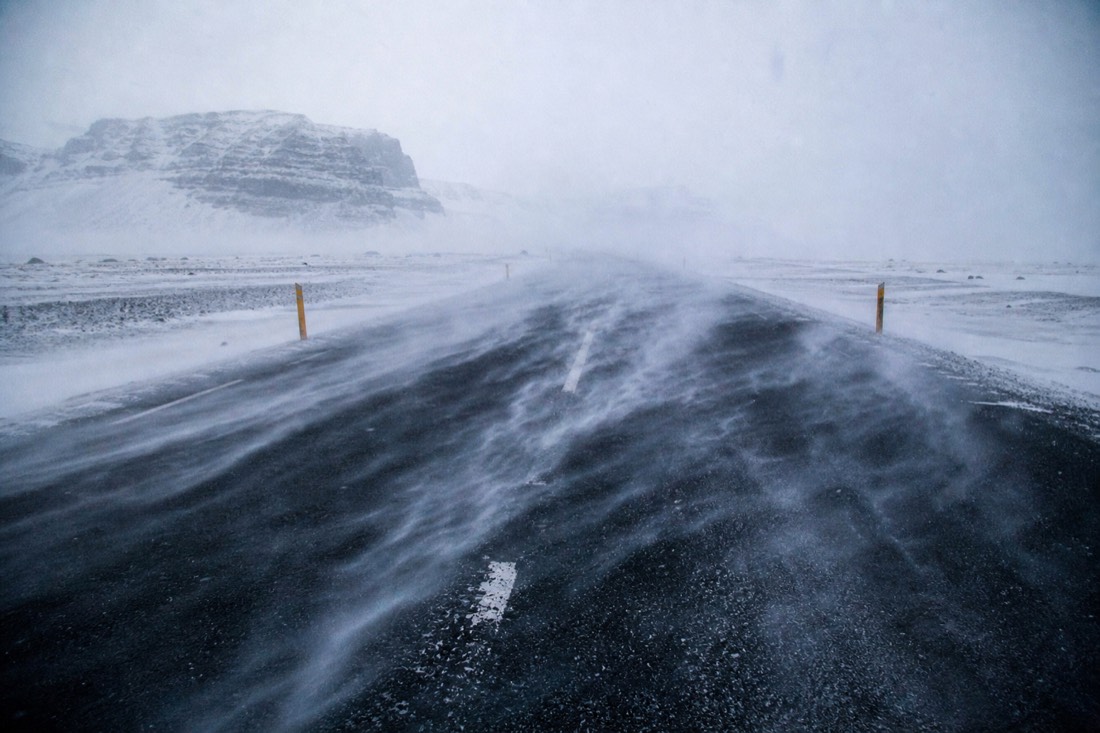
More damage than ice does. Gusts rip doors off hinges at petrol stations, push high-sided vehicles across the centre line, blow grit and volcanic ash across paintwork, and close roads outright. Wind is the reason Icelandic road warnings exist at wind speeds that would not register elsewhere, and the reason vehicles are recovered undriveable.
| Winter hazard | What actually happens | Who carries the risk |
|---|---|---|
| Crosswind on exposed roads | Vehicle pushed toward the centre line or the shoulder | You, in a hire car; the operator, on a coach |
| Door caught by a gust | Hinge bent or door torn, usually excluded from cover | You, almost always |
| Sand and ash storms | Paint stripped along one flank in minutes | You, unless sand and ash cover was added |
| Black ice on shaded bends | Loss of grip without warning at normal speed | You, in a hire car |
| Whiteout in blowing snow | Visibility to a few metres, road markings gone | You; a driver knows where to pull in |
| Road closure ahead of you | Detour of hours, or a night in the wrong town | You pay the hotel; the tour refunds or reschedules |
| Darkness on the return leg | Wildlife, ice and fatigue at the end of a long day | You, and it is the most underrated of the lot |
That last risk is the one I would press hardest. A South Coast day in December ends in the dark whatever you do, and the difference between doing it in a coach seat and doing it behind the wheel after ten hours out is enormous. Nobody plans for how tired they will be.
What does road.is actually tell you, and what does it not?
It tells you the state of the road surface right now and which sections are closed. It does not forecast, it does not know about the wind that arrives at two in the afternoon, and it does not decide whether your day is a good idea. For that you need the weather service, the safety service and your own nerve.
The single most common mistake I see in winter is treating one website as the whole picture. Visitors open the road map, see a green line to Vík, and set off into a wind warning that was published somewhere else entirely. The road map is a description of the present. The forecast is a description of the next eight hours. They answer different questions and you need both before you turn the key.
There is also a timing trap inside the road map itself. Conditions in Iceland change over a distance you can drive in twenty minutes, and the map updates as crews and sensors report, so a section can be clear when you look and impassable when you get there. Checking it at breakfast is the habit. Checking it again before the long leg east is what an experienced driver does without thinking about it.
The phone line matters more than people expect. If you cannot read the map or the picture looks ambiguous, 1777 puts you through to somebody who knows the road. There is no version of this where guessing is better than asking.
| The source | What it answers | What it will not tell you |
|---|---|---|
| road.is | Which roads are open, closed or impassable, and the surface state now | Whether conditions will hold for the next four hours |
| vedur.is | Wind speed, warnings and the weather forecast by region | Whether the road itself is closed or gritted |
| safetravel.is | Official ICE-SAR alerts, travel plans, the 112 Iceland app | Live road surface detail |
| 1777 by phone | A person who can interpret the road picture for your route | Anything about your tour booking |
| Your operator | Whether the departure runs, and what happens if it does not | Whether your own hire car should attempt the same road |
Regions behave differently, and knowing which part of your route is the fragile one is most of winter driving. The short version: the closer you stay to the inhabited southwest, the more forgiving the season is. The further east you push in one day, the more you are betting on a forecast holding.
| Where you are heading | What winter usually does to it | The thing to check |
|---|---|---|
| Reykjavík and Reykjanes | Short gritted hops, rarely a problem, occasional wind days | Wind warnings before an exposed coastal drive |
| Golden Circle loop | Daily commuter roads, cleared early, the most reliable winter route | Ice on the shaded approach to Þingvellir |
| Ring Road to Vík | Well built and busy, but exposed in several stretches | Crosswind warnings and light, about 190 km each way |
| Vík to Jökulsárlón | The leg that turns a manageable day into a committing one | Closures ahead of you, not just behind you |
| Snæfellsnes peninsula | Weather from three sides, a pass that drifts, unpaved spurs | Whether the pass is open, and take the 4x4 |
| North and east | Cleared by priority, so some sections wait their turn | Whether you can get back, and where you would sleep |
| Highland F-roads | Closed for the entire winter, without exception | Nothing, they are shut regardless of vehicle |
What does a hire car really cost once the winter extras go on?
More than the daily rate suggests, because winter adds line items summer does not. Fuel runs roughly 250 to 300 ISK a litre, sand and ash cover is an extra, the excess on a wind-damaged door is yours, natural sites are starting to charge for parking, and a closed road can put you in an unplanned room down the coast.
The rental headline price is the number people compare against a tour seat, and it is the wrong number. What you are actually buying is a rate, plus fuel across some long distances, plus the cover that makes the rate safe, plus whatever the day costs when it goes wrong. Only the first of those appears at the booking stage.
Distance is the quiet multiplier. Jökulsárlón is about 380 km from Reykjavík, so a there-and-back day is roughly 760 km of fuel at 250 to 300 ISK a litre, and that is before you have parked anywhere. The South Coast to Vík and back is about half of it. On a Golden Circle day the fuel line is small enough not to matter, which is precisely why that loop is the one where self-driving stacks up best.
Then there is the line nobody prices at all, which is the driver. Somebody in your group spends the day watching black ice instead of watching Iceland, does not have a beer at the Blue Lagoon, and drives the last two hours in the dark after nine hours out. On a coach they are a passenger. That is a real transfer of value even though it never appears on an invoice.
| Cost line | In a hire car | On a booked seat |
|---|---|---|
| The base price | Daily rate, usually quoted before winter extras | One fare, quoted in full |
| Fuel | Roughly 250 to 300 ISK a litre, over some long distances | Included |
| Insurance excess | Yours, and Icelandic excesses are not small | None |
| Sand and ash damage | An extra you have to add, and the one people skip | Not your problem |
| Wind damage to a door | Usually excluded from cover altogether | Not your problem |
| Parking at natural sites | Charges have started appearing at popular sites | Included where it applies |
| An unplanned night down the coast | Yours, on top of the room you already paid for | Not your problem |
| The driver's day | Someone loses it | Nobody loses it |
| A cancelled day | Fuel and hotel spent, nothing back | Rescheduled or refunded |
The full trip arithmetic, including where a package beats both, is worked through in how much an Iceland winter trip costs, and where you sleep changes the driving question completely, which is the argument in where to stay in Iceland in winter.
Who genuinely should drive in an Icelandic winter?
People who have driven on snow and ice before, who are staying near Reykjavík, who are travelling with more than one licensed driver, and who are relaxed about abandoning a plan. Everyone else gets more out of a coach seat, and that includes plenty of very good drivers from places that never freeze.
Confidence is a poor predictor here and experience is a good one. The question I would ask is not whether you are a competent driver, but whether you have ever felt a car step out on ice and known what to do with your hands in the next second. If the answer is yes, winter Iceland will feel familiar within an hour. If the answer is no, this is an expensive place to find out.
Two other factors decide it more than people expect. The first is how many drivers you have, because a single driver on a long dark return leg after a full day out is the most tired anyone gets on an Icelandic holiday. The second is temperament. Winter here rewards people who cancel their own plans cheerfully and punishes people who have booked a non-refundable room in Höfn and feel committed to reaching it.
There is a middle answer that most sensible trips land on. Hire a car for the days near town and book seats for the long ones, which gets you the freedom without the exposure. That mix is why the Golden Circle tours and the South Coast day tours sell to the same people who have a rental parked outside their hotel all week.
| If this is you | The honest verdict | Why |
|---|---|---|
| You drive Alberta, Minnesota or Scandinavian winters | Drive, and enjoy it | Ice handling is a learned reflex and you have it |
| You have never driven on snow | Book seats for anything beyond Reykjavík | Winter Iceland is a poor classroom |
| One licensed driver, long days planned | Book the long days at least | The dark return leg is where the fatigue lands |
| Travelling in December | Keep the car for short local days | About four hours of usable light makes long drives night drives |
| Travelling in March | Drive more freely | Roughly 11.5 hours of light changes what fits in a day |
| Your itinerary has no spare days | Book seats | Operators reschedule, hotels and rental days do not |
| You want Jökulsárlón and the ice caves | Book it, or take a package | About 380 km each way, plus a glacier transfer you cannot do yourself |
| You are chasing the aurora | Book it | Cloud gaps move, and hunting them on unlit roads after dark is a bad first night |
| Nervous, but staying around town | Drive, short hops only | The anxiety is not the problem; overreach is |
How much light you actually have to work with on any given date is the constraint underneath most of that table, and it is set out month by month in the daylight hours guide. If you do drive, dress for the roadside rather than the car: the list in what to pack for Iceland in winter has the scraper, the spare gloves and the boots that let you stand outside in a gale and think clearly.
What happens if the weather turns on the day?
Booked seats absorb it. Icelandic operators reschedule or refund their own weather cancellations, and every listing here allows free cancellation up to 24 hours before departure, with one exception at two days. A hire car absorbs nothing: the hotel down the coast, the fuel and the lost day are all yours.
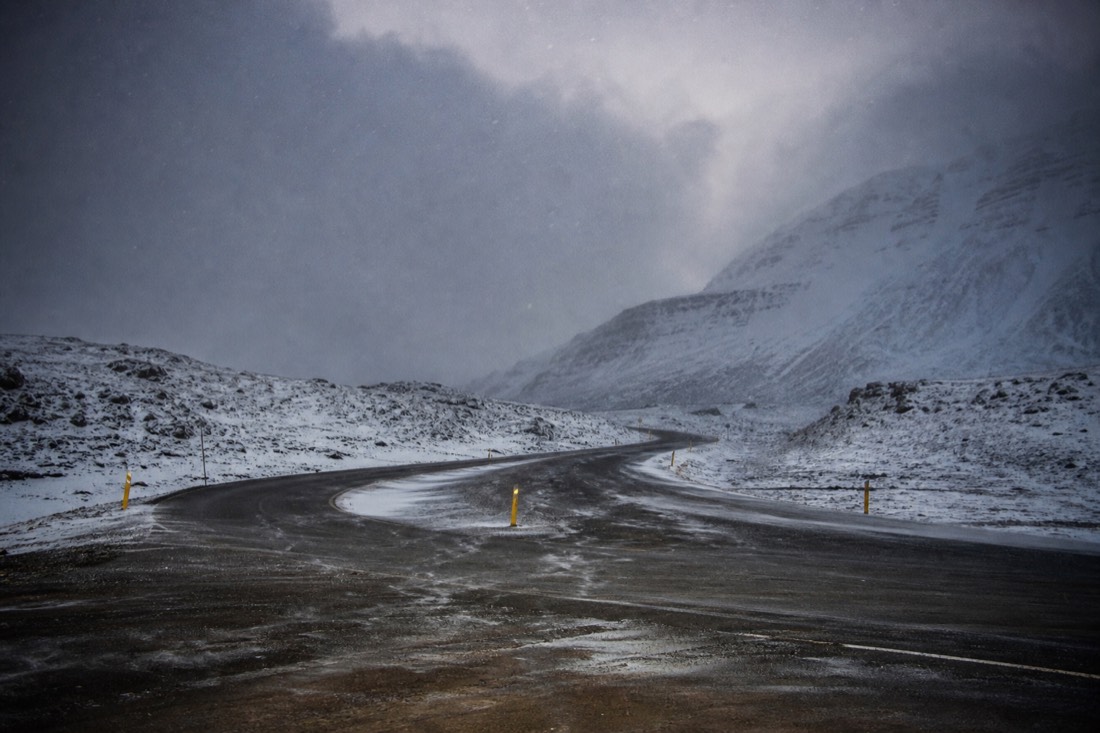
This is the part of the comparison that never appears in a rental brochure. When a South Coast day is called off for wind, the operator moves you to another date or gives your money back, and the whole thing costs you an afternoon in Reykjavik. When your self-drive day is called off by the same wind, you are looking at a non-refundable room in Hofn and a decision about whether to risk it.
| The rule | What it says | Where it lives |
|---|---|---|
| Studded tyres | Legal from 1 November to 15 April | Fitted by the rental company in season |
| Highland F-roads | Closed for the entire winter, no exceptions | road.is |
| Road conditions | Check on the morning of the drive, not the night before | road.is, or 1777 by phone |
| Travel plans and alerts | Submit a plan, carry the 112 Iceland app | safetravel.is, run by ICE-SAR |
| Volcanic status, Reykjanes | Nine eruptions since December 2023, none of which closed Keflavik | safetravel.is eruption page |
| Tour weather cancellation | Operator reschedules or refunds; free cancellation up to 24 hours out on every listing here, bar one at two days | The operator's listing |
The practical routine is the same either way. Look at road.is with your first coffee, look at the alerts on safetravel.is, and accept the verdict rather than negotiating with it. Icelandic weather does not care that you have three days.
Days do get lost, and it is worth knowing what one feels like before it happens to you. The day the weather cancelled everything is exactly that, written from a February when nothing ran.
For how the bookings on this site work, who operates each departure and what we earn from it, our FAQ page sets it all out plainly.
From Reykjavík: South Coast Waterfalls, Glacier and Black Beach Day Tour
If the verdict has you booking the long days, check the South Coast date first: it is the day the wheel-versus-seat decision actually costs money, and the listing cancels free up to 24 hours out.
10 to 12 hours · English
Check travel dates with GetYourGuide below.
None of these experiences matches that choice. Adjust your preference or reset to the general recommendation.
Compare Options And Plan Your Trip
- The full South Coast day
- 190 km each way, mostly dark in December; the coach absorbs it.
- Jökulsárlón and the ice cave
- 380 km each way makes the overnight package the sane version.
- The aurora night
- Chasing cloud gaps on unlit roads is the one drive this page argues against.
- A relaxed Golden Circle
- The half-day guided circle for mornings when the forecast is ugly.
Before Booking
Compare complete party totals in the same currency, including any transport, meals or extras you would otherwise buy.