Iceland in December 2026: Daylight, Cost, What to Book
About four hours of light at the solstice and twenty of darkness. What an Icelandic December really allows, what Christmas week does to prices, what to book.
 Written with Björn Einarsson, Icelandic guide & winter tour specialist
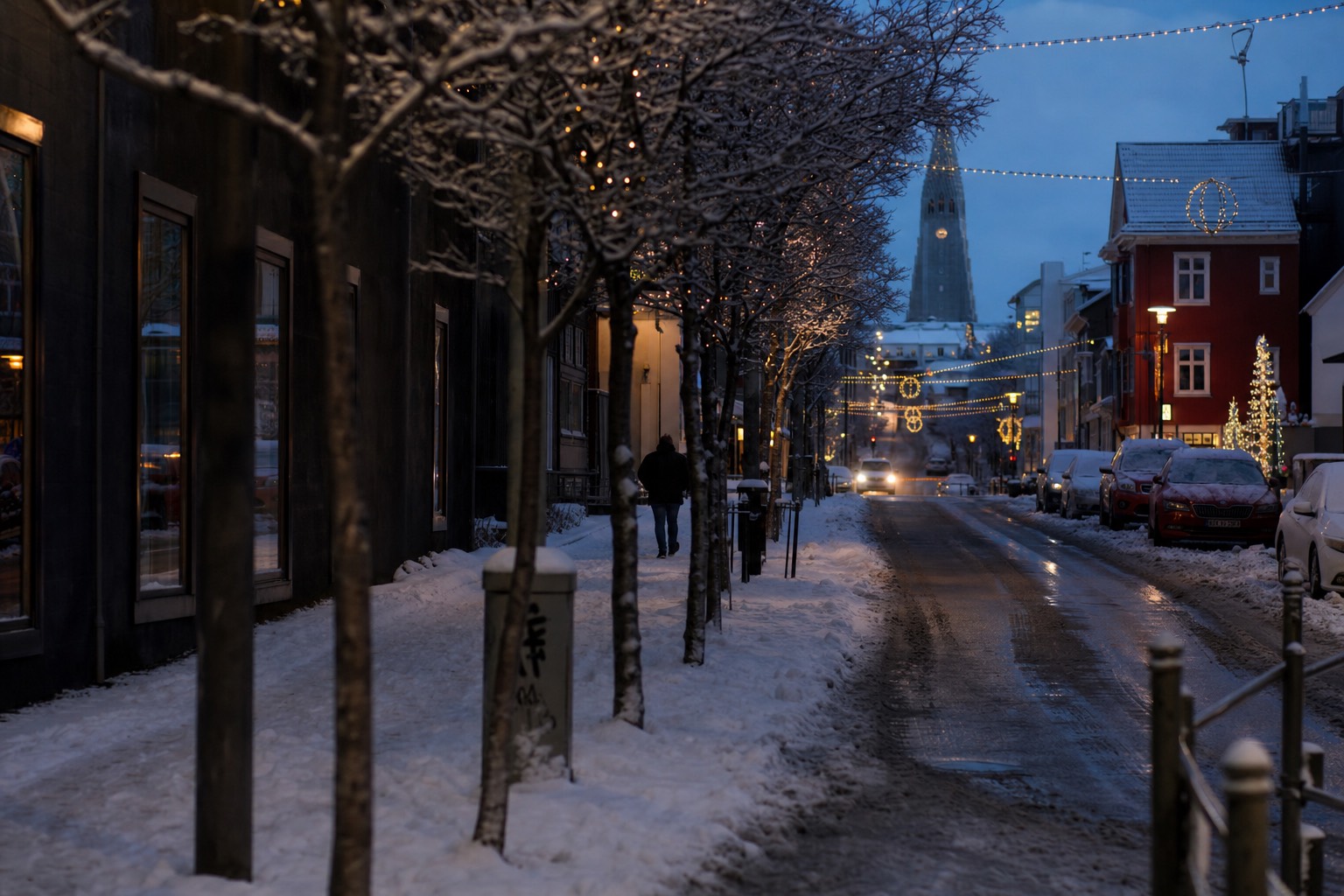
The bus pulls out of Reykjavík at half past eight and nothing happens to the sky for three hours. You sit with a coffee going cold in the cupholder, watching headlights sweep over black lava and old snow, and then somewhere east of Hveragerði the horizon turns the colour of a bruise and stays that way. That is December here. The light does not so much arrive as leak in sideways, hangs about for a few hours looking like a permanent sunrise, and drains away again while you are still finishing lunch.
TL;DR. December gives Reykjavík about four hours of daylight at the solstice and roughly twenty hours of darkness. It is not as cold as the name of the country suggests, sitting near the 0.5°C that Reykjavík averages in January. Natural ice caves are open. The aurora season is in its strongest stretch. The real constraints are the length of the day, which allows one anchor activity and no more, and Christmas and New Year pricing, which is the peak of the whole winter calendar. Book the holiday dates first and treat everything else as flexible.
How much daylight does Iceland get in December, and when does it arrive?
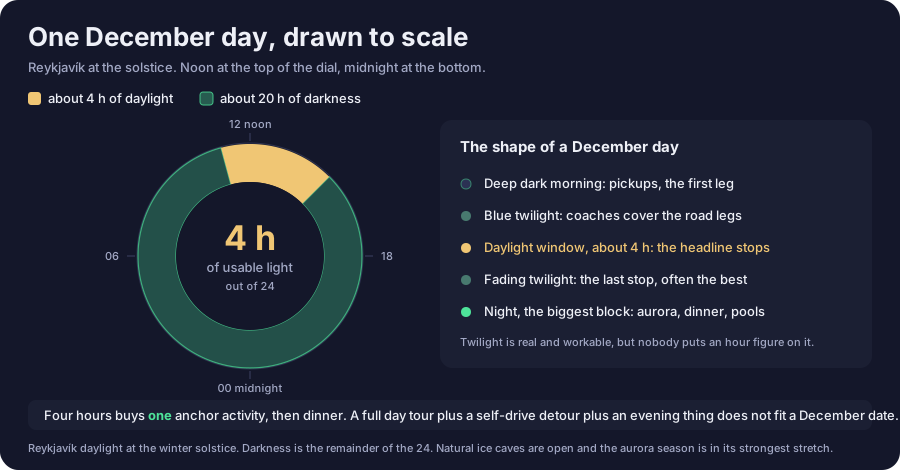
Reykjavík gets about four hours of usable daylight at the winter solstice, with roughly twenty hours of darkness wrapped around it. The sun scrapes along the horizon instead of climbing over it, so the entire short day reads as one long sunrise sliding into sunset. Plan one outdoor thing per date, not three.
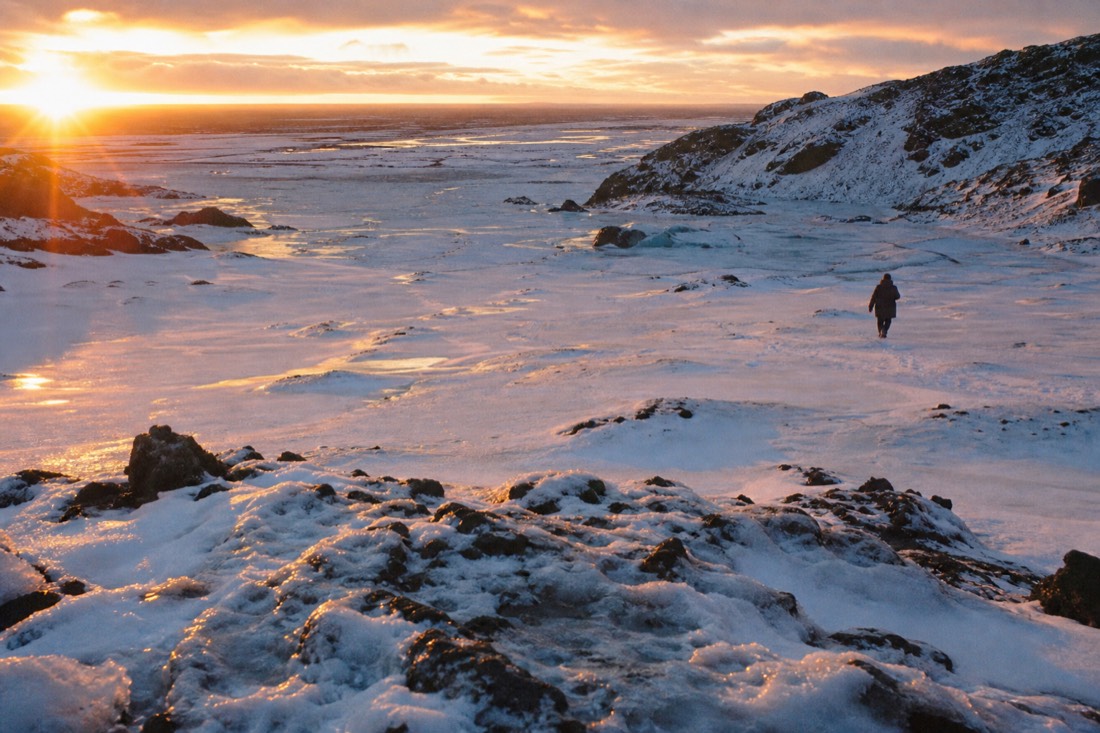
That number surprises people in both directions. Four hours sounds brutal on paper, and then you get here and find that the quality of the light is unlike anything you get further south. Because the sun never rises far, everything is lit at a low angle for the whole window: waterfalls, black beaches and the sides of buildings all get the sort of light photographers elsewhere wait until the last twenty minutes of the day to catch. You are not getting much of it, but what you get is good.
The practical effect is that a December day has a shape you do not control. Pickups happen in full dark. The first hour or two of any day tour is driving with nothing to look at beyond the headlight cone. Then the light comes up somewhere on the road, you get your stops, and by the time the coach turns for home the dark has already closed in again. Nobody advertises it this way, but on a South Coast day in December a genuine majority of your time is spent moving between things rather than looking at them.
If you want the month-by-month numbers rather than just December's, the daylight hours in an Icelandic winter guide lays out what each month gives you and how fast it changes.
Is it too cold to visit Iceland in December?
No. Reykjavík averages about 0.5°C in January and December sits close to it, which is milder than most people expect from a country with ice in its name. The cold that actually hurts is wind chill on an exposed beach or glacier front, and wind is a clothing problem rather than a reason to stay home.
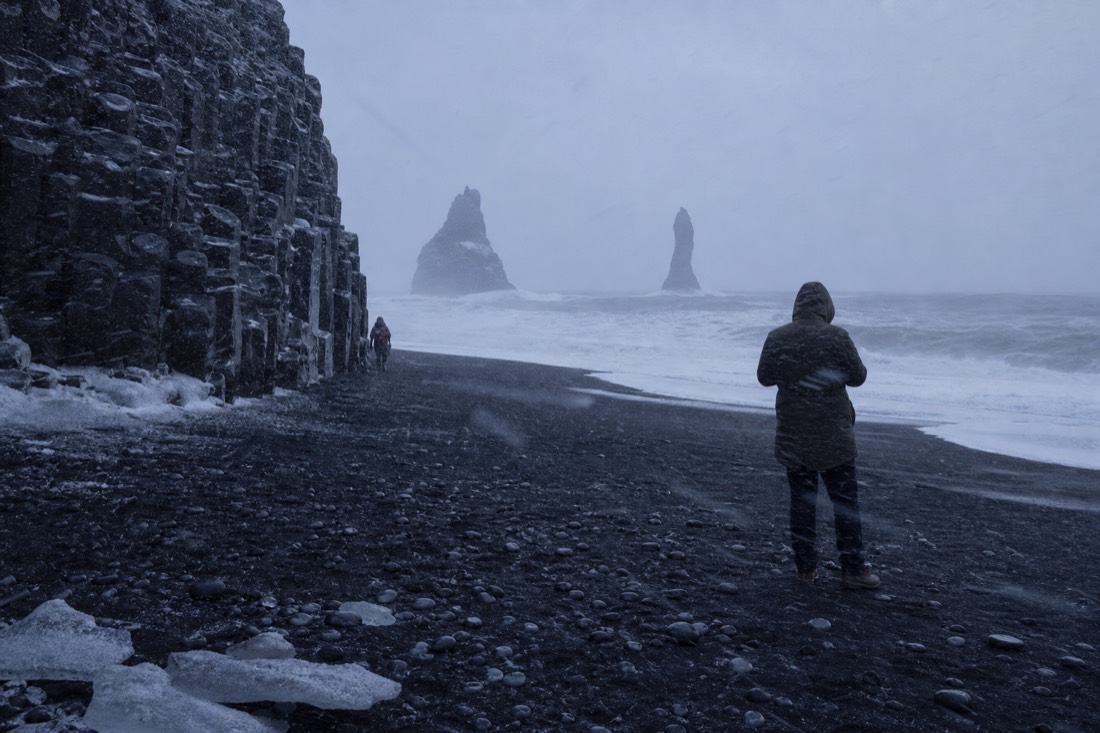
The Gulf Stream does the heavy lifting, which is why coastal Iceland in December is often milder than continental European capitals on the same date. It is common to stand on the South Coast in what a thermometer calls two degrees and feel considerably worse, because the gust coming off the water is pulling heat away faster than your jacket can hold it. That gap between the number and the sensation is the whole story of Icelandic winter clothing.
What this means in practice: nobody is turned back by temperature in December. Trips get disrupted by wind, ice on the road and horizontal rain, and the decision is made by the operator on the morning, not by you the night before. Check road.is before any drive you are making yourself, and keep an eye on safetravel.is, which is the official ICE-SAR channel and where travel plans get submitted.
The one December detail that catches visitors out is darkness plus ice underfoot. Car parks at the big sites are packed snow by mid-month, and you will be walking across them with a phone torch. Microspikes over your boots cost very little and change how a December trip feels more than any other single item you can pack.
What does four hours of light force you to cut from the plan?
Four hours of light forces you to cut the third stop, not the trip. A South Coast day still works, because most of it is driving anyway. What breaks is the itinerary that stacks a full day tour, a self-drive detour and an evening activity on the same December date. One anchor per day, then dinner.
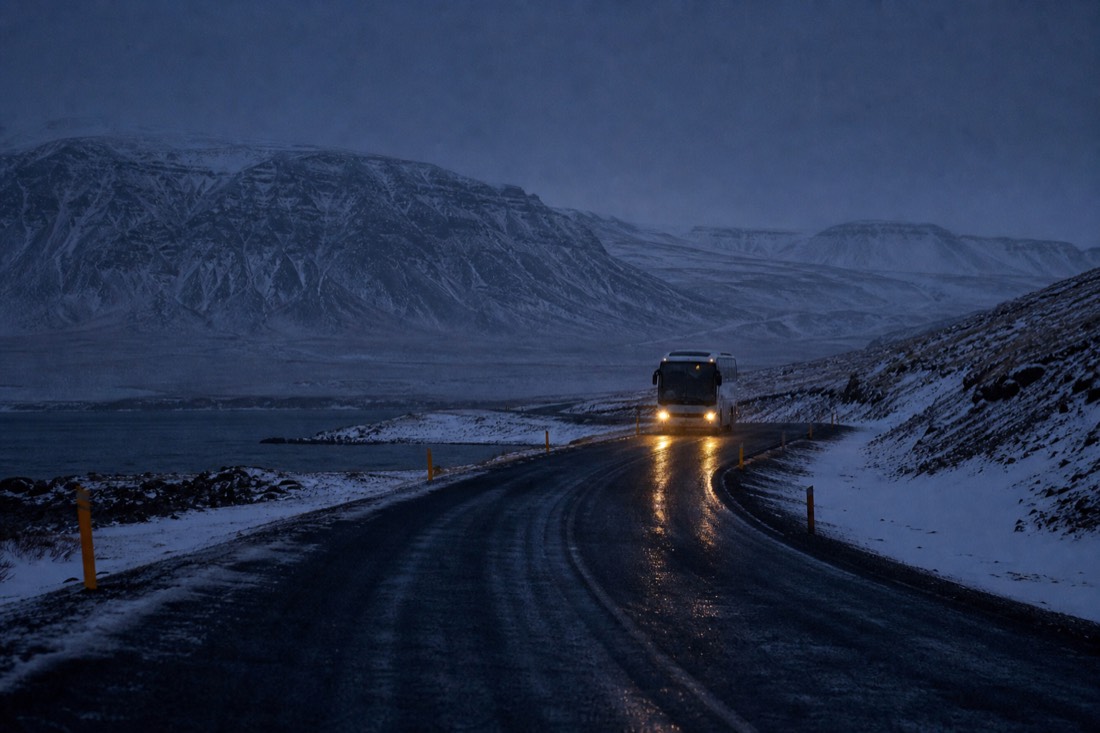
Here is the arithmetic that most December itineraries get wrong. A long day tour is not competing with the light, it is competing with your energy, and the light simply decides which parts of it you will actually see. The stops themselves are unaffected: Seljalandsfoss is lit or floodlit, the black beach at Reynisfjara is genuinely more dramatic in half-light, and an ice cave is dark whatever the surface is doing.
| Day tour | Listed length | How much falls in daylight | The December trade-off |
|---|---|---|---|
| South Coast waterfalls, black sand and glacier | 10 to 12 hours | Roughly the middle third | Both drives are in the dark; the stops still work |
| Golden Circle classic | 6.5 hours | Most of the sightseeing window | The best single use of a short December day |
| Jökulsárlón ice cave | 2.5 to 3 hours at the cave | Irrelevant, the cave is dark | The 380 km each way is the problem, not the light |
| Northern lights bus | About 4 hours | None, and that is the point | Only runs after dark, so it costs you no daylight |
| Blue Lagoon with transfers | About 4 hours | Better used after sunset | Steam and low light beats steam and no light |
Read that table as a scheduling tool. The two products that cost you nothing in daylight terms, the aurora bus and the lagoon, are the ones to push into the evening, which frees the light window for something that needs it.
The trip this maths ruins is the ambitious self-drive to the glacier lagoon and back in a day. Jökulsárlón is about 380 km from Reykjavík, roughly five hours each way, which in December means both legs in full darkness on a road you have never seen. This is the one journey where a two or three-day winter package is the sane call rather than the indulgent one, because somebody else drives and you sleep near the ice instead of three hundred kilometres from it.
If what you are really asking is whether another month would serve you better, that comparison lives in the best month to visit Iceland in winter rather than here.
What do Christmas and New Year do to prices and availability?
Christmas week and New Year are the peak of the Icelandic winter calendar. Reykjavík rooms sit at the top of their usual band, restaurants book out days ahead, and the popular departures fill earlier than they do in the rest of the month. The pressure is on those specific dates rather than on December as a whole.
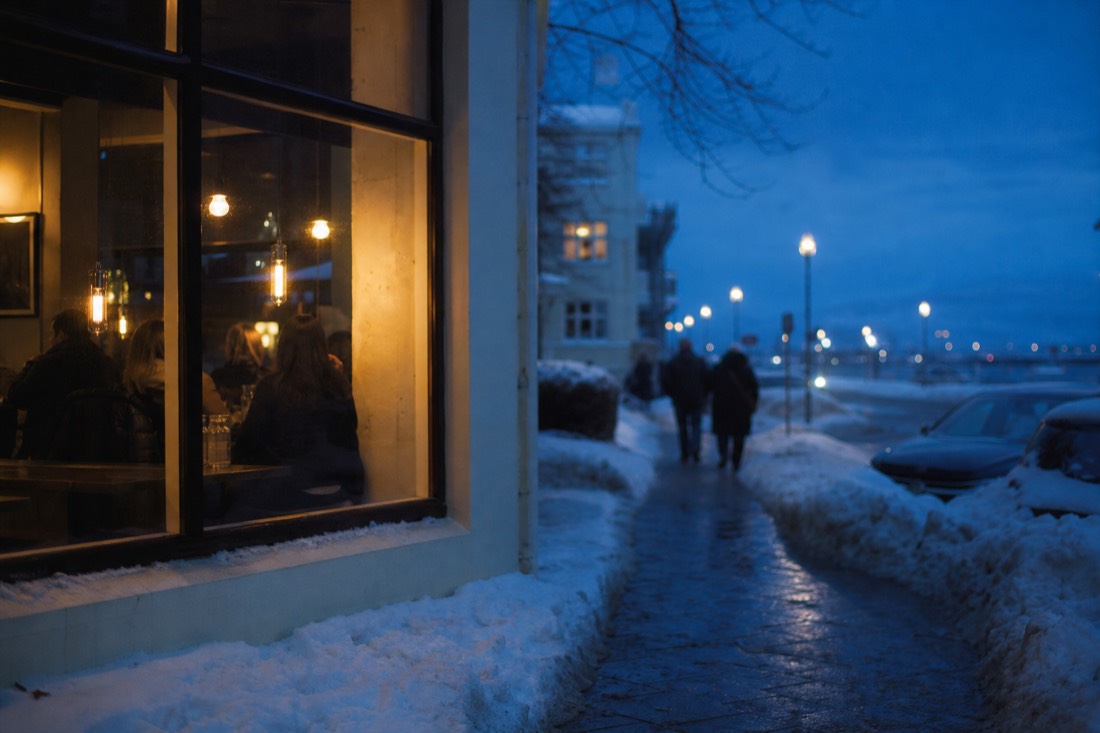
Iceland is expensive in a way that is easy to underestimate before you arrive and easy to manage once you understand where the money goes. Nothing on this list is a December-only phenomenon, but every line of it tightens over the holidays.
| What you are paying for | Approximate range in ISK | What the holiday dates change |
|---|---|---|
| Hotel night in Reykjavík | 25,000 to 40,000 | Availability goes before price does |
| Restaurant meal | 3,000 to 5,000 | Reservations needed, not optional |
| Beer | 1,200 to 1,500 | Unchanged, and still a shock |
| Petrol, per litre | 250 to 300 | Unchanged; relevant if you self-drive |
| City bus fare | 500 to 1,000 | Reduced services on the holidays themselves |
Two extra costs catch people out. Iceland reintroduced an accommodation and tourist tax in 2024, so it appears on your hotel bill rather than in the advertised rate, and a number of natural sites now charge for parking that used to be free. Neither is large. Both are annoying if you budgeted to the exact króna.
The full picture, including how much a week actually adds up to, is in what an Iceland winter trip costs, which breaks the same numbers down by trip length rather than by line item.
How do you book the days around 24 December and 1 January?
Lock the holiday-week departures and rooms before anything else, then check the operator's own calendar for 24, 25 and 31 December, because those dates are set on each listing rather than by any national rule. Every tour linked from this site cancels free up to 24 hours ahead, with a single exception at two days.
The mistake is assuming that somebody publishes a master list of what runs on Christmas Day. Nobody does. Each operator makes its own call, and the only authoritative answer is the availability calendar on the product page itself, which either offers you that date or does not. If a date is not there, it is not running, and no amount of emailing changes it.
| The decision | Where it is actually set | What to do about it |
|---|---|---|
| Does this tour run on 24, 25 or 31 December | The operator's own availability calendar | Try to select the date; absence is the answer |
| Cancellation window | The listing terms | 24 hours on everything here, except Blue Lagoon admission with transfers, which is two days |
| Room rate and tourist tax | The hotel, at booking | Book the holiday nights first, then build tours around them |
| Whether the road is drivable that morning | road.is, phone 1777 | Check the morning of, never the night before |
| Weather cancellation | The operator, on the day | Icelandic operators reschedule or refund their own cancellations |
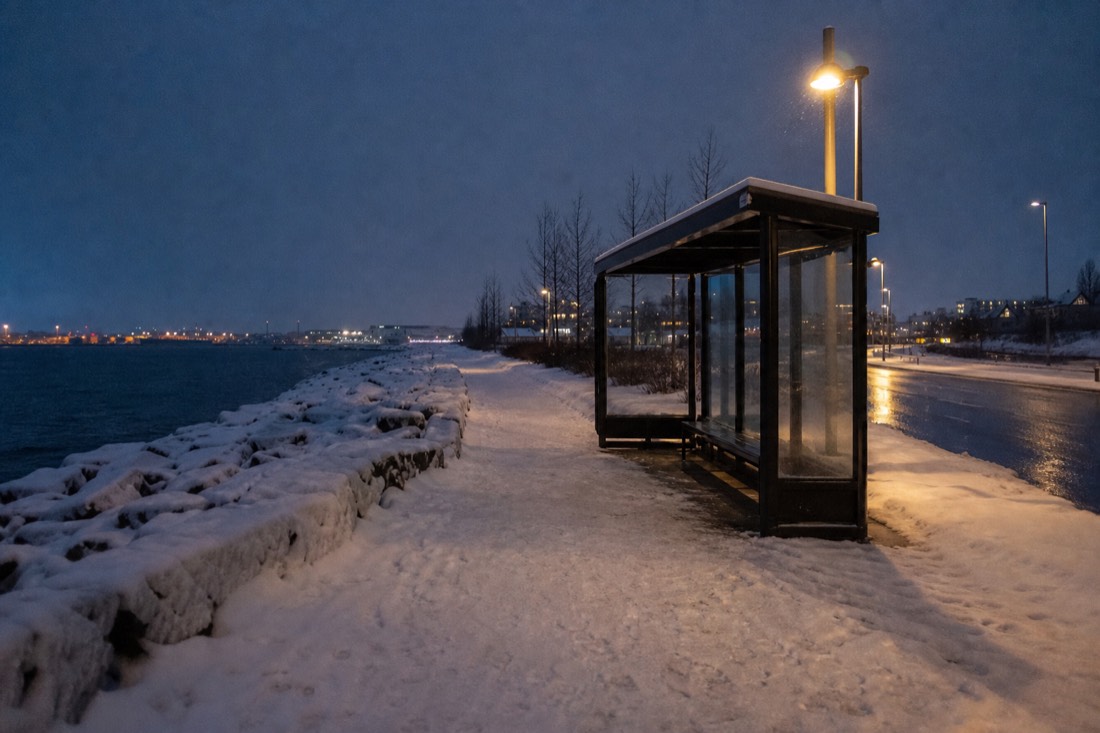
One more booking note that has nothing to do with the holidays: pickup in Reykjavík is usually from a designated bus stop rather than your hotel door, and in December you will be standing at it in the dark. Give yourself the ten minutes. The common questions about how pickups, cancellations and weather calls work are collected on the FAQ page.
Which December tours are actually worth the short day?
Two things are worth structuring a December trip around, because they only improve as the light gets worse: the aurora and the natural ice caves. Everything else you can do in any winter month. December sits inside the strongest aurora stretch, October to February, and gives you the longest nights of the year to work with.
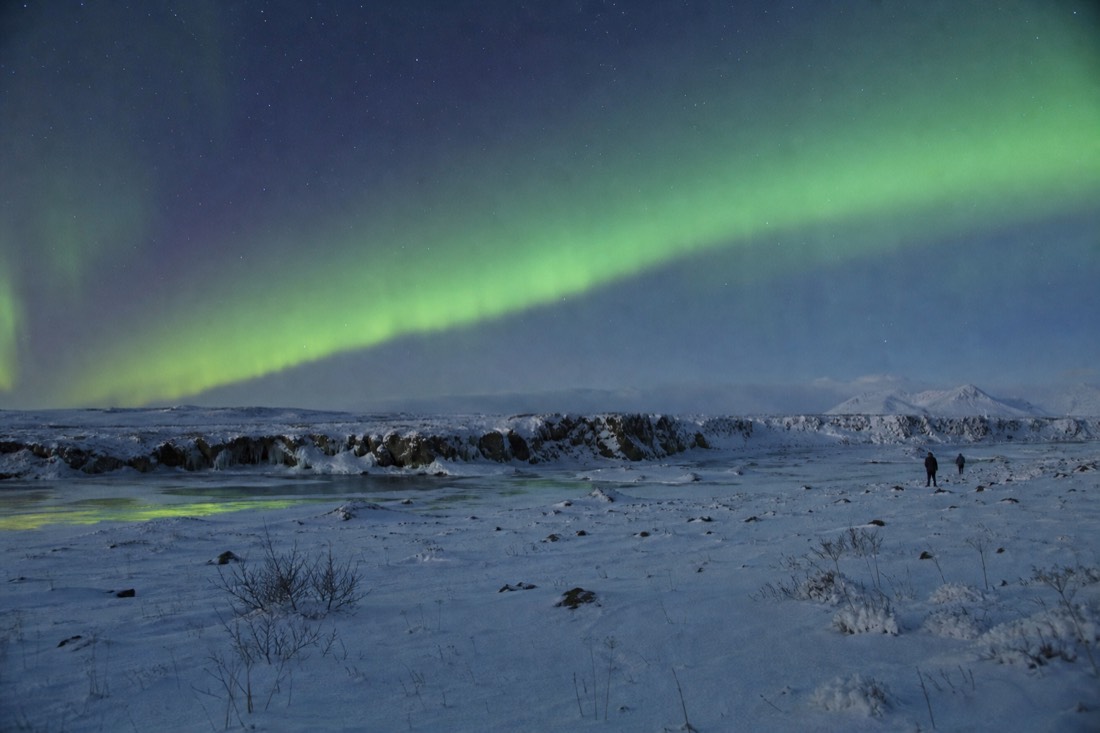
The honest framing on the northern lights never changes. You need solar activity and a gap in the cloud on the same night, and no operator, forecast or guide can promise you both. What a guided run buys you is a driver who knows where the cloud usually breaks and is willing to spend three hours chasing it, which is a genuinely different proposition from standing outside your hotel hoping. The official background on how the auroras behave is on visiticeland.com, and it is refreshingly unhyped.
So if the lights are the reason you picked December, book them early in the trip rather than on your last night, and book the one with the retry: the northern lights tours page compares the four we track, and the most-reviewed of them, at 4.3 across 14,847 GetYourGuide reviews with a free retry night written into the listing terms, is available to check for your dates on GetYourGuide.
For a sense of what those four hours in a coach actually feel like before you commit, what a northern lights tour is actually like is the unvarnished version, including the waiting.
The other December-specific thing is the natural ice caves, open roughly November to March because they are carved by meltwater and refreeze each cold season. December caves are real and often spectacular, though they are earlier in the freeze than January's, so which caves are being run changes year to year. The Vatnajökull ice cave tours page sets out which cave each product actually visits, which matters more than the photography on the listing.
What actually closes over the Icelandic Christmas, and when?
The country slows from the afternoon of 24 December and stays quiet through the 25th and 26th, because the celebration itself happens on Christmas Eve. Expect reduced transport, shorter museum hours and restaurants running on booking only. Nothing here is set by a single national rule, so every venue publishes its own hours.
The shape of the Icelandic holiday is different enough from the British or American version that people arrive misaligned. Christmas begins in the evening of the 24th, traditionally when the church bells ring at six, and that is when the meal happens and the presents are opened. By then the city has already emptied. Anyone expecting the 24th to be a full shopping day with a big evening out has the timings exactly backwards.
| Date | What it is | What to assume about opening | The planning move |
|---|---|---|---|
| 23 December | Þorláksmessa, a late-shopping night with its own fermented-skate tradition | Shops and the city centre unusually lively, late | Do your buying and your wandering on this evening |
| 24 December, morning | Aðfangadagur, before the celebration | Normal but winding down fast | Anything you need from a shop, get it early |
| 24 December, afternoon and evening | The main Christmas celebration | Assume closed, restaurants on set menus and pre-booking | Have your dinner reserved days ahead or eat where you sleep |
| 25 December | Jóladagur | The quietest day of the Icelandic year | Plan an outdoor day, a pool, or nothing at all |
| 26 December | Annar í jólum, the second day | Partially back, still reduced | Museums and pools are the safe bet |
| 31 December | Gamlárskvöld, bonfires then fireworks | Daytime normal, evening entirely given over to it | Be outdoors around midnight, wherever you are |
| 1 January | Nýársdagur | Reduced again, and a late-starting city | Do not schedule an early pickup |
| 6 January | Þrettándinn, bonfires and the last Yule Lad | Normal | A free evening event if you are still here |
Two practical notes that catch people. The geothermal pools, which are the single best thing to do on a closed day in Iceland, generally keep some hours across the holidays but on a shortened timetable, so check the individual pool rather than assuming. And the tours themselves do not follow the shops: each operator publishes its own availability for the 24th, 25th and 31st on its own calendar, which is the only authoritative answer, as covered further up this page.
The satirical television review that goes out late on New Year's Eve is worth knowing about even if you will not understand a word of it, because it empties the streets completely for the length of the broadcast and then fills them again for midnight. If you are outside during it and wondering where everybody went, that is where. What follows is the fireworks, funded by the volunteer rescue teams whose real job is on safetravel.is for the rest of the year.
What does a December day actually look like, hour by hour?
Roughly: dark until late morning, a long low light through the middle of the day, and dark again by mid-afternoon. Around the solstice the usable window is about four hours, centred near midday, and it shifts week by week. Build the day around that block and put everything else in the dark on purpose.
The reason a worked example helps here more than in any other month is that December inverts the normal instinct. Elsewhere you get up early to make the most of the day. In Reykjavík in late December, getting up at six buys you five hours of darkness and a tired afternoon. The light is the scarce resource, not the hours.
| Roughly when | What the sky is doing | What belongs here | What does not |
|---|---|---|---|
| 07:00 to 09:00 | Full dark | Breakfast, pickup, the first leg of a long drive | Anything you want to look at |
| 09:00 to 11:00 | The sky lightening toward a long dawn | Driving, or a museum, or the pool | Your one big outdoor stop |
| 11:00 to 15:00 | The usable window, low and golden throughout | The waterfall, the beach, the glacier front, the photographs | Sitting in a café |
| 15:00 to 17:00 | Draining away into a long dusk | The return drive, the shops, a swim | Starting something outdoors |
| 17:00 to 20:00 | Dark, city lit | Dinner, drying out, an hour horizontal | Nothing that needs daylight |
| 20:00 onwards | Dark for the rest of the night | Aurora pickup, or a lagoon in the steam and the dark | Sleep, if the sky is clear |
The exact clock times move across the month, so treat the block as a shape rather than a timetable, and expect the last week of December to be tighter than the first. What does not move is the ordering logic: daylight goes to the thing that needs to be seen, darkness goes to the things that are better in the dark or indifferent to it.
That last row is where December quietly beats every other month. The northern lights runs and the Blue Lagoon transfers both cost you nothing in daylight terms, and an ice cave is lit by torch whatever the sky is doing. Line those up in the evenings and December stops feeling like a month with four hours in it and starts feeling like a month with two working shifts. The bigger question of how many days that arithmetic needs is handled in how many days you need for an Iceland winter trip.
What is an Icelandic Christmas actually like, and who are the Yule Lads?
Icelandic Christmas turns on Christmas Eve rather than the 25th, with the meal and the presents on the evening of the 24th. The country's own Father Christmas figures are the thirteen Yule Lads, who come down from the mountains one a night through the run-up, leaving something small in a child's shoe on the windowsill.
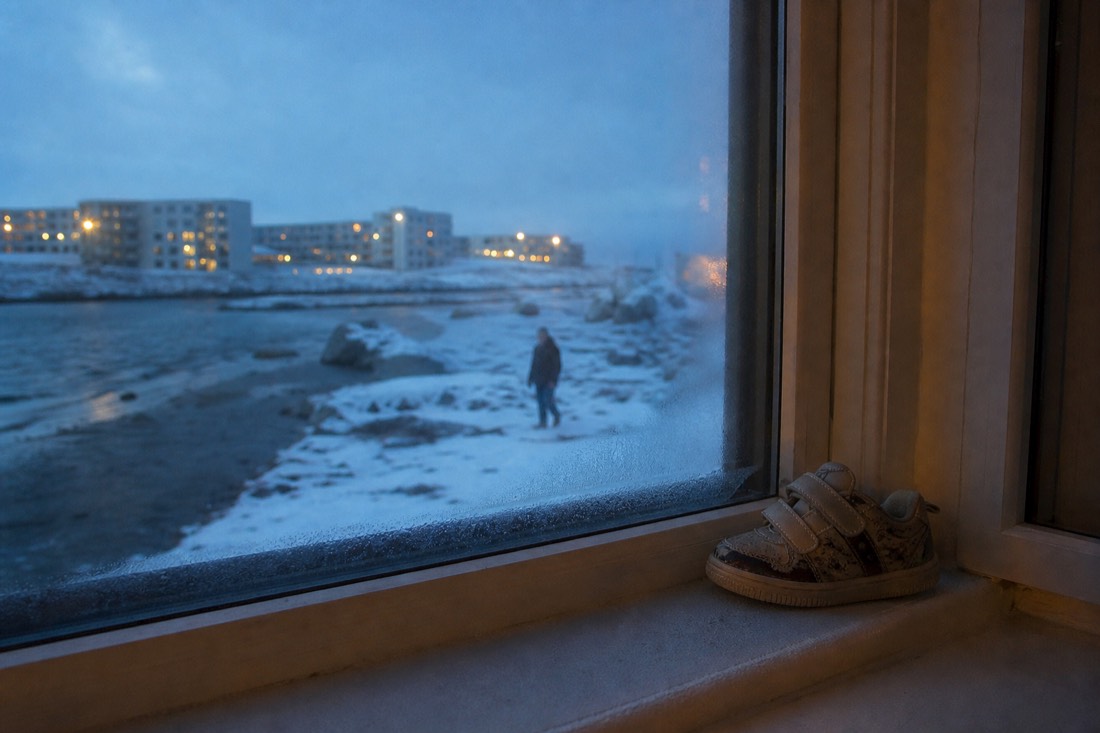
They are not a tourist-board invention. The Yule Lads are old, and by folklore descent they are the sons of a mountain troll, which tells you something about the local temperament around midwinter. Each one has a job and a name to match it: door-slamming, sausage-stealing, spoon-licking, window-peeping. Children put a shoe in the window and get a small gift for good behaviour or a potato for bad, and the whole sequence winds up on Christmas Eve.
What this means for a visitor is mostly practical. The afternoon of the 24th is when the city goes quiet, because Icelanders are at home eating, and the 25th is subdued in a way that a British or American Christmas is not, simply because the main event already happened. Museums, shops and restaurants set their own reduced hours across the three days, and there is no substitute for checking each one directly.
New Year is the opposite. Reykjavík on the 31st has a reputation for private fireworks on a scale that no municipality would sanction elsewhere, sold by volunteer rescue teams as their main fundraiser of the year. You do not need a ticket to anything. You need a viewpoint, warm layers and a tolerance for noise, and then you are standing in the middle of one of the loudest, most cheerfully lawless midnights in Europe.
Who are the thirteen Yule Lads, and what night does each one arrive?
They come down one a night from 12 December, ending on the 24th, and leave in the same order finishing on 6 January. Each has a name describing what he steals or ruins, from door-slamming to skyr-eating. Children leave a shoe on the windowsill and get a small gift, or a raw potato if they have earned one.
The Lads are not a marketing invention and they are not thirteen versions of Father Christmas. They are the sons of Grýla, a mountain troll with a documented appetite for badly behaved children, and her husband Leppalúði. In the older stories they are frightening rather than charming, and the softening into thirteen mischievous uncles in red is relatively recent. The family also keeps a cat, Jólakötturinn, which is said to eat anyone who does not receive new clothes before Christmas, which is either a charming folk custom or the most effective clothing-gift marketing in European history.
| Night he arrives | Icelandic name | In English | What he is after |
|---|---|---|---|
| 12 December | Stekkjarstaur | Sheep-Cote Clod | The sheep, on stiff peg legs that make him bad at it |
| 13 December | Giljagaur | Gully Gawk | The froth off the milk pails |
| 14 December | Stúfur | Stubby | Pans, for whatever is stuck to them |
| 15 December | Þvörusleikir | Spoon-Licker | The wooden stirring spoon |
| 16 December | Pottaskefill | Pot-Scraper | What is left in the cooking pot |
| 17 December | Askasleikir | Bowl-Licker | The wooden food bowls, taken from under the bed |
| 18 December | Hurðaskellir | Door-Slammer | Nothing at all. He just slams doors at night |
| 19 December | Skyrgámur | Skyr-Gobbler | The skyr, all of it |
| 20 December | Bjúgnakrækir | Sausage-Swiper | Smoked sausages from the rafters |
| 21 December | Gluggagægir | Window-Peeper | Anything he can see through your window |
| 22 December | Gáttaþefur | Doorway-Sniffer | Fresh baking, tracked down with an enormous nose |
| 23 December | Ketkrókur | Meat-Hook | Smoked meat, fished down through the roof on a hook |
| 24 December | Kertasníkir | Candle-Beggar | Children's candles, which were once made of edible tallow |
The shoe on the windowsill is the part a visiting family can actually join in with, and Icelandic hotels are entirely used to it. Thirteen nights, thirteen small things, and the potato threat held in reserve. The final Lad leaves on 6 January, a date called Þrettándinn, the Thirteenth, which is marked with bonfires and a general understanding that the elves are out and about. It is the real end of the Icelandic Christmas rather than the 25th.
None of this needs a ticket and none of it can be booked, which makes it a useful counterweight to the way a December trip otherwise runs on availability calendars. If you are travelling with children, the folklore does a lot of work on a dark afternoon, and the rest of the practical side is covered in Iceland with kids in winter.
From Reykjavík: Northern Lights Bus Tour with Hot Cocoa
Lock the holiday-week rooms first, then the aurora night: December gives the lights their longest window of the year, and the most-reviewed run cancels free up to 24 hours out while its retry clause covers the cloudy ones.
4 hours · English
Check travel dates with GetYourGuide below.
None of these experiences matches that choice. Adjust your preference or reset to the general recommendation.
Compare Options And Plan Your Trip
- Aurora on the longest nights
- Twenty hours of dark and a free retry on the most-reviewed run.
- The natural ice cave
- Open in December, dark whatever the sky is doing.
- A festive city plus a lagoon
- Timed entry with transfers; the two-day cancellation window is on the listing.
- Short plan-B days
- The half-day circle sized to a four-hour window.
Before Booking