Best Time to See the Northern Lights in Iceland: 2026/27
Aurora season runs late August to late April and peaks October to February. Why cloud beats darkness, what Kp really means, and how many nights to book.
 Written with Björn Einarsson, Icelandic guide & winter tour specialist
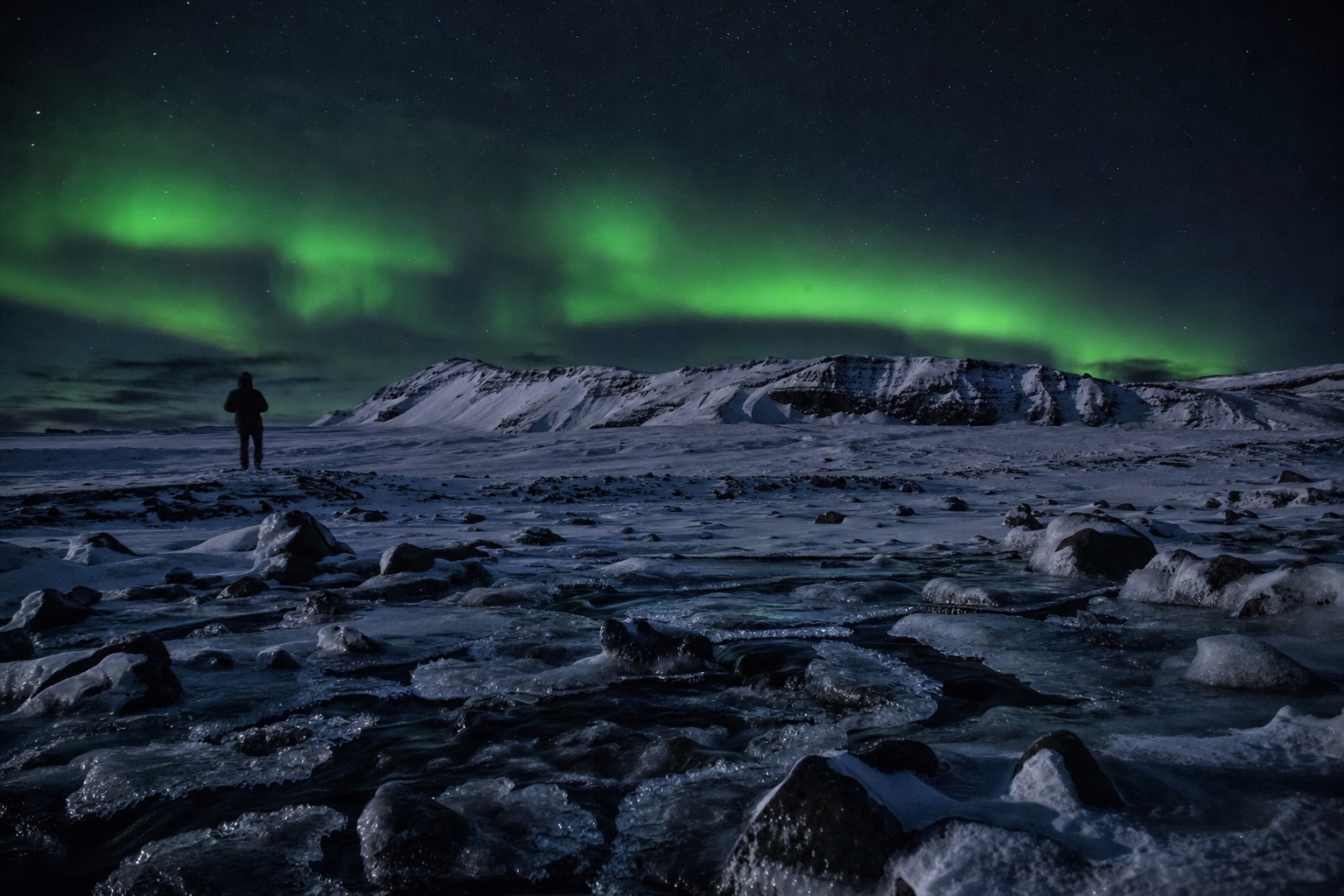
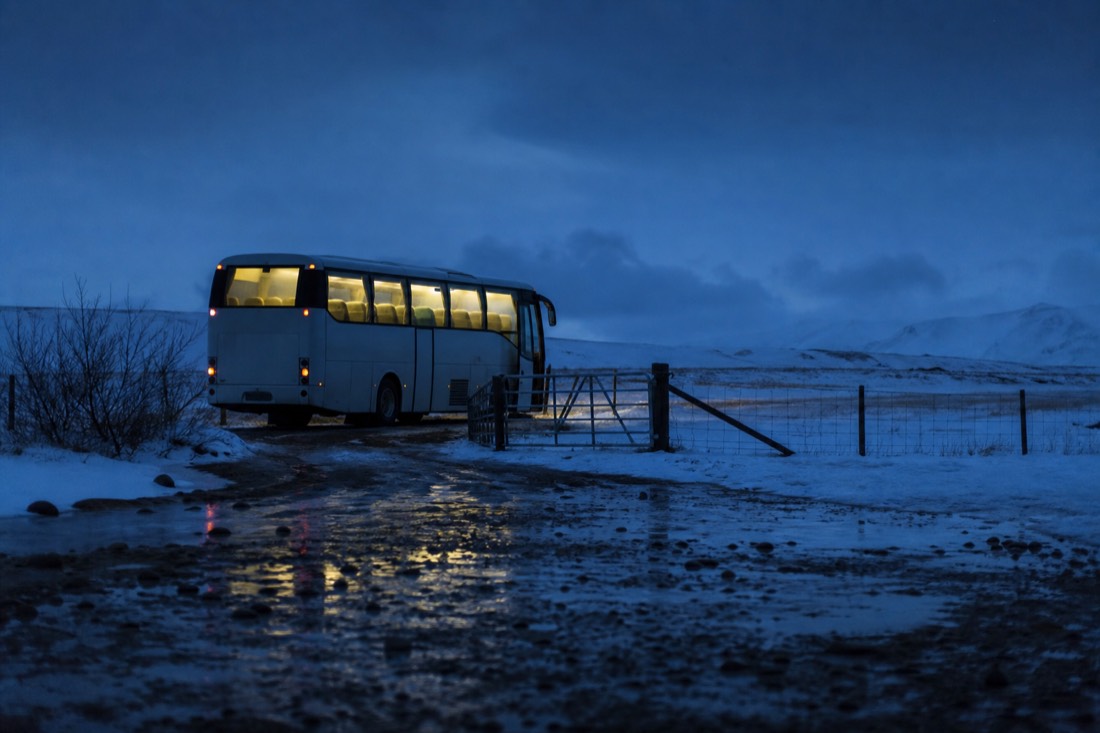
The bus stops in a lay-by somewhere past Þingvellir, the engine goes quiet, and forty people get out and look up at nothing. That is most of an aurora tour. Then somebody says something in a language you do not speak, everyone turns, and a grey smear that looked like cloud ten minutes ago has started to move.
TL;DR: The season runs late August to late April and is strongest October to February. The month matters less than the number of nights you give yourself, and the hour matters less than either. Cloud, not darkness, is what stops people seeing anything. Book your first night early in the trip and keep the rest of the week as insurance, because a free retry is worthless on your last night.
What is the best time to see the northern lights in Iceland?
Aurora season runs from late August to late April, at its strongest October through February. Within that, the best time is early in a trip of at least three or four nights, on a night with a gap in the cloud. You need solar activity and clear sky together, which is why nobody honest guarantees it.
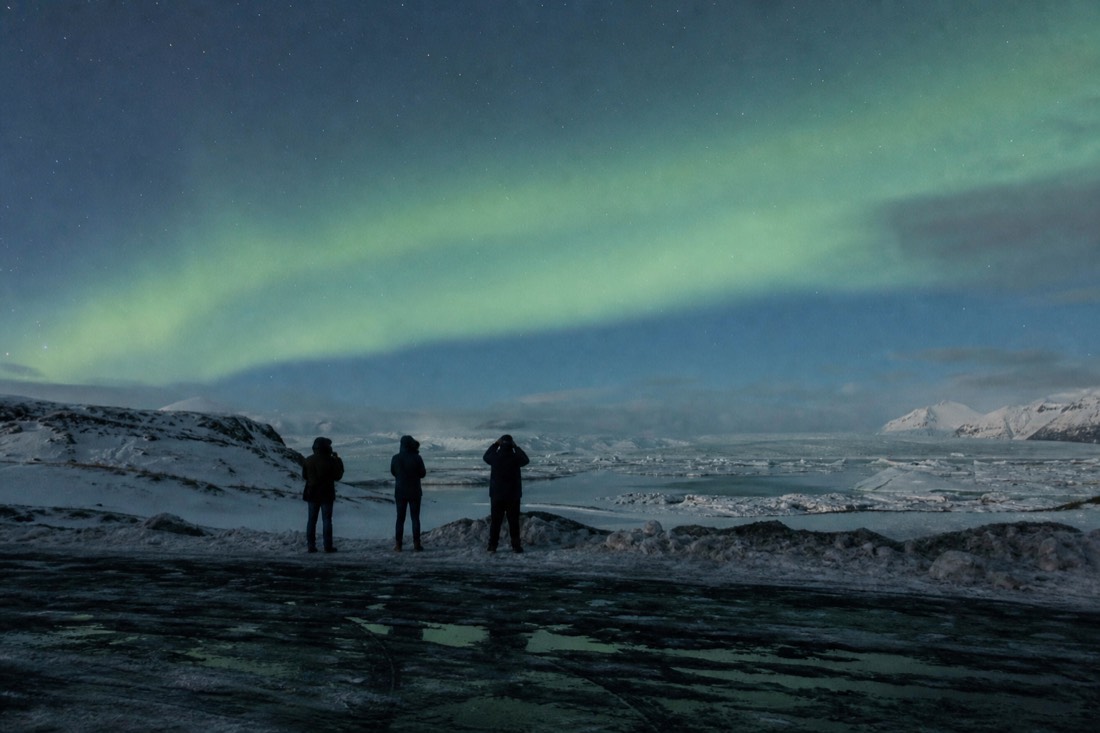
The mistake in almost every planning article is treating this as a single-variable problem. People pick the darkest month, book one tour, and go home having seen nothing but a car park. Meanwhile someone who came in late March with five loose evenings saw the lights twice.
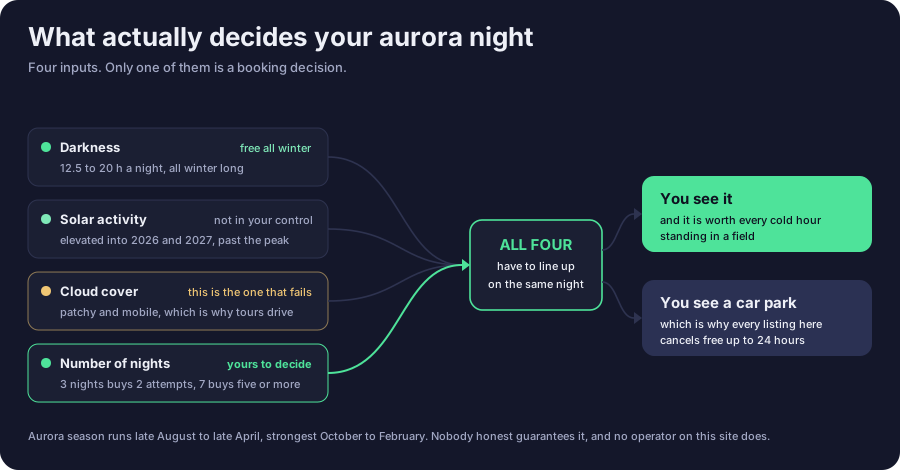
Three things have to line up: darkness, activity above, and a hole in the weather. Iceland hands you the first for free all winter. The second is broadly out of your hands and mostly fine during the strong months. The third is the one that fails, and the only defence against it is time, which means nights.
So the useful reframing is this. Do not ask which month gives the best chance, ask how many attempts you are buying. Four nights in February beats two nights in December, every time. That is also why the orientation guide to an Icelandic winter keeps insisting you plan around weather instead of around a wish list.
What is the best month to see the northern lights in Iceland?
October to February, with December and January giving the longest darkness and February the most workable evenings. December has about 20 hours of darkness a day, February about 15.5, and both are far more than any tour needs. The month sets your window; the weather still decides.
| Month | Daylight in Reykjavík | Roughly this much darkness | Aurora season status | Practical note |
|---|---|---|---|---|
| November | about 6.5 h | about 17.5 h | Strong | Season settled, roads still reasonable |
| December | about 4 h | about 20 h | Strongest stretch | Longest window, hardest daytime schedule |
| January | about 5.5 h | about 18.5 h | Strongest stretch | Deepest winter, quietest of the peak months |
| February | about 8.5 h | about 15.5 h | Still strong | Enough light for a full day out and a late tour |
| March | about 11.5 h | about 12.5 h | Fading toward the late April end | Still plenty of dark, better driving |
Darkness figures are simply what is left of the 24 hours, so treat them as the size of your window rather than the size of your chance.
Notice how little separates the months in practical terms. Even March's 12.5 hours of darkness is roughly three times the length of a standard four-hour tour. Nobody has ever missed the aurora in Iceland because the night was not long enough. If you are choosing dates for the whole trip rather than the lights alone, the month-by-month verdict weighs daylight, ice caves and cost together, and the specific case for the deepest month is set out in can you see the northern lights in Iceland in January.
Will aurora be strong in 2026?
Activity should stay elevated. The current solar maximum peaked around 2024 and 2025, and raised activity is expected to continue into 2026 and 2027. That is a real advantage over the quiet years of the cycle, but it is not a guarantee of anything on your particular night, and anyone selling you a once-in-a-decade season is overselling.
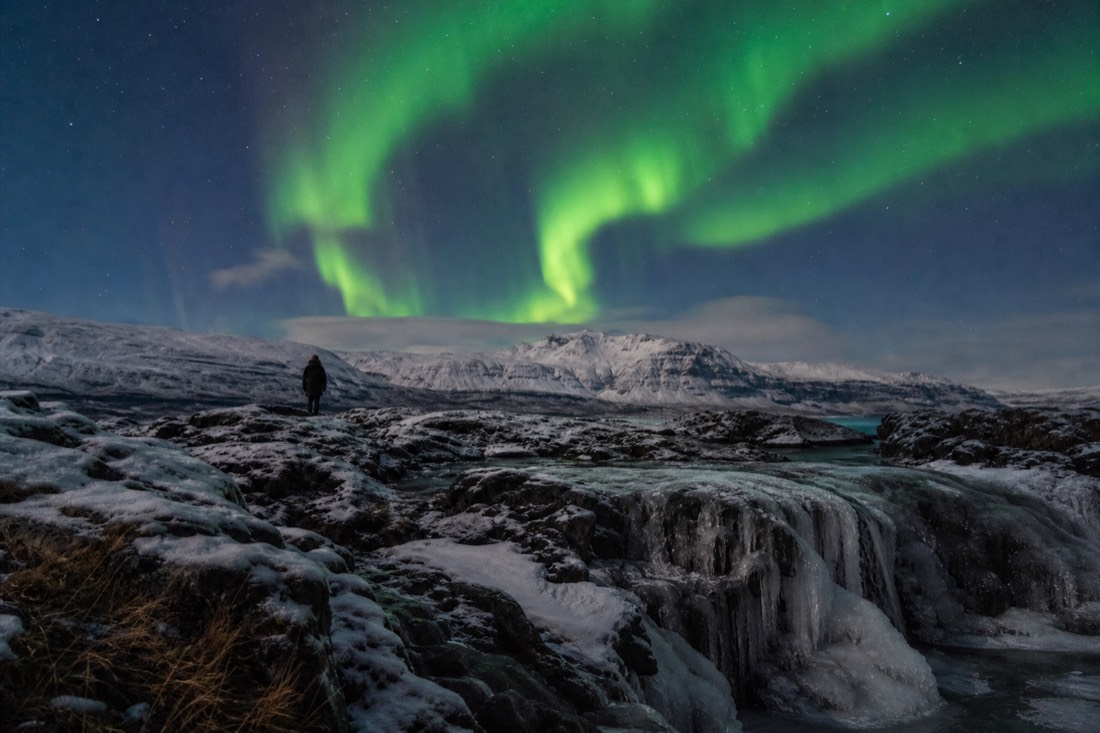
The solar cycle runs on roughly an eleven-year rhythm, and we are on the far side of its peak rather than climbing toward it. In practice that means the background level of activity through 2026 and 2027 sits well above where it was at the start of the decade. Good news, honestly delivered.
What it does not mean is that the sky performs on schedule. Solar activity varies day to day, and a strong year with a bad week of weather still shows you nothing. I have watched a genuinely active night pass unseen over a solid deck of cloud, and I have seen a modest one look extraordinary because the air happened to be clear all the way to the horizon.
Treat the solar cycle as a small tailwind rather than a reason to book fewer nights. The planning advice does not change: several attempts, early in the trip, with flexibility. Visit Iceland's aurora page is the official reference and is refreshingly free of hype.
Why is cloud the real enemy, not darkness?
Because the aurora sits far above the weather. A strong display behind an overcast sky is invisible, while a weak one under clear air is obvious. Icelandic cloud moves fast and unevenly, which is the entire reason guided tours drive: they chase the gap, sometimes for two hours in the wrong direction.
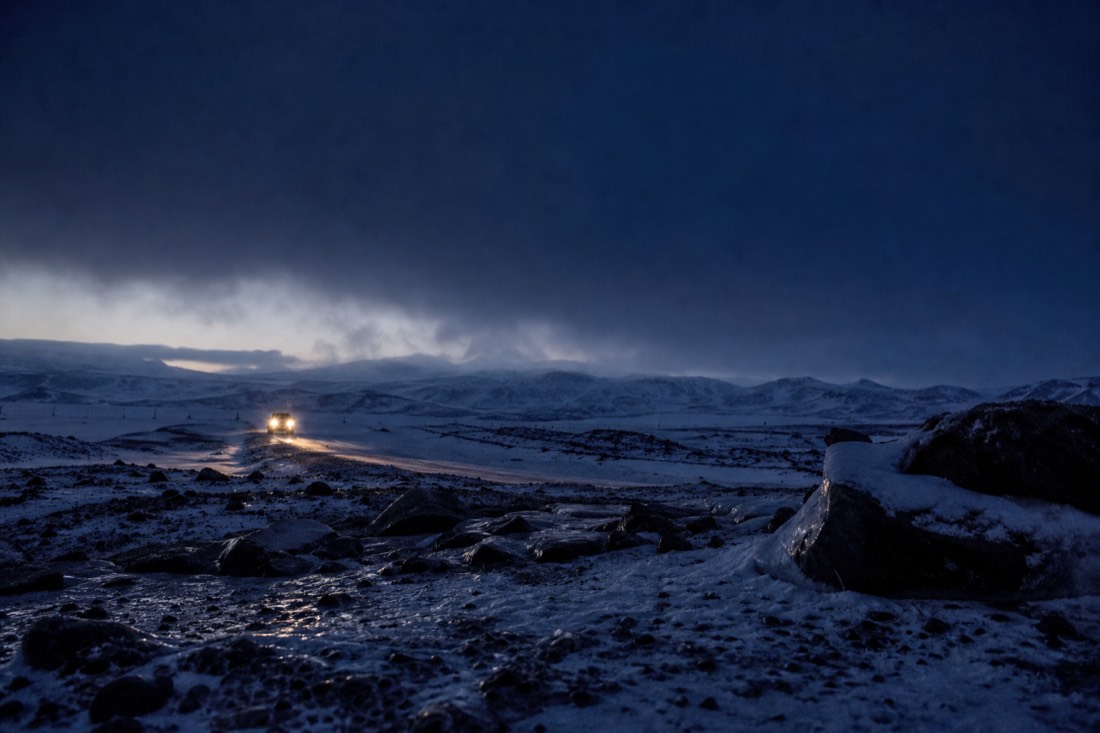
This is the single most useful thing to understand before you book. Aurora forms roughly a hundred kilometres up, far above any weather system, so the question is never whether the lights are happening. The question is whether anything is in the way.
Iceland's cloud is patchy and mobile, and the island is small enough to drive out from under it. A tour leaving Reykjavík at nine may end up on the south coast, up near Þingvellir or halfway to Borgarnes, depending on where the forecast shows a break. That mobility is most of what you are paying for, and it is the reason a guided run usually outperforms standing outside your hotel hoping.
If you are driving yourself to chase clear sky, do it with the same care you would give any winter night drive: check the routes on road.is before you leave, and leave a travel plan on safetravel.is if you are heading somewhere remote. Cold is not the danger on an aurora night. Ice on an unlit road is.
What does the Kp number actually mean, and should you chase it?
Kp is a planetary index reported in three-hour blocks, describing global geomagnetic disturbance on a 0 to 9 scale. It is not an Iceland forecast. Iceland sits under the auroral oval, so modest readings are often enough here, while a high number under thick cloud shows you precisely nothing.
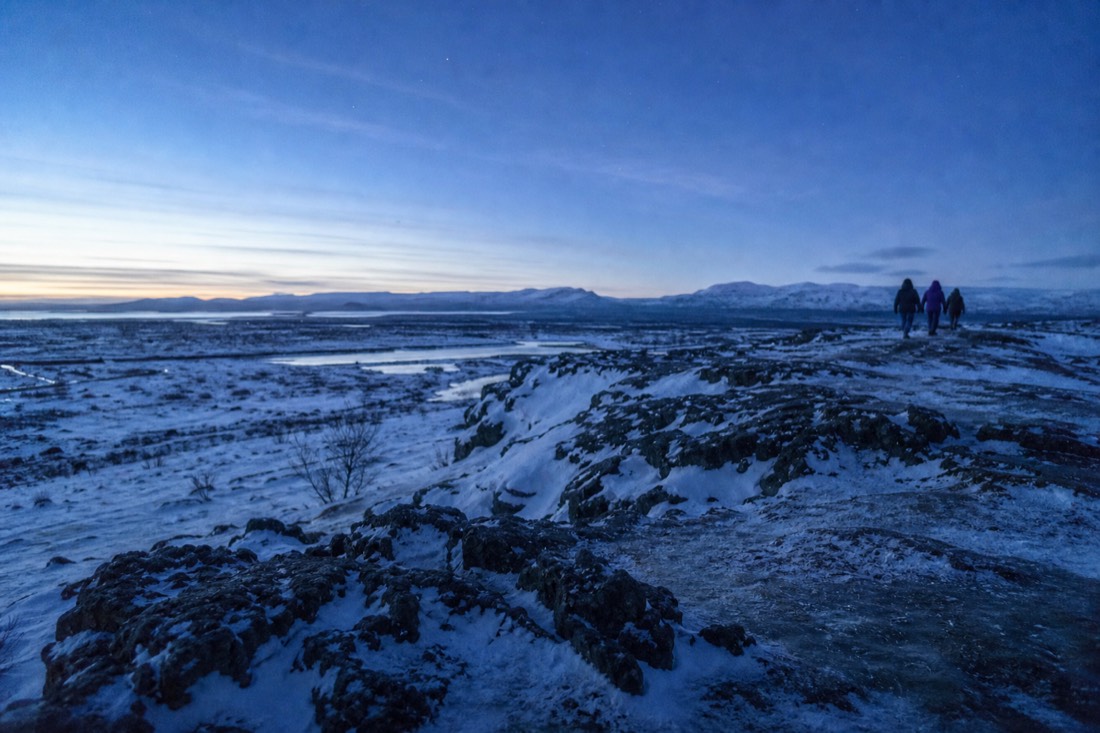
People arrive with the number bookmarked and treat it as a verdict. It is closer to a background reading. Because the country lies beneath the oval where aurora already occurs, a quiet Kp can still produce a visible arc on a clear night, and there is a particular kind of disappointment reserved for the traveller who cancelled on a low reading and then heard what everyone else saw.
The other half of the problem is timing. A three-hour planetary average smooths out exactly the sort of short burst that makes a tour, so the index tells you about the last few hours across the whole planet rather than about your field in the next twenty minutes.
Use it as one input, weighted below the cloud forecast. Then trust the operator, whose driver has spent the afternoon looking at both and has a strong professional interest in finding you something. A first-hand account of how that decision-making plays out from the passenger seat is in what a northern lights tour is actually like.
How many nights do you need to book?
Give yourself at least three nights, ideally four or more, and book your first attempt for early in the trip rather than the end. Every extra night is another roll of the weather dice. Two-night trips see the lights sometimes, and go home empty sometimes, and there is no technique that changes that.
| Nights in Iceland | Realistic aurora attempts | What to book | Risk of going home empty |
|---|---|---|---|
| 2 nights | 1, maybe 2 | Book night one immediately | High, and nothing fixes it |
| 3 nights | 2 | Book night one, hold night two | Moderate |
| 4 to 5 nights | 3 or more | Book night one, keep two evenings free | Meaningfully lower |
| 6 to 7 nights | 4 or more | Book early, and consider a night out east | Lowest available |
The rule every Icelandic guide repeats is the one that sounds counterintuitive: book your aurora tour for the first night you are in the country. Not the last, not the middle. If the sky delivers, you have the rest of the week for everything else with no unfinished business. If it does not, you still have nights in hand, and the free retry night on the bus tour actually means something.
So if the lights are why you are flying, take the highest-volume run on your first evening: the northern lights tours page compares the four bookable options side by side, and the most-reviewed of them at 4.3 across 14,847 GetYourGuide reviews is available to check for your dates on GetYourGuide.
There is one geography trick worth knowing. Reykjavík's weather is not Iceland's weather, and a night spent out east near Jökulsárlón, about 380 km away, is a completely separate roll of the dice under a different sky. That is a quiet argument for a two or three-day winter package: you get aurora attempts from two different weather systems instead of four attempts from one.
How to spot the northern lights tonight?
Get away from streetlights, give your eyes twenty minutes to adjust, and look north. Early aurora looks like a static grey band, not green curtains: colour arrives with intensity, and your camera will see it before you do. Check the cloud forecast first, because that is what decides the night.
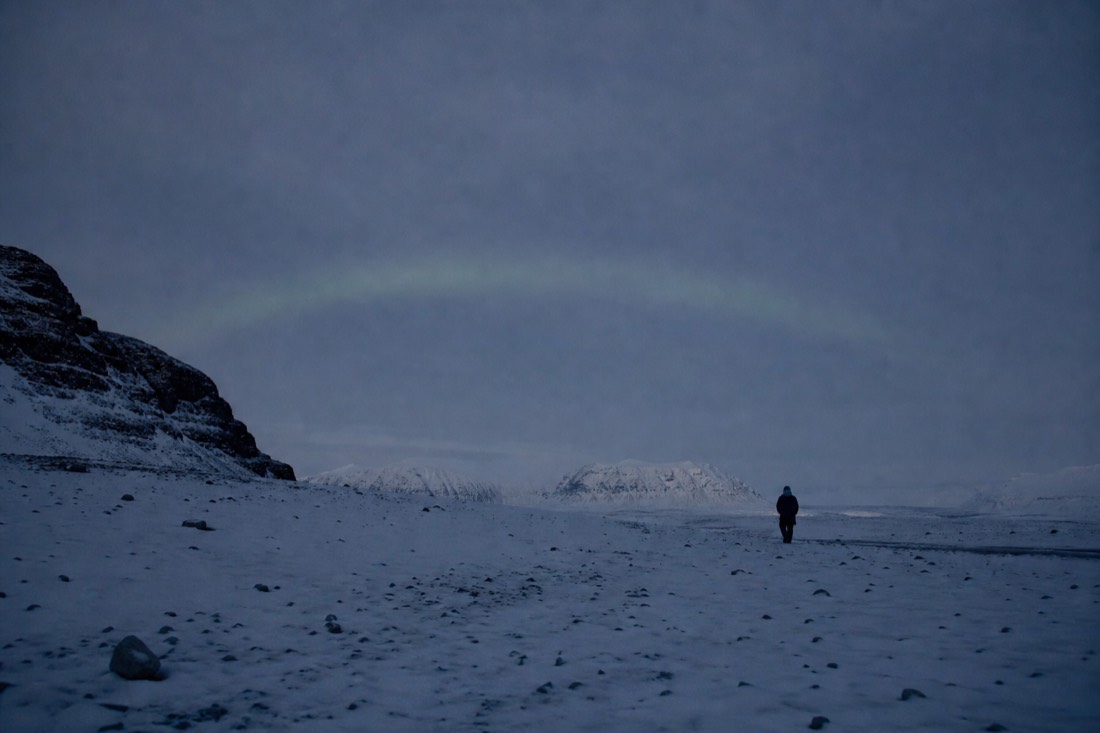
The most common way to miss the lights is not knowing what you are looking at. A faint arc reads as a pale, motionless streak of cloud that refuses to drift with the rest of the sky. That is your cue. Point a phone at it on a three-second night exposure, and if it comes back green, stay put.
Dark adaptation is worth taking seriously, and it is undone in a second by a phone screen at full brightness. Turn it down before you get off the bus. Then be patient in a way that is genuinely uncomfortable at 0.5°C in an Icelandic wind, which is why the layer that matters most on an aurora night is the windproof one, not the thickest one.
Timing within the night is the part people overthink. The window is enormous, most tours run somewhere between about nine and one, and displays can arrive at any point in it. Waiting up until three because a forum told you midnight is magic mostly costs you the next day.
What actually causes the northern lights, and what do the shapes mean?
Charged particles streaming off the sun collide with gas high in the atmosphere and make it glow. That happens far above the weather. On the ground the display arrives in recognisable stages rather than all at once, and knowing the sequence is what stops people walking back to the bus twenty minutes too early.
The chain is short. The sun throws off charged particles, Earth's magnetic field funnels them toward the poles, and where they meet the thin gas of the upper atmosphere they release light. Iceland's advantage here is geographic rather than meteorological: the island sits under the ring where that collision happens most nights of the year, which is why a modest night can still produce something visible here and the same night produces nothing at all over most of Europe.
The part almost nobody explains is that a display has a shape over time. It rarely opens with green curtains. It opens with a smudge you would swear was cloud, sitting low and still, and it can sit there doing nothing while people give up on it. Then the lower edge sharpens. That is the tell, and once you know it you stop misreading the first half hour.
| What you are looking at | How it reads to the naked eye | What it usually means next | What to do |
|---|---|---|---|
| Clear sky and nothing else | Stars, no band | Either too early, or not tonight | Give your eyes twenty minutes of proper dark before judging |
| A still pale arc low to the north | A grey streak that refuses to drift with the cloud | The display has begun | Stay put and test it with a long phone exposure |
| The arc sharpens and brightens | A defined band with a hard lower edge | Activity is building | Set the camera up now rather than later |
| Rays, vertical structure, movement | Curtains that visibly shift | The strongest part of this burst | Look up instead of at a screen |
| Light spreading directly overhead | Rays converging above you | A corona, the thing guides talk about afterwards | Nothing at all. Watch it |
| The band flattens and dulls | Back to a smear | A lull rather than the end | Wait. Displays often come back |
Colour behaves the same way, arriving with intensity. A weak aurora reads grey to the human eye because the colour receptors in your eye need more light than the sky is giving them, while a camera sensor has no such limit and returns green from the first frame. That gap explains the most common complaint about aurora photographs. They are not exaggerated, your eyes are simply poor instruments in the dark, and when the display strengthens the green becomes obvious to everybody and the argument ends.
The reason all of this is available for so much of an Icelandic winter night is the sheer length of the dark, which the daylight hours guide sets out month by month. Whether the deepest, longest-nighted month is genuinely the best bet is the specific question answered on can you see the northern lights in Iceland in January.
How do you photograph the northern lights on a phone or a camera?
Put the camera on something solid, switch to manual, focus on a bright star, and start around four seconds with the lens wide open and the ISO high. Adjust from there: a fast-moving display needs a shorter exposure, not a longer one. Cold flattens batteries quicker than anything else you will meet.
The biggest single improvement is not the camera body, it is holding it still. Four seconds handheld gives you a green smear and stars drawn as commas. A cheap tripod fixes it, and so does a beanbag, a fence post, a rucksack on the roof of a parked car, or the top of a gatepost. Anything rigid will do. Nobody has ever regretted the extra kilogram.
| The problem | What it looks like | Where to start | Then |
|---|---|---|---|
| Camera shake | Green smear, stars as short streaks | Tripod or anything rigid, plus the 2-second timer | Never trigger the shutter by hand |
| Wrong focus | Nothing sharp, stars rendered as discs | Manual focus set on a bright star at maximum magnification | Tape the focus ring so it cannot drift in the cold |
| Frame too dark | Near black with a hint of grey | Lens wide open, ISO high, exposure near four seconds | Lengthen the exposure only if the display is slow |
| Curtains look like fog | Structure smeared into a wash | Shorten the exposure | Fast displays need less time on the sensor, not more |
| Phone with no manual mode | Night mode fighting you | Night mode on, phone braced, hold completely still to the end of the capture | Kill the flash and drop the screen brightness |
| Battery dead within the hour | The camera simply stops | Spares in an inside pocket against your body | Cold drains them, warmth revives them |
The setting people get wrong is exposure length, because the instinct is that longer must be brighter. It is, and it also blurs away the structure that made the display worth photographing. When the rays start moving, come down rather than up. On a slow, static arc you can go the other way and let the sensor drink.
One warning that costs nothing to give and gets ignored every winter. Do not spend the whole display behind a screen. Get two or three frames early, then put the camera down and look at the sky with your own eyes, because the memory is the part you keep. If you would rather somebody else handled that entirely, one of the guided runs is built around photographing you under the lights, and the difference between a tolerable night out and a miserable one usually comes down to gloves you can shoot in, which is covered in what to pack for an Icelandic winter.
Should you chase the aurora yourself, or let somebody else drive?
Let somebody else drive unless you are genuinely confident on ice in the dark. What you are buying on a guided run is mobility toward a gap in the cloud, sometimes two hours of it in an unexpected direction. Standing outside your hotel in Reykjavík is the weakest of all the options and the one most people default to.
Every approach below can work, and the ranking changes with your experience rather than your budget. The thing that does not change is the cloud, which is why the first stop for anyone making this decision themselves should be the forecast maps at the Icelandic Met Office, followed by the road picture on road.is if you intend to be behind a wheel.
| How you chase it | What it buys you | What it costs you | When it is the right call |
|---|---|---|---|
| Guided coach from Reykjavík | A driver who moves you to clear sky, and usually a retry night | A fixed departure time and a full vehicle | Almost always, and especially on your first night |
| Small-group or photo-led run | Fewer people, more attention, help with settings | Fewer seats, so it sells out earlier | When the photograph matters as much as the sighting |
| Self-driving out of the city | Total freedom over where you go and how long you wait | Winter night driving, and you are your own rescue plan | Only with real winter experience and a checked route |
| Walking out of town on foot | Nothing to book and nothing to pay | City glow, one patch of sky, no mobility at all | As a free bonus while you wait for a booked night |
| Countryside hotel, no travel | Dark sky at the door and a warm room to retreat into | You are stuck under whatever sits overhead | On a multi-night stay outside Reykjavík |
The self-drive case deserves an honest hearing rather than a blanket warning. If you have driven winter roads before, the freedom is real: you stop where you like, you wait as long as you like, and you are not being handed back to a car park at one in the morning. What you are taking on is a night drive on ice, on unfamiliar roads, at the end of a long day, and the full version of that trade is set out in self-drive versus guided tours in winter and again in are guided tours in Iceland worth it.
The hotel-doorstep option is where expectations go to die. A city sky washes out everything except a strong display, so people conclude the aurora was not out when in fact it was, forty kilometres away, over a group standing in a field. Use it as a free extra on the nights you have nothing booked. Do not use it as your plan.
What Björn tells travellers who only have one night
Book it, book it for that night, and stop negotiating with the forecast. One attempt is a weak hand rather than a hopeless one, and free cancellation up to 24 hours ahead means a hopeless outlook costs nothing to walk away from. The real error is holding the decision open until the afternoon, by which point the good departures have gone.
Björn has guided professionally since 2020, and has worked the South Coast and glacier country since 2022, by his own count for more than a thousand international travellers. He does not drive any of the departures listed here, so what follows is advice on using them rather than a pitch for his own bus.
The conversation he has most often starts with somebody asking him to predict a specific night, usually a week out. He will not, and neither will anybody else honest. What he will say is that the people who go home happy from a single-night trip are the ones who treated the booking as a lottery ticket bought early rather than a purchase to be optimised, and the ones who go home bitter spent three days refreshing an index and then booked too late to get on anything.
His practical list for the one-night traveller is short. Eat before you go, because a four-hour run in the cold on an empty stomach is a long four hours. Wear the windproof layer over everything, not the thickest one. Take gloves you can operate a phone in and a spare pair for when those get wet. And when the driver says the group is moving on to a second stop, do not argue, because that decision is being made on a cloud map you cannot see from the seat.
The one thing he tells people to skip on a single night is the ambitious self-driven chase to a scenic foreground. It is the plan that reads best on paper and goes wrong most often: an unfamiliar road, a car park nobody has gritted, and a driver who has been awake since a pre-dawn flight. If the whole trip is one night, spend it as a passenger. There is a stronger version of this trip anyway, and it is the two or three-day package that gets you out from under Reykjavík's weather entirely.
Are free retry nights actually worth anything?
Yes, if you have nights left. No, if you do not. A free retry only converts into a second attempt when you are still in the country with a spare evening, which is precisely why the timing rule exists. Operators also reschedule or refund their own weather cancellations, and listings here cancel free up to 24 hours ahead.
| What happens | What the policy gives you | What it is actually worth |
|---|---|---|
| You see the lights on night one | Nothing needed | You already got what you came for |
| Clouded out on night one, several nights left | A free retry on the bus tour | High, this is the case it exists for |
| Clouded out on your final night | A retry you cannot use | Nothing at all |
| Operator cancels for weather before departure | Reschedule or refund | Full value, and the correct call |
| You cancel yourself, more than 24 h ahead | Free cancellation | Full value on every listing here |
Read the bottom rows carefully, because this is where the retry promise is quietly oversold across the internet. It is a real, useful term, and the operator honours it. It simply cannot manufacture a night you do not have, which is the entire argument for booking early in the trip rather than saving the tour as a treat for the end.
One exception on cancellation terms is worth knowing: the Blue Lagoon admission with transfers requires 2 days rather than 24 hours. Everything else on this site, aurora tours included, is a 24-hour window, and the rest of the small print sits on the FAQ page.
From Reykjavík: Northern Lights Bus Tour with Hot Cocoa
The timing rule only works if the first night is actually booked. Check your dates now: the most-reviewed run cancels free up to 24 hours out, so a hopeless forecast costs nothing to walk away from.
4 hours · English
Check travel dates with GetYourGuide below.
None of these experiences matches that choice. Adjust your preference or reset to the general recommendation.
Compare Options And Plan Your Trip
- The classic coach with a retry night
- Most-reviewed run out of Reykjavík; free retry in the listing's terms.
- A photo-led night
- A photographer handles the camera work and shoots you under the display.
- A 19-seat minibus with photos
- Capped at 19 passengers, photos included when conditions allow.
- Nights spent east of the city
- A 3-day package gives you aurora attempts from a second weather system.
Before Booking