Snowmobiling on Langjökull: What It Feels Like
The Langjökull snowmobile tour is listed at about four hours from Gullfoss, and the riding is the shortest slice of it. An honest look at the trade.
 By Björn Einarsson, Icelandic guide & winter tour specialist
TL;DR. The Langjökull snowmobile tour from Gullfoss is listed at about four hours, and the part where you are actually driving is the shortest piece of it. You are paying for altitude, a transfer up onto the ice, a suit that makes you look like a mechanic, and one of the few ways a visitor with no mountain skills gets on top of an ice cap in the middle of winter. Whether that is worth most of a short January day depends on how badly you want the ice cap. The machine is not really the point, and the brochures never say so.
What does snowmobiling on Langjökull actually feel like?
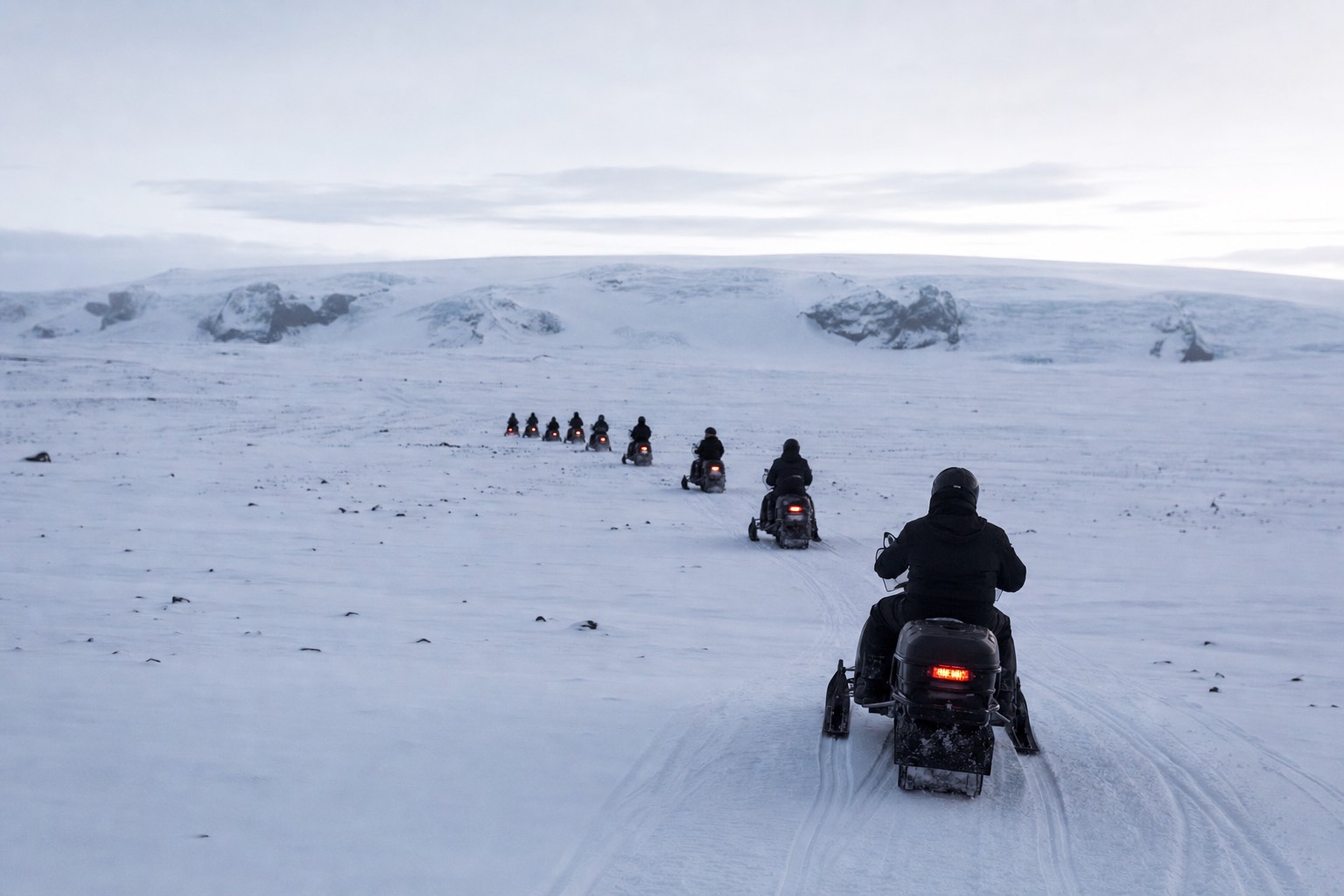
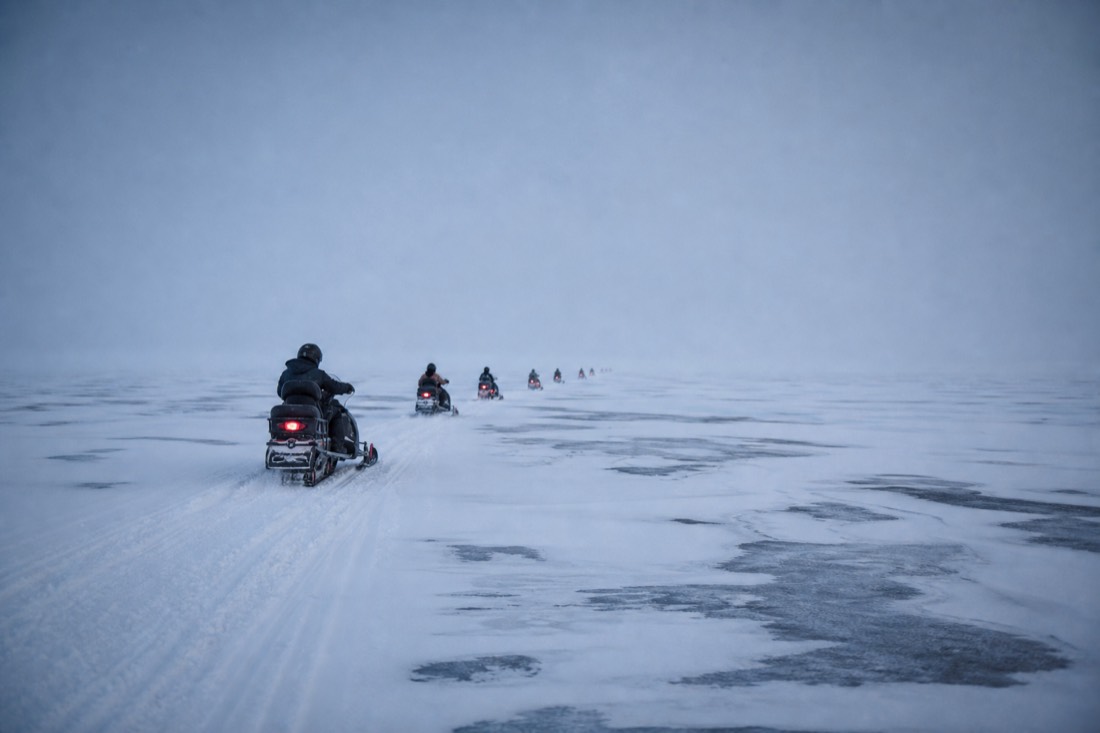
Loud, cold and stranger than you expect. You sit high on a wide white plain with almost no reference points, following the guide's track in single file at a speed that feels quicker than it is. When the light goes flat, the horizon stops existing and you steer by the machine ahead of you.
I have been up on Langjökull, though never at the front of one of those convoys, because these departures belong to the operators and not to me. What surprises people is how little it resembles riding anything else. There are no trees, no fences, no buildings, nothing to give your eye a sense of scale or speed, so the throttle lies to you in both directions. Then the surface changes under you, a small rise you never saw coming, and the machine goes light for half a second.
The ice cap sits high enough that the weather up there is a separate country from the weather at Gullfoss. It can be still and grey in the car park and blowing hard on the ice forty minutes later. That gap catches people out more than the cold does.
And the whiteout, when it comes, is not dramatic. It is quiet and total. Snow, sky and ground turn the same shade of nothing, the guide slows the line down, and everyone rides very close together until it lifts.
How much of the day do you actually spend on the machine?
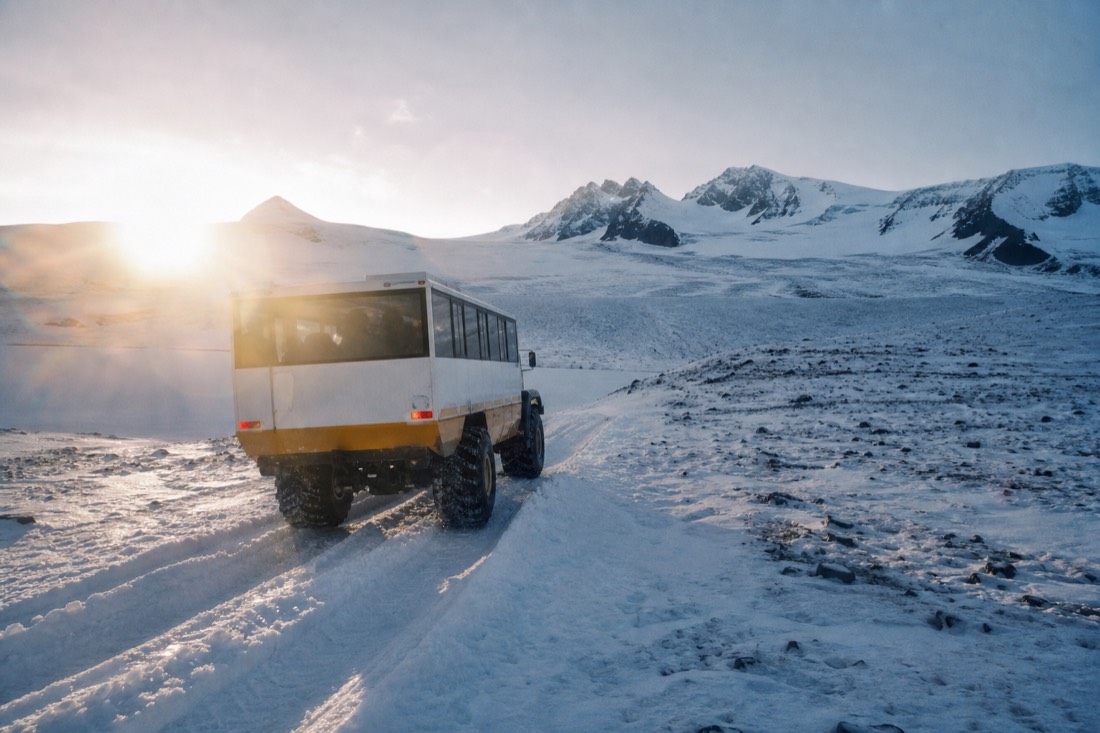
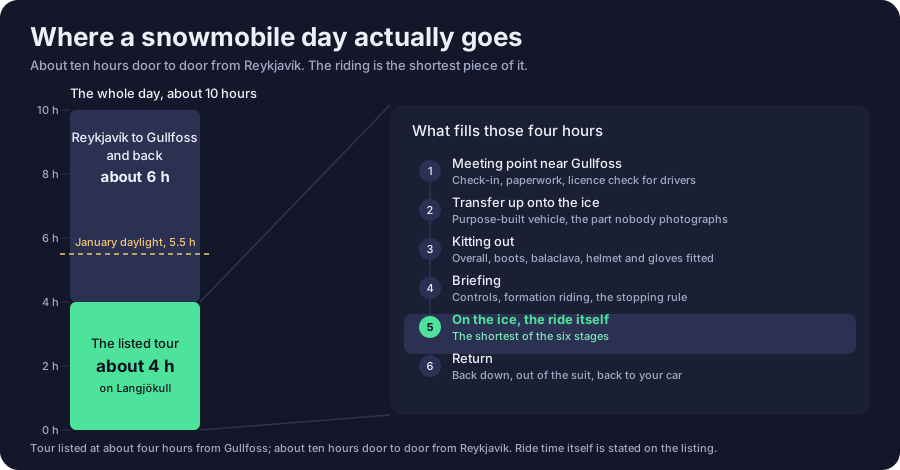
Less than you are imagining. The four-hour listing covers the transfer from the meeting point up onto the ice, kitting out, a safety and controls briefing, the ride itself, and the run back down. The riding is the shortest of those stages, and the listing is where you check exactly how long it runs.
This is the honest bit that the photographs hide. Add the drive from Reykjavík out to Gullfoss and back, and a snowmobile day is most of the useable light in January, when Reykjavík gets about five and a half hours of it. You are trading a whole day for a short ride and a very large view.
I do not say that to talk anyone out of it. I say it because the people who come off the ice disappointed are almost always the ones who thought they had booked an afternoon of driving and got a logistics operation with a ride in the middle. The people who enjoy it understood what they were buying.
| Stage of the day | What actually happens | What you control |
|---|---|---|
| Meeting point | Check-in at the base near Gullfoss, paperwork, licence check for drivers | Arrive early, bring the licence |
| Transfer to the ice | Purpose-built vehicle up onto the glacier, often the scenic part nobody photographs | Nothing, sit by a window |
| Kitting out | Overalls, boots, balaclava, helmet, gloves handed out and fitted | Ask for a bigger size, not a smaller one |
| Briefing | Controls, throttle, formation riding, what to do if you stop | Listen to the stopping rule, it matters |
| On the ice | Single file behind the guide, one photo stop if conditions allow | Position in the line, glove choice |
| Return | Back down, out of the suit, back to your car | How fast you get moving afterwards |
What do they give you, and what do you still have to bring?
The operator supplies the outer shell: overall, helmet, balaclava, gloves and boots. What nobody supplies is the layer against your skin. Cotton under a snowmobile suit turns damp and then cold, and no amount of expensive outerwear fixes a wet base layer at altitude.
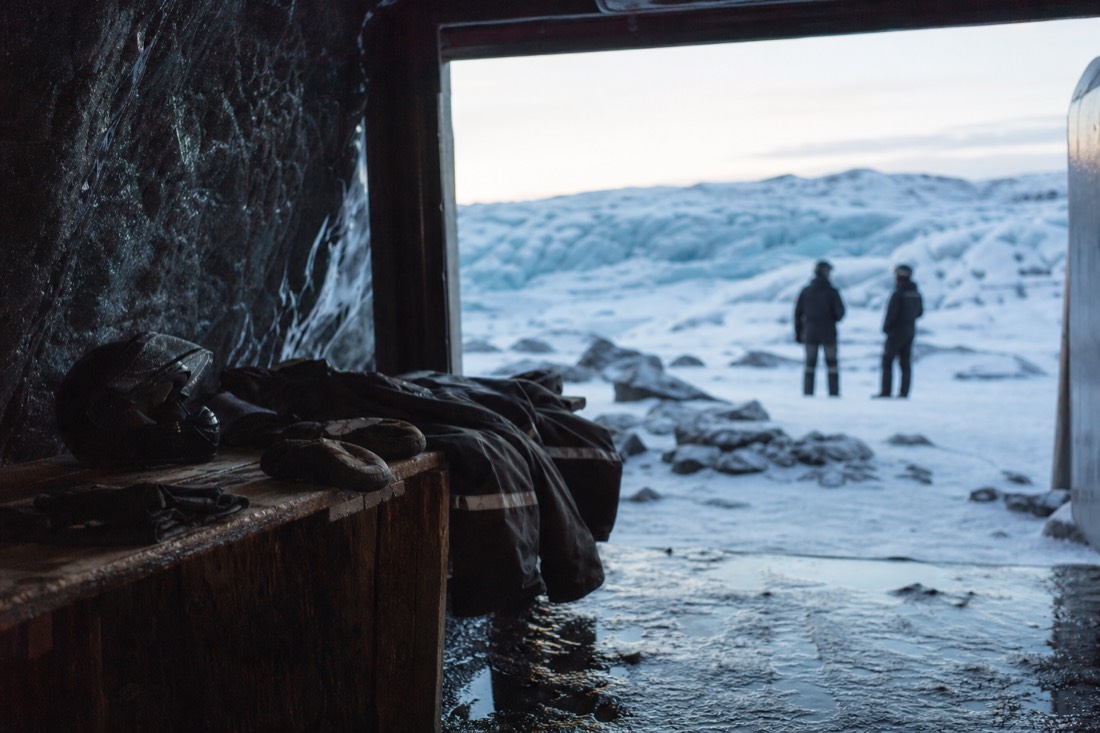
The thermal suit is genuinely good, and it does most of the work. But it is a windproof box, not a heater. Everything that keeps you warm inside it comes from you: wool or synthetic next to the skin, a fleece or light down mid-layer, wool socks that reach past the boot line. My advice on layers is the same one I give before any winter day here, and it is set out properly in what to pack for an Icelandic winter.
Two small things ruin more rides than the cold. Thin liner gloves inside the supplied mitts, so you can take a photo without going bare-handed at speed. And a lip balm, because the wind up there strips skin faster than anything at sea level.
| Item | Supplied by the operator | Bring your own | Why it matters |
|---|---|---|---|
| Snowmobile overall | Yes | No | Windproof outer shell, sized over your clothes |
| Helmet and balaclava | Yes | No | Hygiene liner sometimes provided, ask |
| Outer gloves | Yes | Optional spare | Supplied mitts are warm but bulky |
| Liner gloves | No | Yes | Lets you use a phone without bare hands |
| Base layer | No | Yes, wool or synthetic | Cotton goes damp and stays cold |
| Wool socks | No | Yes, tall | Boot line is where the cold gets in |
| Goggles or sunglasses | Sometimes | Yes | Glare off the ice is savage even in cloud |
| Driving licence | No | Yes, if you want to drive | Drivers are checked, passengers are not |
Should you start at Gullfoss or pay for the pickup?
Starting at Gullfoss is cheaper and gives you your own day. It also means driving a winter road yourself, in the dark at one end of it. Taking a Reykjavík pickup costs more and burns more hours, but somebody else deals with the ice, the wind and the decision to turn back.
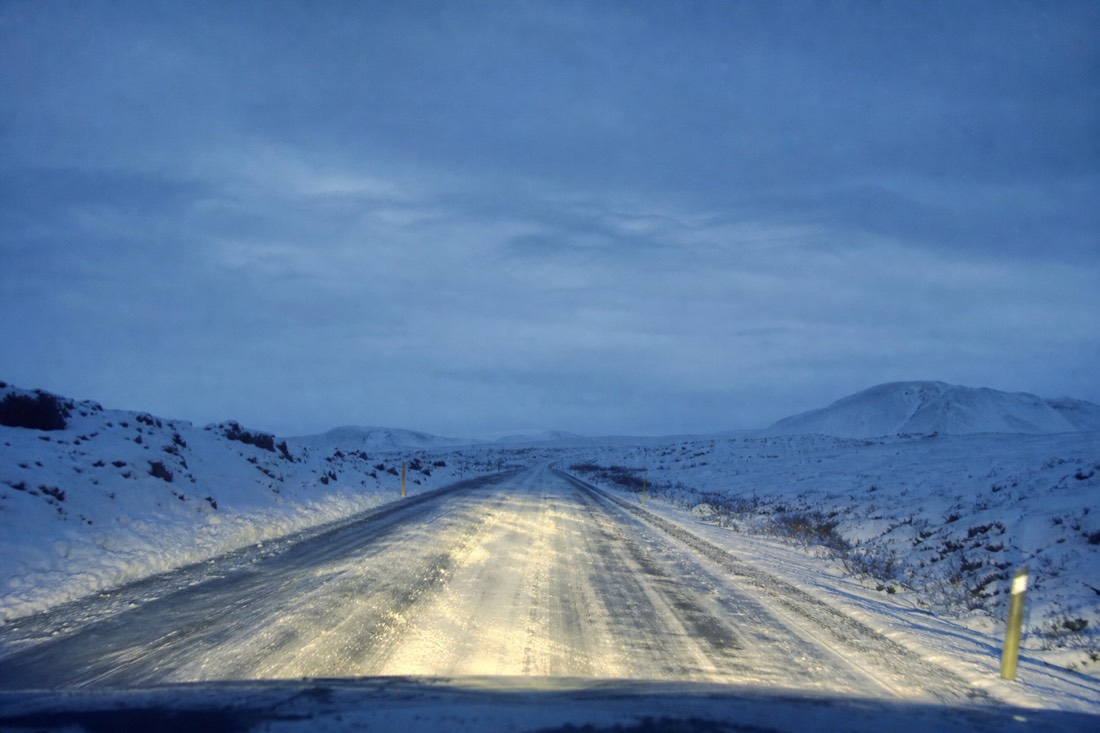
The meeting point sits out on the Golden Circle route, so you are on main roads the whole way rather than anything remote. That is the good news. The rest of the news is that Icelandic main roads in January change character in an hour, and the honest test is not whether you can drive in snow at home. It is whether you will check road.is on the morning and cancel your own plan when it tells you to.
If you are already weighing that up for the whole trip, the trade is laid out in full in driving yourself versus taking guided tours in winter. My rough rule: self-drive to Gullfoss is reasonable for confident winter drivers, and a bad idea for a first Icelandic trip in December.
Snowmobile, ice tunnel, or both?
Three different Langjökull days exist and they are not interchangeable. The snowmobile run puts you on top of the ice. The Into the Glacier tunnel puts you inside it, and it is man-made, so it runs all year. The combination days pair either one with the Golden Circle waterfalls and geysers.
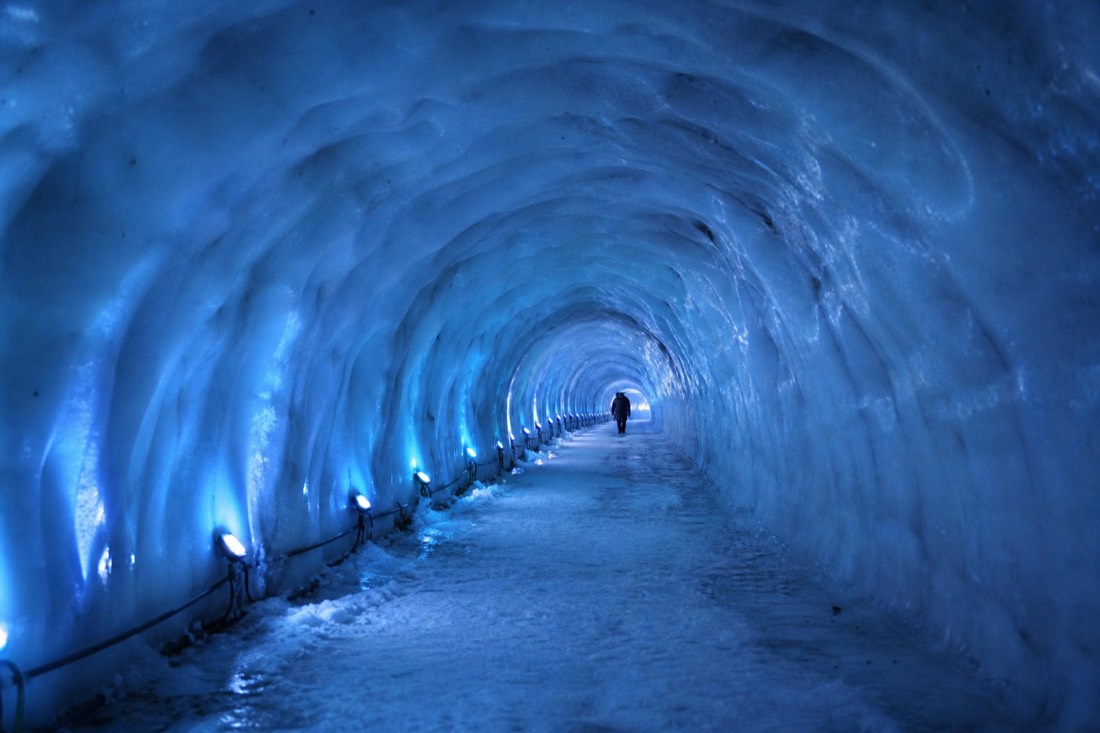
That distinction matters more than anything else on this page. Natural ice caves in Iceland are meltwater features that form and refreeze each cold season, so they exist roughly from November to March and change from year to year, which Guide to Iceland explains well. The Langjökull tunnel is engineering. It is impressive, it is reliable, and it is not the same experience as a blue cave under Vatnajökull.
If the machine is what you came for, book the machine and stop optimising: the Langjökull snowmobile tours page compares the four routes onto the ice, and the most-reviewed of them, run by Mountaineers of Iceland from Gullfoss, is available to check for your dates on Viator at 4.3 across 419 reviews.
| Langjökull day | What it is | Runs in winter | Best for |
|---|---|---|---|
| Snowmobile from Gullfoss | Ride on the ice cap surface, about 4 h | Yes, weather permitting | People who want the machine and the view |
| Snowmobile with Reykjavík pickup | Same ride, no driving for you | Yes | Nervous winter drivers, no rental car |
| Snowmobile plus ice cave | Surface ride paired with a cave visit | Winter season | One trip, two ice experiences |
| Into the Glacier tunnel combo | Man-made tunnel inside the ice cap | All year | Anyone who wants the inside of a glacier reliably |
| Golden Circle plus snowmobile | Þingvellir, Geysir, Gullfoss, then the ice | Yes, long day | Short trips with one free day |
Who should skip this one?
Anyone on a three-day trip with a single free day should probably spend it on the South Coast instead. Skip it too if you dislike engine noise, if you have a back that objects to vibration, or if you are travelling with young children, because the listing sets the minimum age for this one and it is not the same across operators.
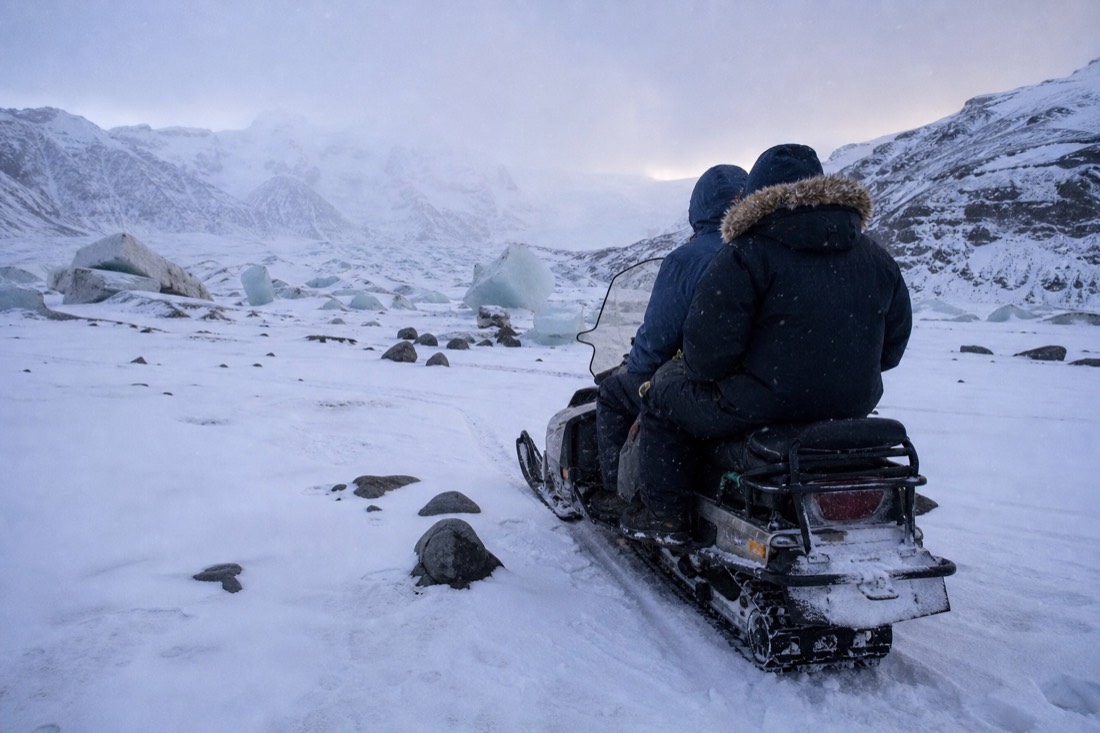
Drivers need a valid licence and it is checked at the base. Passengers ride pillion, which is warmer, cheaper per head and considerably less fun. If a child in your group is close to the age limit, read the listing rather than the summary, and if the answer is still unclear, the common questions page covers how these conditions are usually written.
There is also a plain comfort argument. Two people on one machine at glacier temperatures, in a stiff wind, is a long stretch for whoever is sitting behind, because the passenger is not steering and therefore has nothing to distract them from being cold. Solo riders pay more and enjoy it more.
What happens when the weather takes the day?
Snowmobile tours cancel more often than bus tours, because a wind that is merely unpleasant at Gullfoss is unworkable on top of the ice cap. Icelandic operators reschedule or refund their own weather cancellations, and every listing here allows free cancellation up to 24 hours before departure.
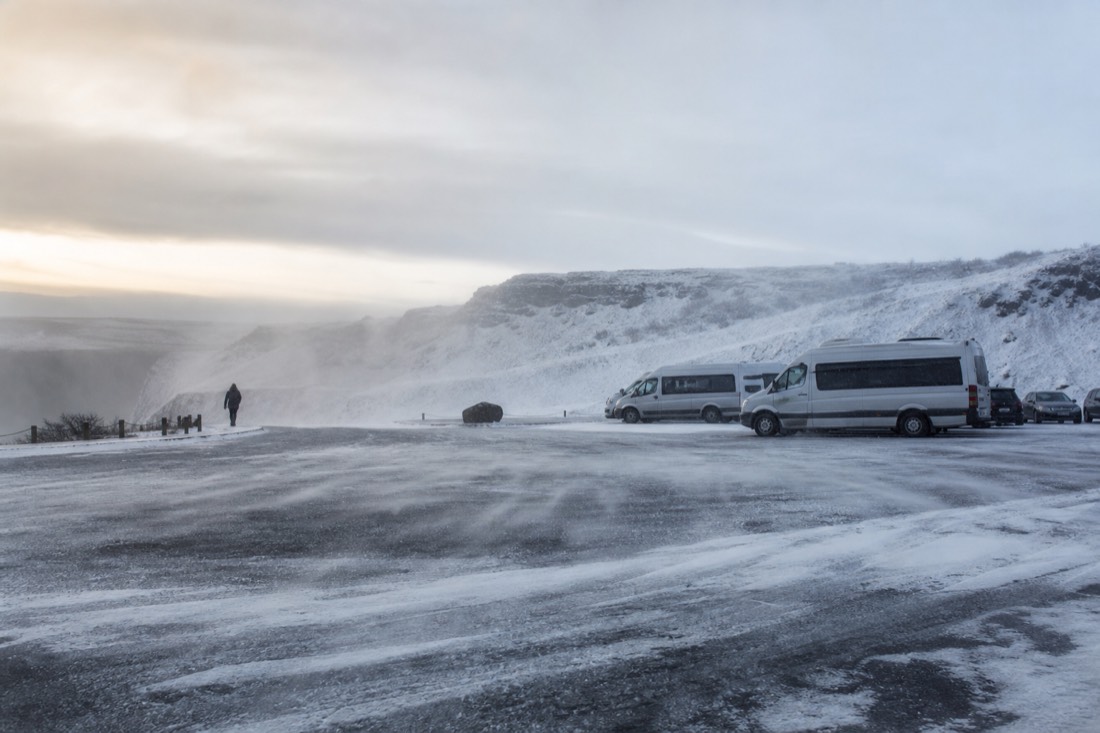
Build the assumption in from the start. Book the glacier early in your trip, not on the last day, so a cancellation has somewhere to go. I have watched more visitors lose an experience to a tight schedule than to the weather itself, and the pattern repeats every winter, which is more or less the story of the day the weather cancelled everything.
The other thing worth knowing: an operator that cancels in marginal conditions is showing you something good about itself. Up there, judgement is the product.
What is a whiteout actually like up there?
Undramatic and total. Snow, cloud and ground turn the same shade of nothing, depth perception goes with them, and you stop being able to tell a rise from a hollow until the machine is already on it. The line slows, the gaps close, and everybody rides in somebody else's track until it lifts.
The word makes people picture a blizzard. It does not need one. A still, grey afternoon with a solid cloud deck produces flat light, and flat light on a white surface removes every shadow, which removes every clue your eyes use to read ground. You can be standing upright, perfectly warm, in no wind at all, and be unable to see a two-metre bank in front of you.
What that does to a first-time rider is peculiar. Some people get mild vertigo. Most just slow down without noticing and drift towards the machine in front, which is precisely what the guide wants anyway. The professionals up there navigate by GPS and by knowing the ground, not by looking at it, which is why the single-file rule stops being a formality the moment the light goes.
| The condition | What it does to you | The rule that goes with it |
|---|---|---|
| Flat light, no wind | No shadows, no depth, no horizon | Ride the guide's track, do not pick your own line |
| Falling snow | Visibility closes down to the machine ahead | Shorten the gap, keep your light on |
| Blowing spindrift | The ground appears to move under a stationary machine | Fix on the guide, not on the surface |
| Goggles fogging up | You lift them, and then the wind blinds you instead | Stop first, clear them, then move off |
| Losing sight of the line | The genuinely serious one, and it happens quickly | Stop exactly where you are and wait. They come back for you |
That last row is the one to memorise. The instinct when you cannot see anyone is to ride on and find them, and it is the wrong instinct on an ice cap, where a rider who keeps moving in poor visibility is a rider who ends up somewhere nobody is looking. Sitting still on a cold machine feels like failure for about ninety seconds. It is the correct answer. Anyone building a broader picture of how Icelandic conditions behave will find the same principle everywhere in what to expect from an Icelandic winter.
Driver or passenger: which seat should you take?
Driver, if the machine is any part of why you booked. Pillion costs less per head and sits in a warmer spot on the seat, but you are along for someone else's ride with nothing to occupy you except how cold you are. Drivers need a valid licence and it is checked at the base.
Couples default to sharing because the price looks better, then one of them spends the ride quietly furious. I have heard that conversation in more than one car park. The person who drove had a fine time and cannot understand the problem, and the person on the back has been sitting motionless in a headwind for the entire ride while somebody else steers.
| Driving your own machine | Riding pillion | |
|---|---|---|
| Cost shape | Usually a single-rider supplement on top | Two people on one machine, cheapest per head |
| Licence | Required, and checked at check-in | Not needed |
| How warm you stay | Working, gripping, adjusting, generating heat | Still, in the wind, behind someone else |
| How much you see | You are watching the track, mostly | Better view, if you can hold your head up |
| Control of the day | You set your pace within the line | None at all |
| Best for | Anyone who came for the riding | Nervous riders, and children old enough for the listing |
If you are two people and only one of you actually wants to drive, that combination works well. If you both want to drive, pay the supplement and stop pretending otherwise. It is a small amount of money against the thing you flew here for.
What are you actually paying for on a snowmobile day?
Access, not machine time. The ticket buys a permitted operator, a transfer onto an ice cap you cannot reach any other way, a thermal suit, a guide, and the safety apparatus behind all of it. The riding is the smallest component of the price and the biggest one in your head.
Once you see it that way, the value question changes shape. Nobody in Iceland is charging you for a rented engine. They are charging for the ability to put an inexperienced visitor on top of a glacier in January and get them off again, which involves permits, vehicles, radios and people who know the surface. Highland routes are shut all winter and the ice cap is not a place you drive to.
| What the price covers | Normally included | The thing to watch |
|---|---|---|
| The transfer from base up onto the ice | Yes | A Reykjavík pickup version exists and is a longer, dearer day |
| Suit, helmet, balaclava, gloves, boots | Yes | Sizes thin out at busy times, so arrive early |
| Guide, permit and the safety cover behind them | Yes | This is the actual product |
| A machine to yourself | Usually a supplement | Book it when you book the tour, not on the morning |
| Getting yourself to Gullfoss | No, unless you bought the pickup | Petrol runs roughly 250 to 300 ISK a litre |
| Anything to eat | No | Bring food. There is not much up there |
The multi-day packages change the arithmetic again, because they fold the transport and a bed into one price and stop you burning a Reykjavík day on each activity, which is the case made on the multi-day winter packages page.
Why is the weather on the ice cap a different weather?
Because the ice makes its own. You climb onto an exposed white dome with nothing standing on it to break the wind, and the surface itself chills the air above it. Still and grey at Gullfoss tells you very little about what is happening on top, and that gap catches more visitors out than the temperature does.
I have watched people arrive at a meeting point in mild drizzle, look around at a car park full of puddles, and quietly wonder what all the fuss about layers was for. An hour later they are somewhere entirely different in weather terms, still wearing the cotton t-shirt they chose in the hotel.
| At the meeting point | What that can mean on the ice cap | What it does to the day |
|---|---|---|
| Calm and overcast | Flat light, no shadow, no visible horizon | The ride goes ahead, slower, and photographs badly |
| A light breeze | Enough drift across the surface to cut visibility | Shorter route, tighter formation |
| Rain at Gullfoss | Snow and freezing surfaces higher up | Goggles matter far more than you assumed |
| Gusts forecast for later | Unworkable up top whatever the car park looks like | Cancelled, and correctly so |
| Bright, cold and clear | The best version of the day, and savage glare | Eye protection stops being optional |
None of this is a reason to avoid the glacier. It is a reason to dress for the ice cap rather than for the drive there, and to take the cancellation gracefully when it comes. January gives Reykjavík about five and a half hours of light to work with and the weather changes inside that window constantly, which is the running theme of Iceland in January.
So is it worth ten hours for a short ride?
Yes, if standing on top of an ice cap is a thing you want to have done, and no, if you are chasing a driving thrill. The view from the middle of Langjökull is not available any other way to a visitor without mountain experience, and that, rather than the throttle, is what people remember a year later.
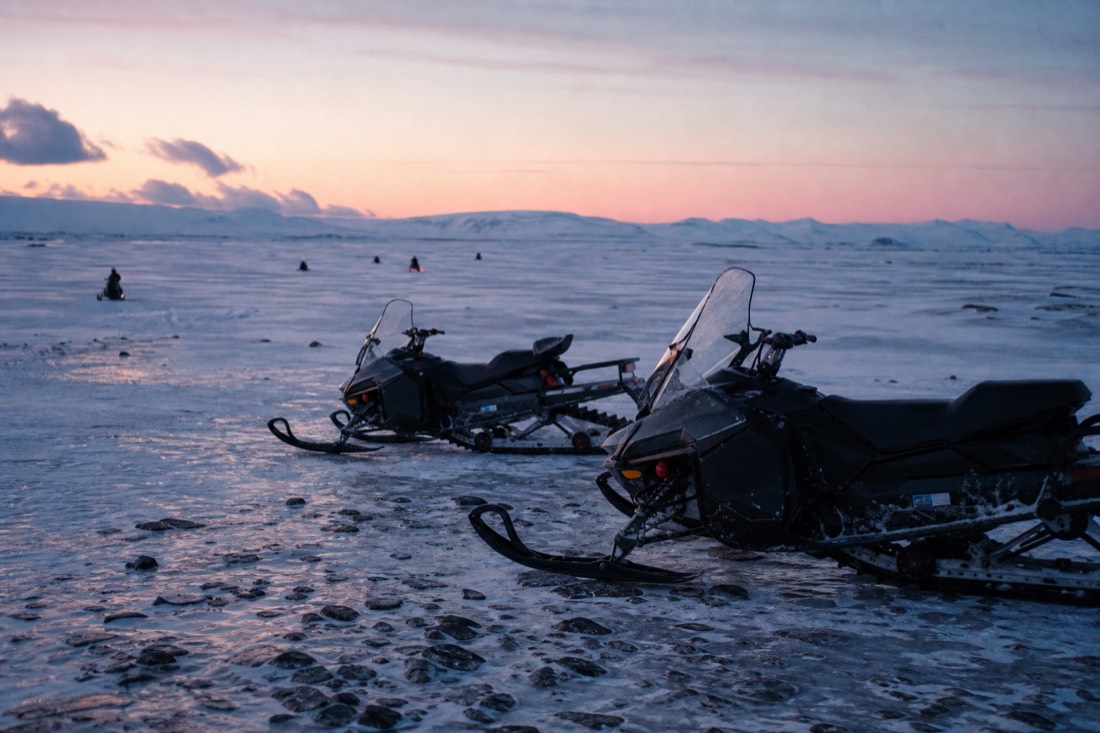
If you have only one spare day and you want the most experience per hour, the Golden Circle day tours hold 4.6 across 9,939 reviews and pack three landmark stops into six and a half hours, which is a better return on daylight. The honest ranking is set out in whether the Golden Circle is worth it in winter.
But if you have three or four days and one of them is free, take the ice. Wear the wool. Accept that most of the day is transport. And when the guide stops the line in the middle of all that white and cuts the engines, stay quiet for a minute, because there is no sound at all up there and you will not hear that again soon. The rest of what I would tell a first-timer is collected in what I wish I had known before my first Icelandic winter.
Snowmobiling Adventure on Langjokull Glacier from Gullfoss
If the ice cap is the thing you want to have done, book the Gullfoss date early in the trip rather than the last morning: this is a weather-sensitive booking with free cancellation up to 24 hours out, and a spare day behind it is what makes the difference.
4h · en, it · Hotel pickup offered; details on the listing
Scheduled departure dates. Availability and final price are confirmed on Viator.
None of these experiences matches that choice. Adjust your preference or reset to the general recommendation.
Compare Options And Plan Your Trip
- The machine, from Gullfoss
- The four-hour run this article describes.
- Two ice experiences in one trip
- Surface ride paired with a cave visit.
- Inside the ice, all year
- The man-made tunnel combo, season-proof.
- The full combo day
- Golden Circle landmarks plus the ice cap in one booking.
Before Booking
Please Note: There must be 1 adult per child or teenager in order to be able to join our tour. Not included: Food and drinks; Solo rider - Extra cost to be 1 rider on the snowmobile; Extra snowmobile staff to drive