The Day the Weather Cancelled Everything
Route 1 shut, every departure in Reykjavík stood down by 07:30, and the sky over the city was clear. What an Icelandic weather cancellation looks like from the inside.
 By Björn Einarsson, Icelandic guide & winter tour specialist
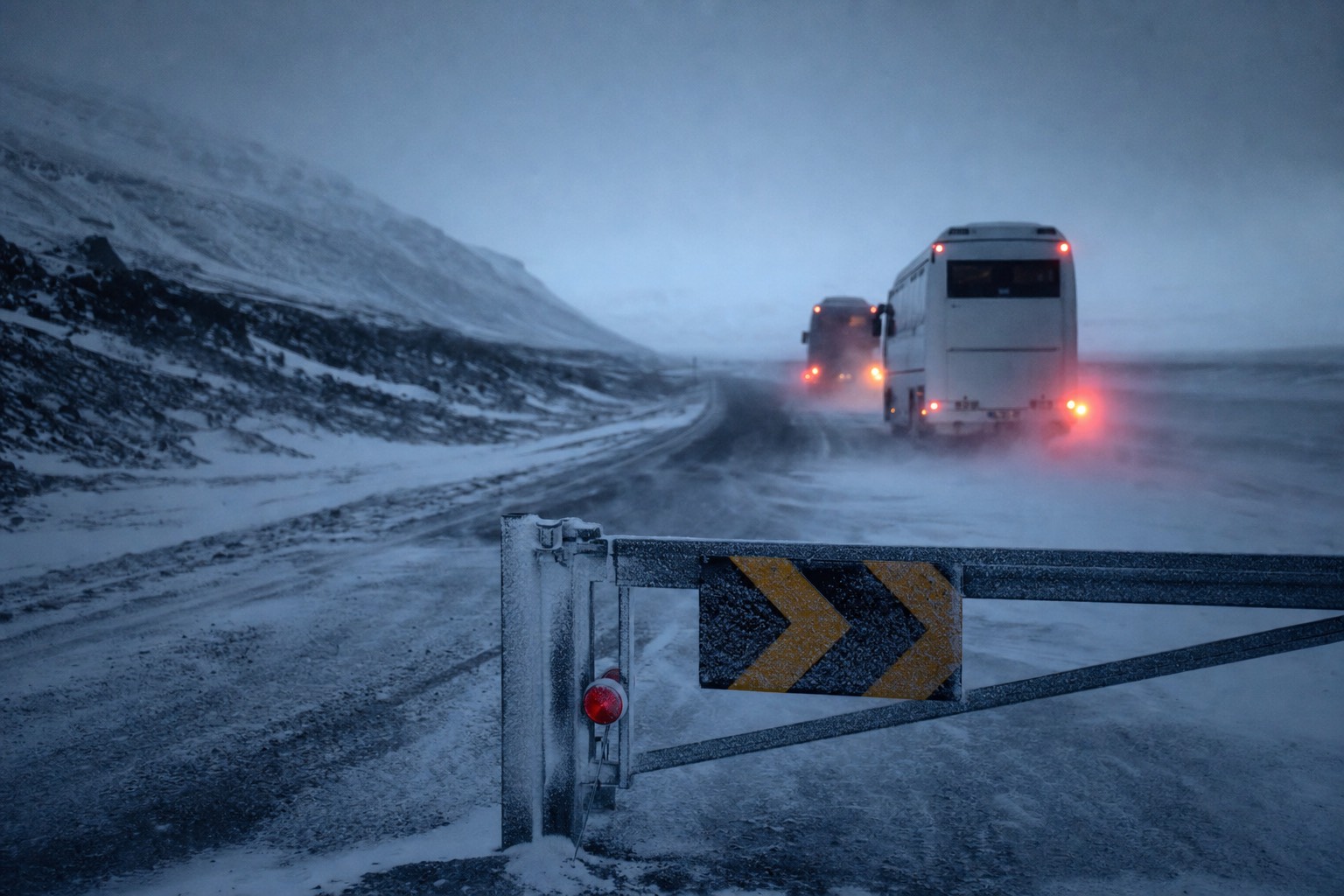
The messages start before the coffee. On the bad mornings my phone lights up around half six with the same three words from different people, and by seven the road administration map has gone red across the south, and every tour leaving Reykjavík that day is finished before it started.
TL;DR: Icelandic tour cancellations are a weather system, not a service failure. When the roads shut, everybody stands down at once, refunds and reschedules follow, and the people who lose out are the ones who put their most important booking on their last available day. Put the thing you came for early, keep one day loose, and check road.is every morning.
What actually happens when Iceland closes the ring road?
The Icelandic Road and Coastal Administration closes sections of Route 1 for wind, drifting snow or ice, and the closure is absolute: no tour vehicle, hire car or bus goes through. Operators watch the same map you can, so most cancel their departures before the closure is even confirmed.
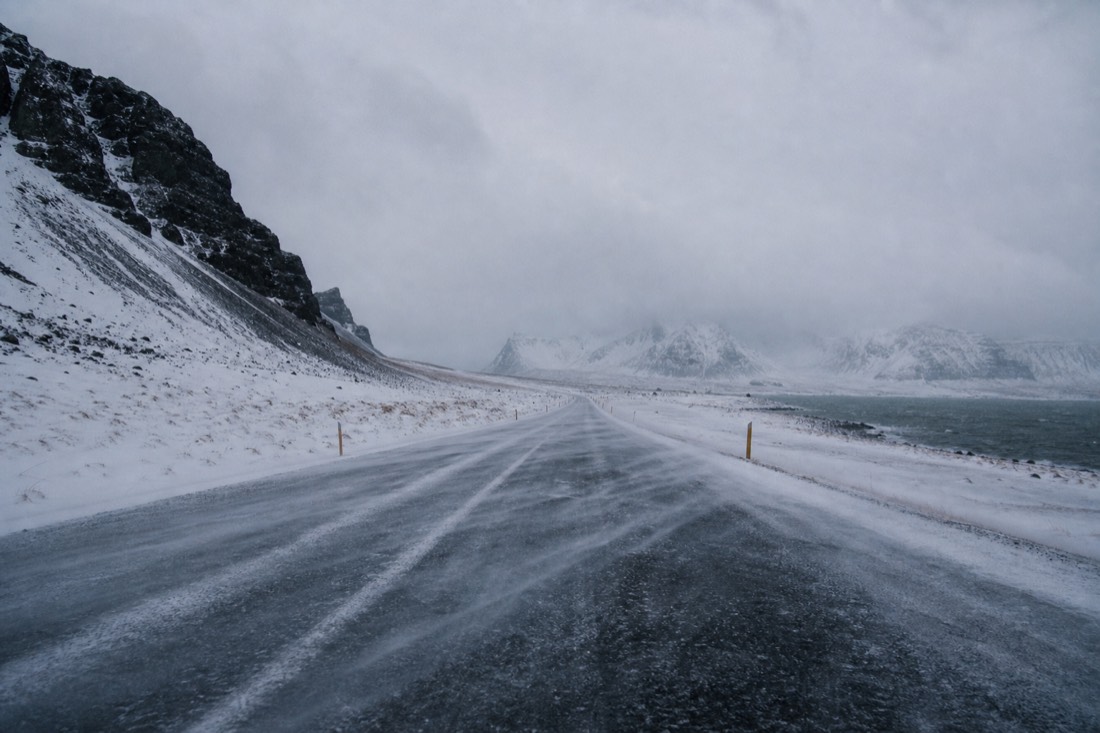
That is the part visitors find hardest to believe. There is no negotiating with it, no experienced driver who can take you anyway, and no operator willing to lose a licence over a waterfall. Closures are usually posted overnight or in the early morning and lifted the same way, sometimes within hours.
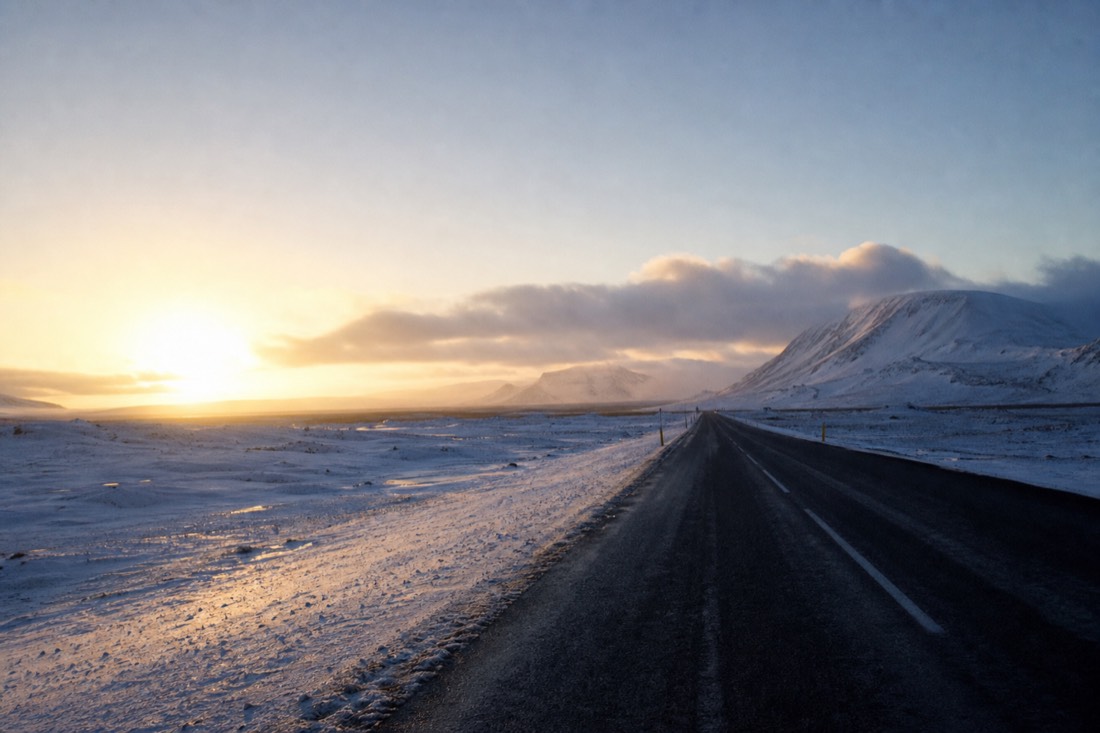
Wind is the usual cause, not snow. A gust warning of the sort that flips a camper van will shut a road that looks perfectly clear on a webcam. The second cause is drifting: a light snowfall combined with an open flat stretch east of Hvolsvöllur can fill a carriageway faster than the ploughs move.
| What causes it | What it shuts | How much warning you get |
|---|---|---|
| High wind and gust warnings | Exposed sections of Route 1, high passes | Often flagged the evening before |
| Drifting snow | Flat open stretches, side roads first | Hours, sometimes less |
| Ice and freezing rain | Everything, including in-town driving | Little, and it lifts slowly |
| Storm at sea | Whale watching and any boat departure | Usually the previous evening |
The highland F-roads are not part of this conversation at all. They are closed for the whole winter, every winter, and no weather window opens them.
How do you find out your tour is cancelled?
By email or SMS from the operator, usually between 06:30 and 08:00, using the phone number you gave at booking. Nobody phones you individually. If your day tour has an early pickup and you have heard nothing by an hour before, check your spam folder before you panic.
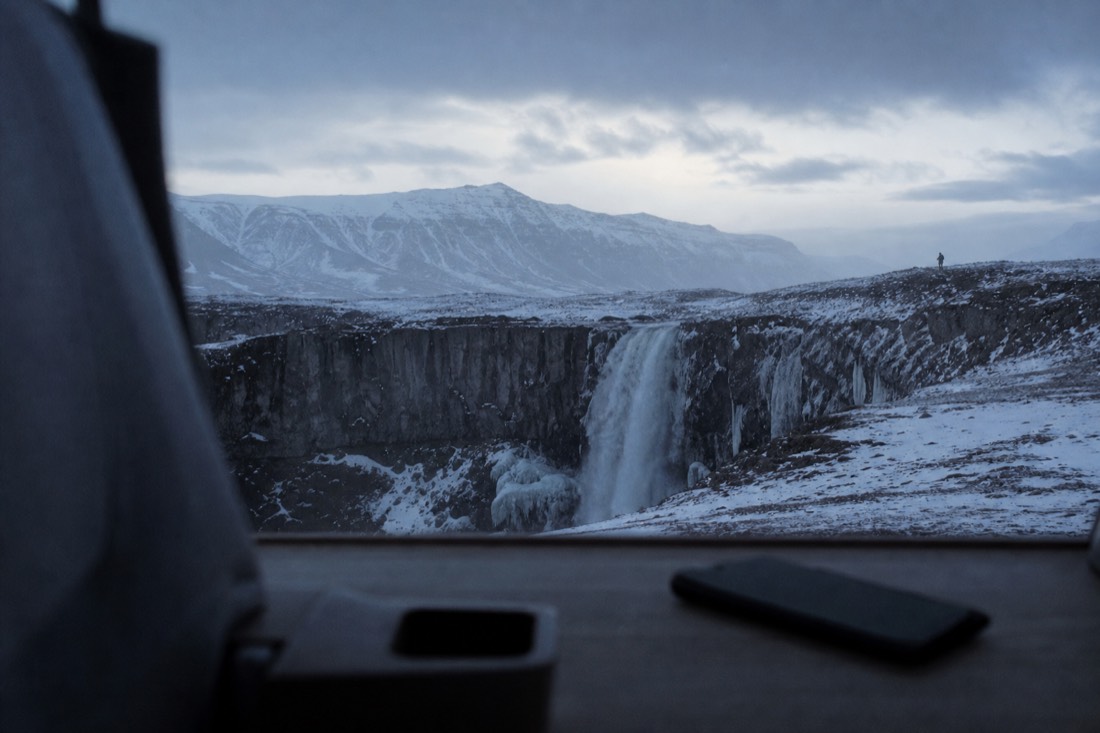
The single most useful habit is to check the road map yourself before the message arrives. If road.is shows the south closed at 06:45, you already know your South Coast day is gone, and you can be back asleep or making another plan while everyone else is standing in a hotel lobby with a rucksack.
For anything beyond a standard day tour, safetravel.is is the official channel run by ICE-SAR, and the 112 Iceland app lets you submit a travel plan. Both are worth having on the phone even if you never drive a metre yourself.
Do you get your money back?
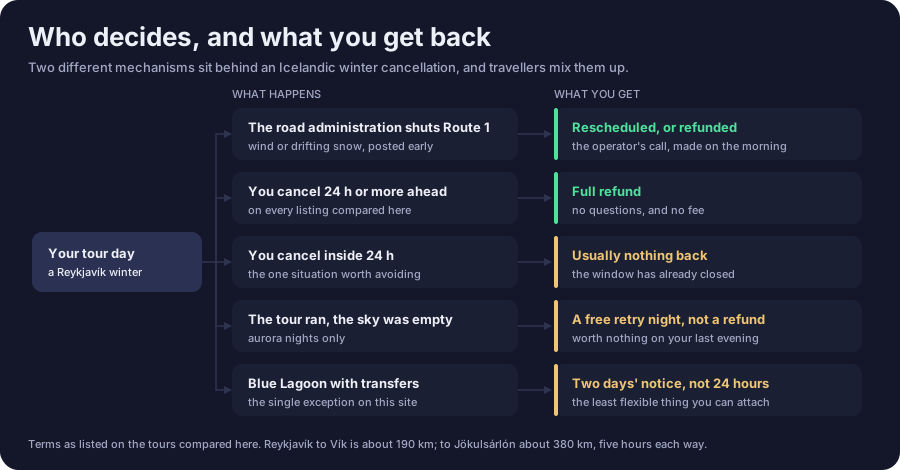
Yes. Icelandic operators reschedule or refund their own weather cancellations, and separately, every listing on this site allows free cancellation up to 24 hours before departure. The one exception is the GetYourGuide Blue Lagoon admission with transfers, which needs two days.
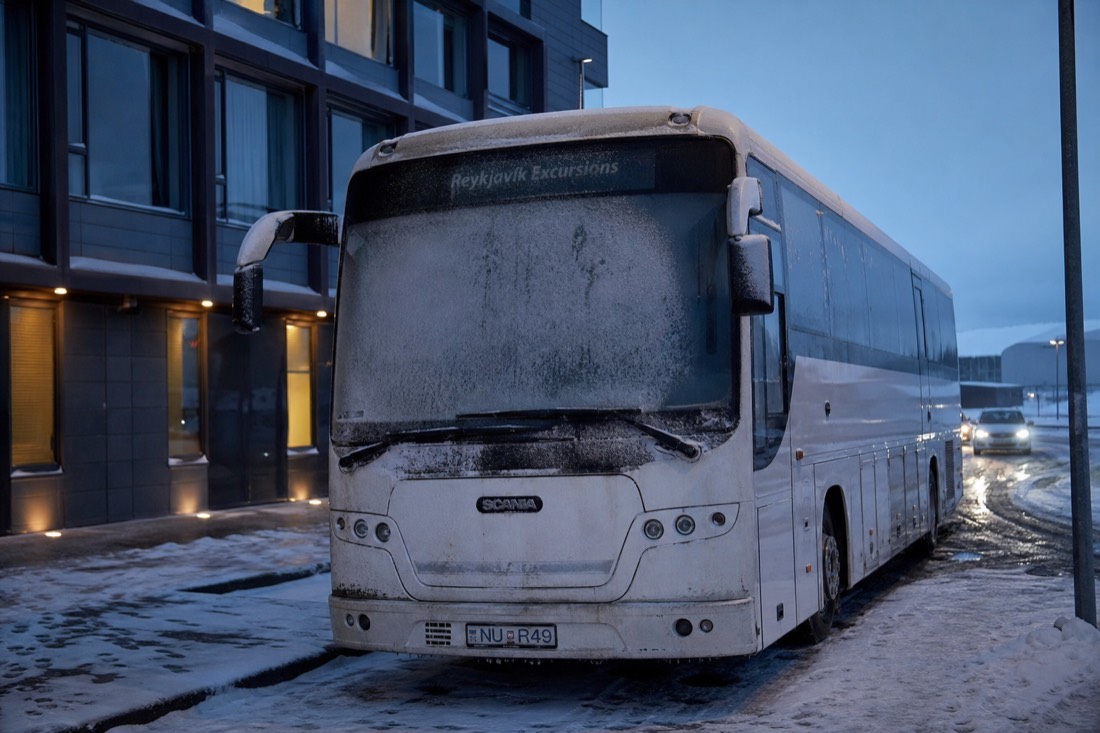
Two different mechanisms sit behind that, and travellers mix them up constantly.
| The situation | Who decides | What you get |
|---|---|---|
| Operator cancels for weather | The operator, on the morning | Reschedule to another date, or a refund |
| You cancel 24 h or more ahead | You | Full refund, no questions, on almost every listing |
| You cancel inside 24 h | You | Usually nothing back, so this is the one to avoid |
| Aurora tour ran, sky was empty | The operator's own terms | A free retry night rather than a refund |
| Blue Lagoon transfers listing | The listing's terms | Two days' notice needed, not 24 hours |
The retry rule on the aurora tours is the one that catches people out, because it is generous and time-limited at once. The tour ran, so no money comes back, but you can go again for free. Useless on the last night of the trip, excellent on the first. There is more on how those nights actually play out in what a northern lights tour is actually like.
Why cancel when the sun is out over Reykjavík?
Because the tour is not in Reykjavík. A South Coast day runs 190 km to Vík, and a glacier lagoon day runs about 380 km each way to Jökulsárlón. The weather at the far end, four hours later, is what decides the morning, and it can be a different country.
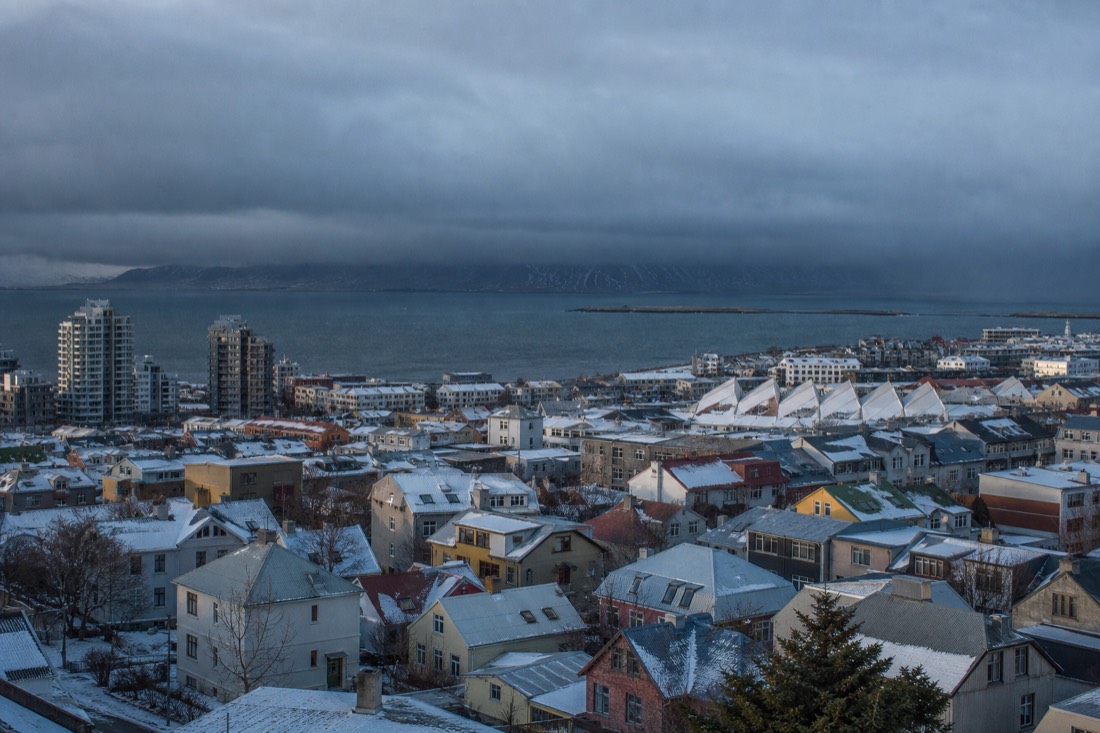
I have stood in still, bright air outside a hotel on Laugavegur while the coast at Vík was taking a full gale. Visitors watching a blue sky through the window take a cancellation as overcaution. It is not. The decision is made on where the coach would be at 14:00, not where it is at 08:00.
The distances are the reason. Reykjavík to Vík is about 190 km, Reykjavík to Jökulsárlón about 380 km and roughly five hours each way. Any tour that far out is committing to a forecast, not a current observation.
What is the real lesson from a day like that?
Put the thing you came for at the front of the trip. Not the middle, not the end. If the ice cave or the aurora is the reason you booked a flight, it belongs on day one or day two, so that a closed road on the day costs you a rescheduling rather than the trip.
Almost everyone does the opposite. They arrive, take a soft first day in Reykjavík to recover from the flight, put the Golden Circle on day two because it is close, and leave the long eastern drive for the end when they are confident. Then the storm arrives on day five and there is nothing left to move into.
| Trip length | Put the must-do here | Keep this free |
|---|---|---|
| 3 nights | Day 1, no exceptions | Day 3 as a fallback |
| 5 nights | Day 1 or 2 | One full mid-trip day |
| 7 nights | Day 2, after the aurora night | Two loose days, spread apart |
| 10 nights | Anywhere in the first half | Anything after day 7 |
The other half of the fix is choosing the right product. A single long day tour with a big fleet behind it rebooks easily, because the operator runs it daily all winter: the South Coast tours page compares them, and the BusTravel Iceland day at 4.8 across 12,306 GetYourGuide reviews is available to check for your dates on GetYourGuide.
Should you self-drive instead, so you can decide for yourself?
Only if you genuinely want the responsibility. Driving yourself does not give you a road the closure does not apply to. It gives you the same closed road, in a car you are liable for, with nobody reading the forecast on your behalf at six in the morning.
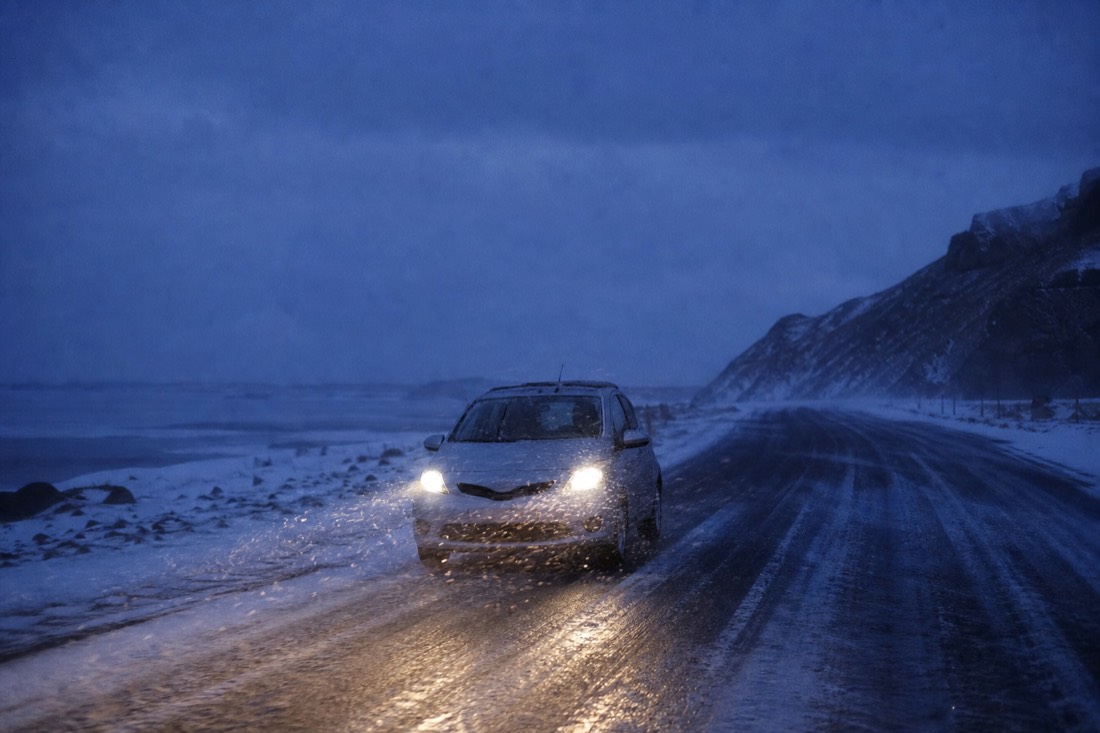
Self-drive suits confident winter drivers on longer trips, and it is a real option rather than a trap. But the calculation changes in December, when you are driving both legs of every journey in the dark, on ice, on roads with no lighting and no barrier. The honest comparison sits in self-drive versus guided tours in Iceland in winter.
One detail people underestimate: your hire car excess almost certainly does not cover wind damage to a door, and a gust taking a door out of your hand at a petrol station in Hvolsvöllur is an ordinary Icelandic event.
Who makes the call, and at what point in the morning?
Nobody in one place. The road administration decides what is open, the operator's duty manager decides whether to run a route that is technically open, and the guide on the road makes the last call of all. By the time a message reaches your phone, three separate people have already looked at the same forecast.
The order matters, because it explains the thing visitors find infuriating: two operators can make opposite decisions about the same morning and both be right. One runs a fleet of full-size coaches that need wide, ploughed carriageways. The other runs small vehicles that can turn around in a farm entrance. The road is identical. Their thresholds are not.
Here is roughly how a red-map morning unfolds, and where you fit into it.
| Roughly when | What is happening somewhere you cannot see | Your move |
|---|---|---|
| Overnight | Warnings posted, ploughs allocated, closures flagged for the morning | Sleep. There is nothing to do yet |
| Around 05:00 | Duty staff comparing the wind forecast against today's routes | Nothing |
| Around 06:00 | The road map updates and closures firm up | If you are awake, this is when to look |
| 06:30 to 08:00 | Cancellation messages sent, in batches, by route | Check your inbox and your spam folder |
| Your pickup time | Vehicles that are running set off, minus the cancelled routes | Be in the lobby anyway if you were not told otherwise |
| Mid-morning | Rebooking requests start landing on the same operators | Reply now, not this evening |
The last row is the one that costs people a place. Everyone whose tour was cancelled reads the email, feels annoyed, goes to breakfast, and gets round to rebooking at four in the afternoon, by which point the popular winter departures have been refilled by the people who answered at half past seven.
How do you read the morning yourself, before anyone tells you?
With two websites and about ninety seconds. The road administration map tells you what is open right now, and the Met Office tells you what is coming, which is the part that decides tomorrow. Between them you will know your day is gone before the operator's email arrives.
I check these before I check anything else between November and April, and so does everyone I work with. It is not expertise. It is two bookmarks.
| Where to look | What it tells you | When to look at it |
|---|---|---|
| road.is | Whether each stretch is open, difficult, or shut right now | The evening before, then again at about 06:45 |
| vedur.is | Wind and gust warnings, which close roads before snow does | The night before, when you can still change a plan |
| en.vedur.is | The same forecasts and warnings in English | Whenever the Icelandic version defeats you |
| 1777 by phone | A human being on road conditions when the map is ambiguous | When you are about to drive and are not sure |
| safetravel.is | Official ICE-SAR alerts, and where you file a travel plan | Before any day you are driving yourself |
| Your own inbox | The operator's decision, which trumps your reading of all of the above | From 06:30 |
Wind is the one to learn. Visitors watch snow forecasts because snow is what looks like winter, and then get shut down by a clear, dry, bright morning with a gust warning on it. A wind that lifts gravel off a verge will close a road that looks flawless on a webcam, and the same wind will take a car door off its hinges at a petrol station.
What does a cancelled day cost you beyond the ticket?
Less than it feels like, and more than the refund covers. The tour money comes back. What does not come back is the day, the hire car sitting in the hotel car park on full daily charge, and the slot in your itinerary that everything else was built around.
This is the arithmetic nobody does at eight in the morning, and it is worth doing, because it usually improves the mood. Most of what you were afraid of losing is not lost.
| The item | What actually happens to it | What to do about it |
|---|---|---|
| The tour ticket | Rescheduled or refunded by the operator | Reply to the message, pick a date, done |
| Tonight's hotel room | Already paid, and you are already in it | Nothing. A Reykjavík night runs 25,000 to 40,000 ISK and none of it is wasted |
| The hire car outside | Charged by the day whether it moves or not | Use it in town, or leave it and take a 500 to 1,000 ISK bus fare |
| Tomorrow's booked tour | Unaffected, unless you now want to shift it | Decide tonight, before everyone else does |
| The airport transfer at the end | Fixed, and immovable | This is precisely why the must-do goes early in a trip |
| The day itself | Gone. The only genuinely unrecoverable item on the list | Spend it, rather than sit in the lobby resenting it |
There is a version of this that hurts, and it is the traveller who booked one long eastern day at the very end of a five-night trip. The refund arrives, the experience does not, and there is no day left to move it into. Everything about how a winter itinerary should be sequenced follows from that single failure mode, which is the ground covered in how many days you need in Iceland in winter.
What happens if the weather turns after you have already left?
The day gets shortened rather than abandoned. A driver who is already on the road and watching conditions deteriorate drops the exposed stops, keeps the sheltered ones, and turns for home earlier than the schedule says. You will not be consulted, and you should not want to be.
This is the least understood category of all, because it is neither a cancellation nor a normal day, and the refund conversation gets awkward. The tour ran. It ran differently. Where operators differ is whether they tell you what they are doing and why, or just quietly skip a stop and hope nobody counts.
| The situation | What the driver does | What you should do |
|---|---|---|
| Wind rising while you are still heading east | Drops the exposed stops, keeps the ones in shelter | Stop lobbying for the beach. He can read the water and you cannot |
| The road closing behind you | Comes home by whatever is open, later than planned | Message your evening booking now, not at eight o'clock |
| One stop judged unsafe on the day | Swaps it for something nearby, if there is anything | Take the swap. It is not a downgrade, it is a decision |
| Sea state rising on a boat departure | The harbour stands down, occasionally after boarding | Same terms apply: reschedule or refund |
| Cloud closing over an aurora stop | Moves the group, or calls the night | The free retry is the mechanism, and it only helps if you have a spare evening |
Judge the day on the calls, not the weather. A guide who explains that the beach is off and then gives you the extra forty minutes somewhere useful has run a good tour in bad conditions. Which is more or less how I separate the operators worth booking from the rest, set out at length in who actually runs these Iceland tours, and it applies as much to a Golden Circle day in a gale as to anything on the coast.
What do you do with a cancelled day?
Take it as a free day in the city rather than a loss. The Reykjavík things that stay open in a gale are the pools, the museums, the food and a lagoon, and the two tours that most often still run are the whale boats and the Blue Lagoon transfers.
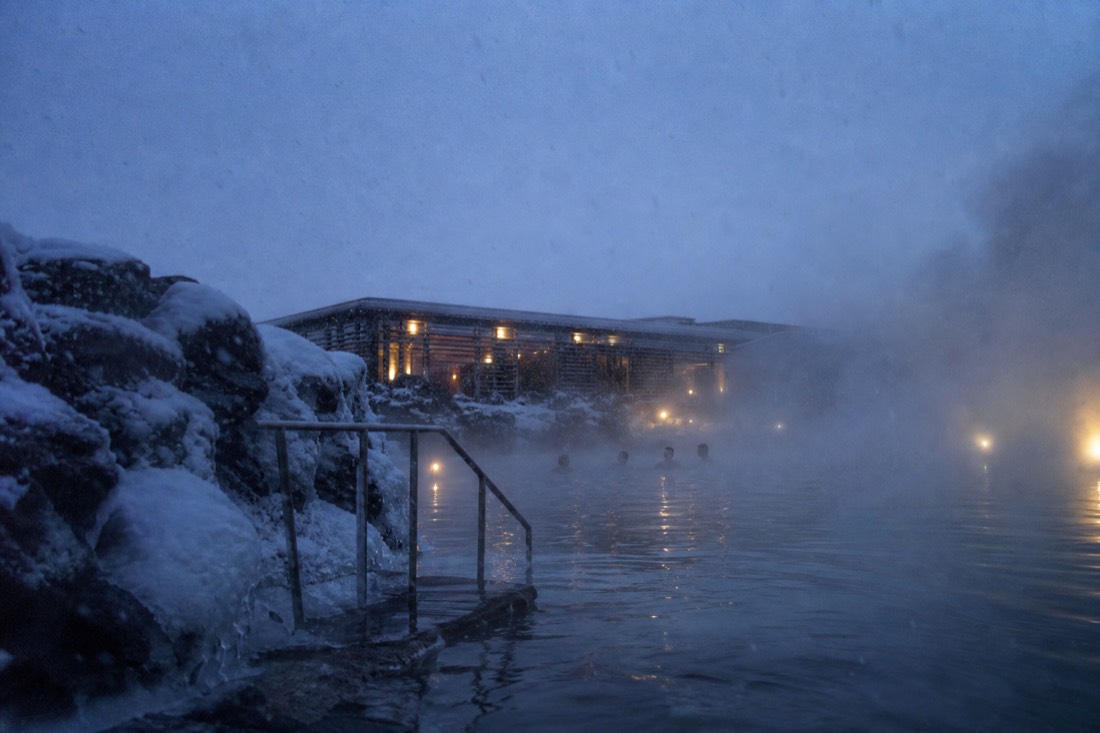
The city plan for exactly that morning is in Reykjavík when your tour gets called off, which is the post I would send anyone at 08:00 on a red-map day. Geothermal water is the local answer to bad weather, and the Blue Lagoon tours rate 4.6 across 9,299 reviews for a reason: a storm looks entirely different from a hot pool.
Rebook the same evening rather than the next morning. The day after a closure is the day everyone else is also rebooking, and the popular winter departures do sell out. If you are unsure how any of the terms apply to what you have already booked, the recurring versions of that question are answered on the FAQ page, and the broader planning mistakes are in what I wish I knew before my first Iceland winter.
By four that afternoon the map had gone green again, the wind had dropped to something ordinary, and half the people I know were out driving east. That is the other half of the truth about Icelandic weather: it does not just arrive quickly, it leaves quickly too.
From Reykjavík: South Coast Waterfalls, Glacier and Black Beach Day Tour
When you book the must-do day, book it early and with the fleet behind it: the most-reviewed South Coast run moves and refunds cleanly when the map goes red, and a spare day behind it is what turns a cancellation into a reschedule.
10 to 12 hours · English
Check travel dates with GetYourGuide below.
None of these experiences matches that choice. Adjust your preference or reset to the general recommendation.
Compare Options And Plan Your Trip
- Rebook the big coast day
- Daily departures all winter make it the easiest must-do to move.
- Use the aurora retry
- The free retry night is the mechanism for a clouded-out evening.
- The close-in day that still runs
- Short loop on cleared roads, afternoon departure.
- A storm-proof soak
- The transfer runs when mountain roads do not.
- The boats still going out
- Harbour departures survive conditions that stop the eastern drives.
Before Booking