Iceland in January 2027: Ice Caves, Aurora and the Quiet
About 5.5 hours of daylight, 18.5 of dark, and the most stable natural ice caves of the season. January is the month for the two things only winter gives you.
 Written with Björn Einarsson, Icelandic guide & winter tour specialist
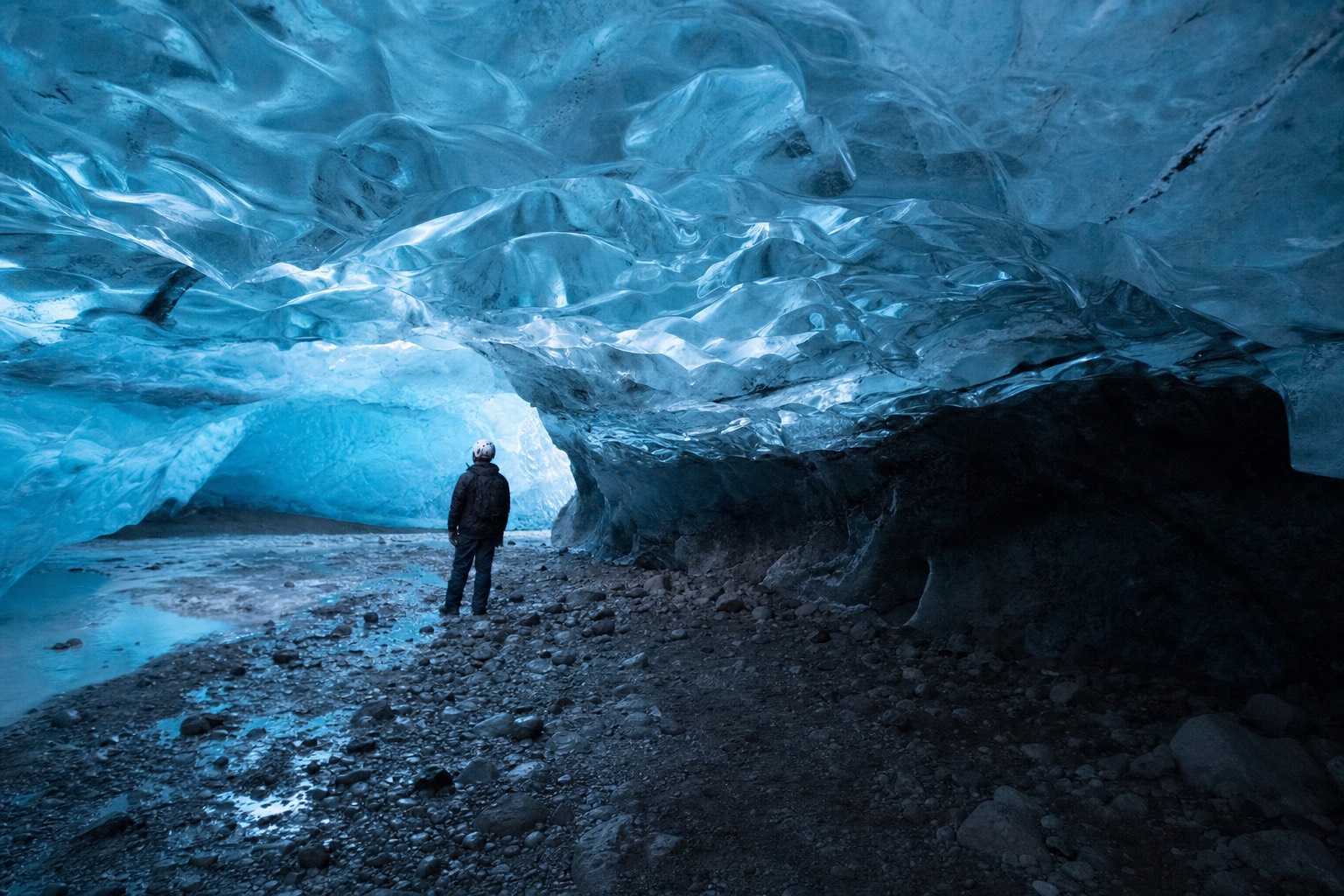
Crampons make a particular sound on glacier ice that has been swept clean by wind: a dry click rather than a crunch, closer to a fingernail on a table than to snow. You hear it about four steps before the ground stops being white and starts being blue. That is the January moment nobody puts on a listing photo, the short walk from the truck to the cave mouth, when it becomes obvious that the thing you booked is not a decorated attraction but a hole in a moving glacier that will not exist in the same shape next winter.
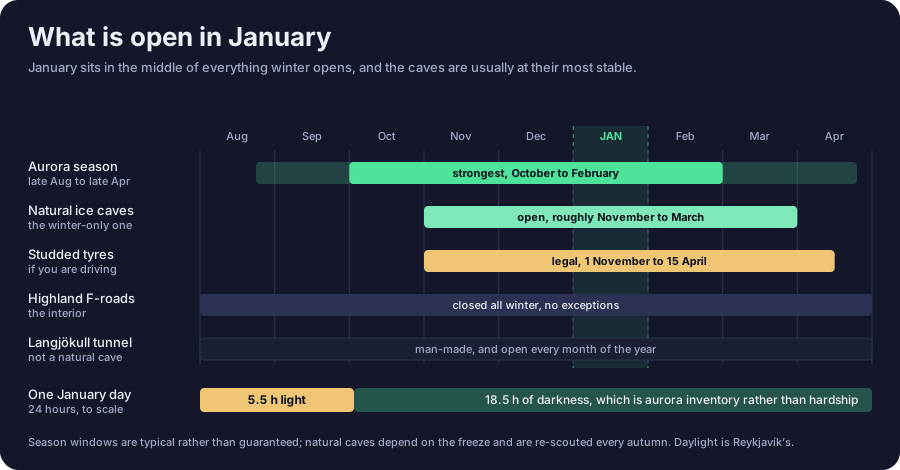
TL;DR. January is the month to come if the winter-only experiences are the point of the trip. The natural ice caves are usually at their most stable, having had a full cold season to refreeze. The nights are still enormous, about 18.5 hours of darkness against 5.5 hours of daylight, which is the longest practical aurora hunting you get once December's holiday crowds have gone home. Reykjavík averages about 0.5°C. Visitor numbers drop hard after New Year: 119,000 foreign visitors came through Keflavík in January 2026, against 147,000 the following month.
Why is January the best month in Iceland for a natural ice cave?
Natural ice caves run roughly November to March, and January usually finds them at their most stable. The caves are carved by summer meltwater and refreeze through the cold season, so by mid-winter the ceilings have hardened and the guides have had two months to learn which caves this particular year has produced.
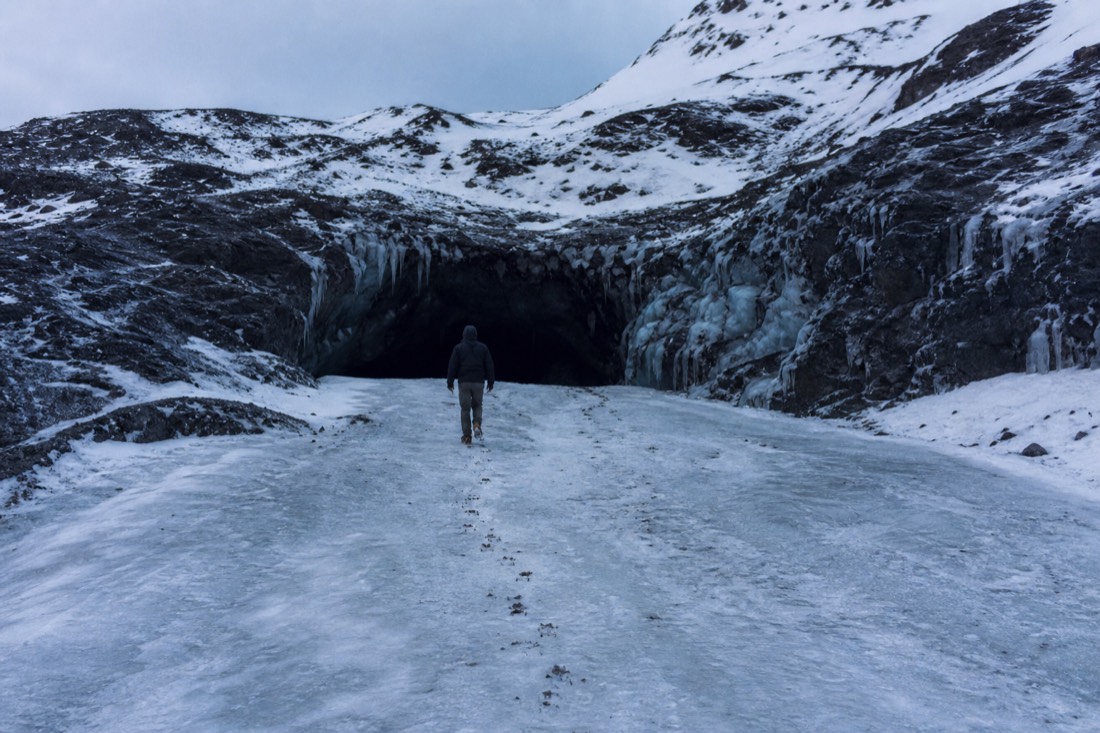
The thing to understand about Icelandic ice caves is that they are not a fixed set of destinations. Meltwater cuts a channel under the glacier through summer, the water drains, the cold locks the roof in place, and what remains is walkable for a few months until spring melt makes it dangerous again. Which caves exist, how big they are and how blue they look changes every single year. Guides go out in October and November to find them, and the honest ones will tell you that a cave they ran last February may simply not be there this time. The background on how that cycle works is set out at Guide to Iceland.
That seasonality is exactly why a January date is worth defending in your itinerary. Come in November and you are on the early edge of the freeze. Come in April and the season is over. Around 30 companies hold permits to run these tours, which is why you will see what looks like a dozen different caves advertised and find on closer reading that several products visit the same one.
| Ice cave product | Glacier | Rating and reviews | What it actually demands of you |
|---|---|---|---|
| Jökulsárlón Vatnajökull ice cave | Vatnajökull | 4.2 across 2,171 GetYourGuide reviews | Meet at the glacier lagoon, 380 km east of Reykjavík |
| Katla ice cave under the volcano | Mýrdalsjökull | 4.7 across 1,172 Viator reviews | Reachable on a South Coast day, super jeep transfer from Vík |
| The Original ice cave tour | Vatnajökull | 4.6 across 1,129 GetYourGuide reviews | Same eastern meeting point, smaller operation |
| Private natural ice cave, 2 hours | Vatnajökull | 4.7 across 302 Viator reviews | Private group, the most flexible on timing |
| Into the Glacier tunnel | Langjökull | Man-made, open all year | Not a natural cave, and honest listings say so |
That last row is the one people get wrong. The Langjökull tunnel is a machine-cut ice tunnel, impressive in its own way and available in July, which is precisely why it is not what you came in January for.
Choosing between the real caves comes down to where you are sleeping and how far you are willing to drive, which is the whole argument of which ice cave tour is best in Iceland.
What do eighteen hours of darkness buy an aurora hunter?
About 18.5 hours of it, against 5.5 hours of daylight. In aurora terms that is not a hardship, it is inventory. Every extra night you can attempt raises the chance that solar activity and a gap in the cloud line up on the same evening, and January still has the long nights while the crowds have gone.
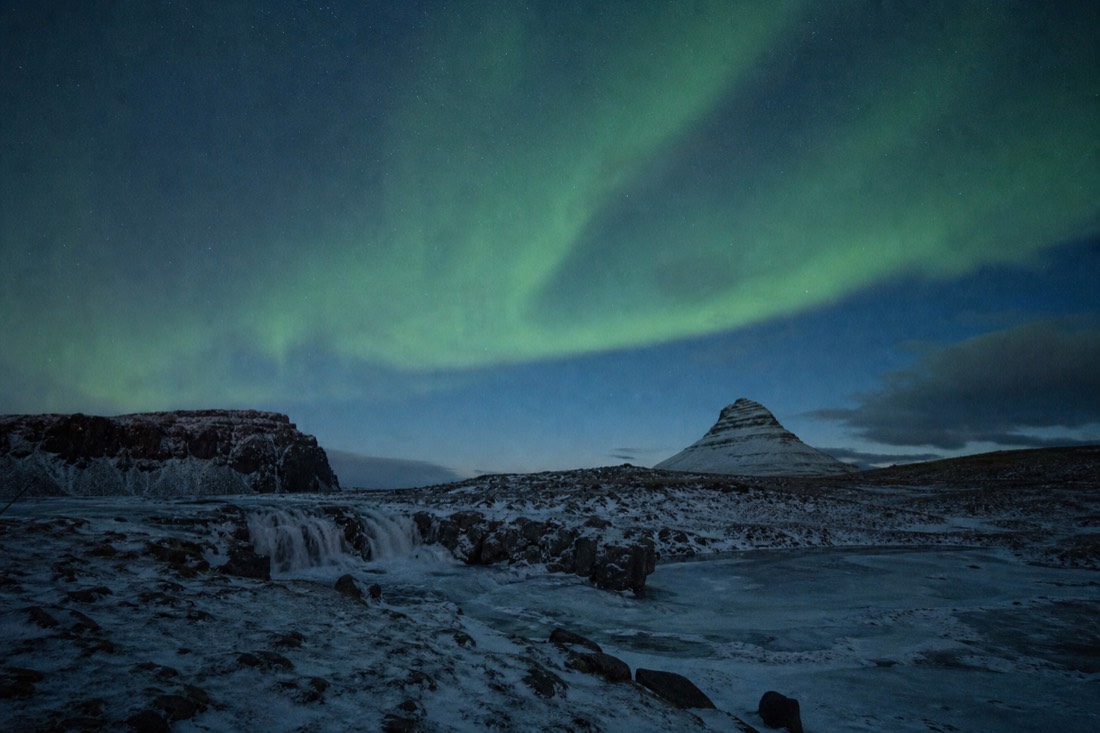
Nobody can promise you the lights, and any page that does is lying. You need two independent things to cooperate: activity on the sun, and clear sky above wherever you happen to be standing. Miss either and the night is a bust regardless of how much you paid. What you can control is the number of attempts you give yourself, and that is a booking decision rather than a luck decision.
| Nights in Iceland | Aurora attempts you can realistically make | What actually improves them |
|---|---|---|
| 3 | 2 | Book night one, keep night two as the retry |
| 5 | 3 to 4 | Split between a guided run and a self-driven night out of the city glow |
| 7 | 5 or more | Move east or inland mid-trip so you are not stuck under one weather system |
The single most useful term on any aurora listing is the free retry: if the tour goes out and the sky gives you nothing, the operator lets you come again on another night at no extra cost. That converts one paid attempt into two or three, which is worth more than any amount of forecast-watching.
The mechanics of why the season peaks between October and February, and what the numbers on the forecast pages actually mean, sit in the best time to see the northern lights in Iceland.
How cold does Iceland actually get in January?
Reykjavík averages about 0.5°C in January, which is around freezing rather than deep cold, and warmer than a lot of continental European capitals on the same date. The wind is the problem. Standing at a glacier front or a black beach in a January gale is a different order of experience from the number on the forecast.
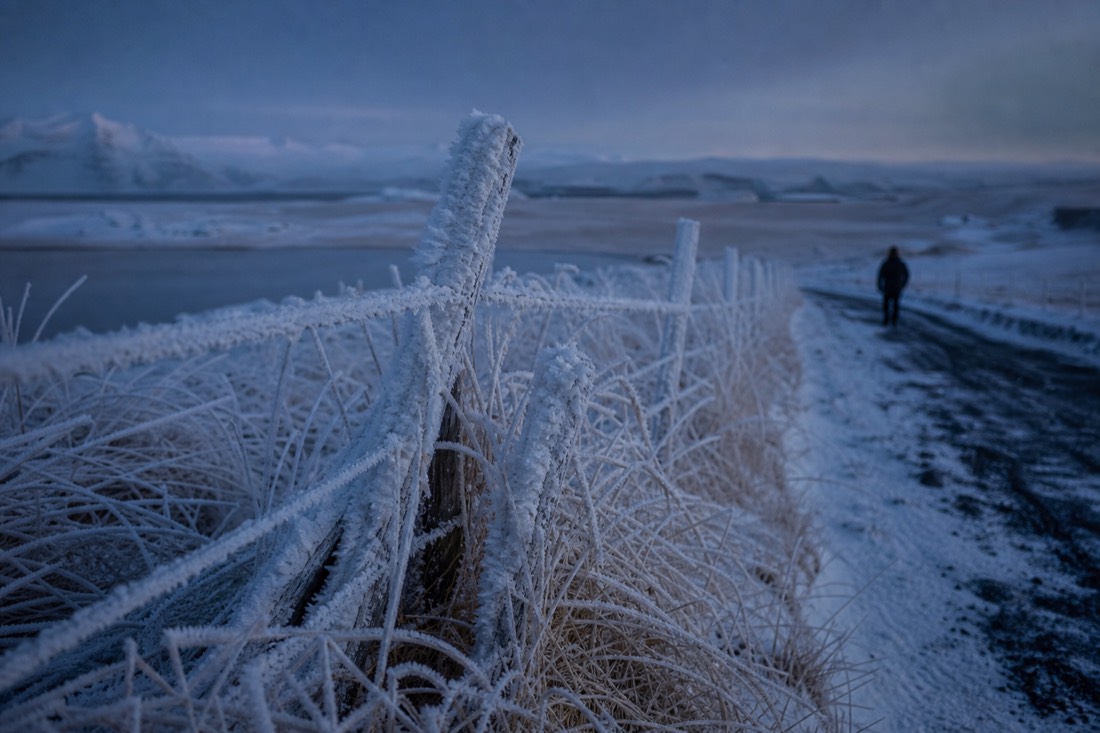
I get asked about temperature constantly and it is almost always the wrong question. Two degrees and still is a pleasant day out. Two degrees with a hard wind and rain moving sideways will take you apart in twenty minutes if you are wearing the wrong thing, and the wrong thing is usually cotton, jeans, or a fashionable coat with no windproof layer.
The other January factor is ice underfoot, and it is the leading cause of ruined trips that have nothing to do with the weather forecast. Pavements in Reykjavík glaze over. Car parks at the waterfalls turn to polished rink. Microspikes that slip over your boots weigh almost nothing and cost less than a restaurant meal, and every guide I know carries a pair from November onwards without thinking about it.
Inside the cave the temperature is not the issue either. Glacier ice sits near freezing and the air is still, so a January cave often feels warmer than the walk to it. What gets you is standing around at the meeting point in an open, exposed spot while the group assembles, which is precisely the twenty minutes people underdress for.
If you want to know how we judge these products and who is behind the site, that is on the about page.
Is January quieter than the rest of the Icelandic winter?
Yes, noticeably. 119,000 foreign visitors came through Keflavík in January 2026, against 147,000 in February. The holiday traffic goes home in the first week and what follows is the quietest stretch of the winter season, with the same tours running and fewer people on them.
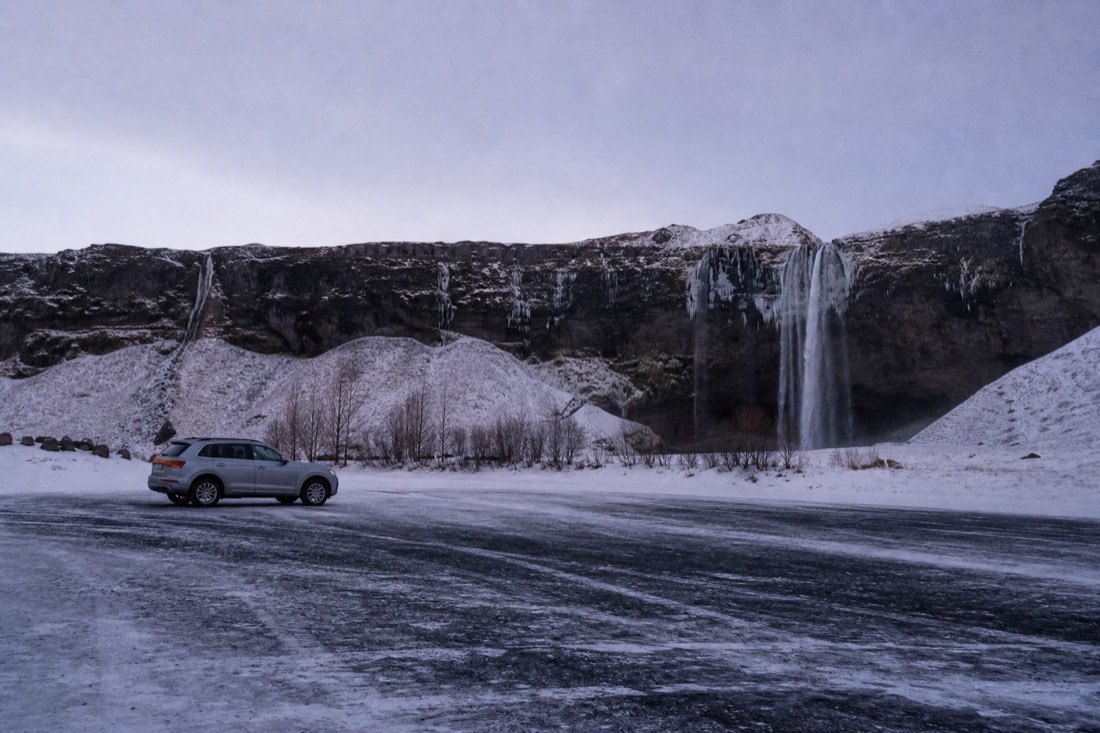
You feel this in specific places. The car park at Seljalandsfoss in mid-January has room. Reykjavík restaurants take a walk-in. The popular ice cave departures still sell out, because the number of permitted operators and the size of a super jeep are both fixed, but the sense of queueing behind five coaches at every stop is largely a summer and holiday-season phenomenon.
There is a second-order effect worth knowing. Quieter months mean smaller groups on the products that do not have fixed capacity, and a guide with eleven people in a minibus behaves differently from the same guide with a full coach. He will wait longer at a viewpoint. He will detour for a break in the cloud. That flexibility is the real prize of a January booking, and it does not show up on any comparison table.
How far can you realistically drive in January?
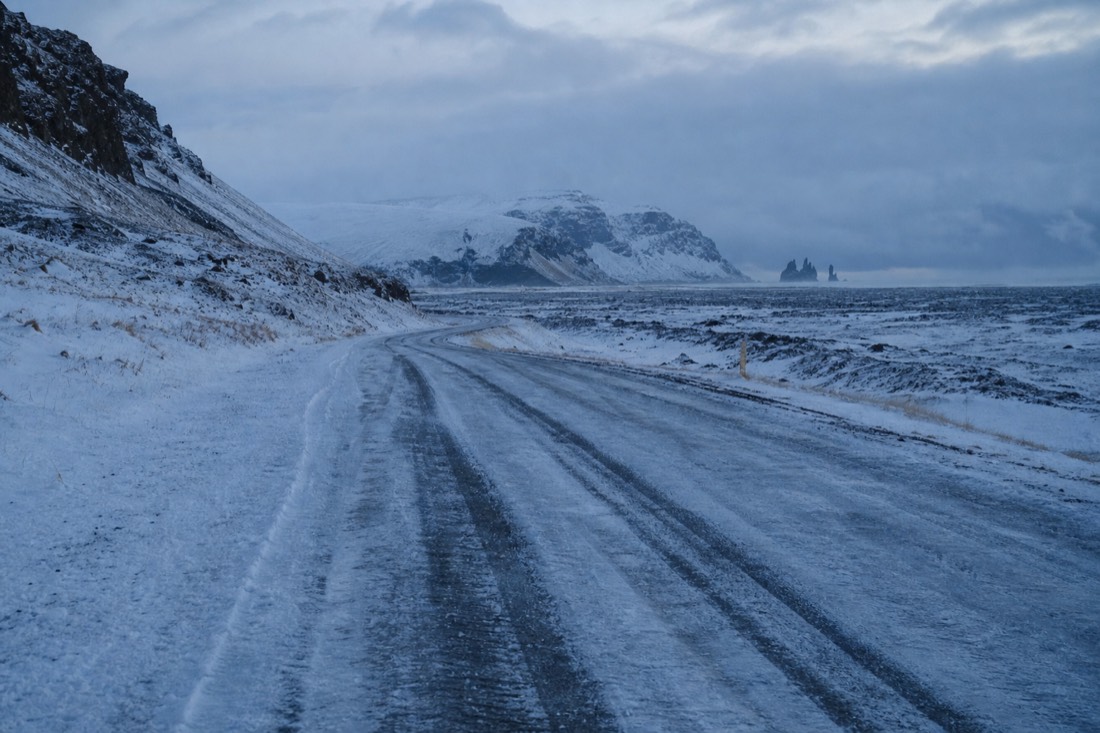
Less far than the map suggests, and mostly in the dark. With 5.5 hours of light, any drive over about three hours each way is a night drive in both directions. The rules are fixed and public: studded tyres are legal from 1 November to 15 April, and every highland F-road is shut for the winter.
| The rule or the resource | What it actually says | Why it decides your January plan |
|---|---|---|
| Studded tyres | Legal 1 November to 15 April | Confirm your rental has them before you accept the car |
| Highland F-roads | Closed for the whole winter | The interior is off the table, no vehicle changes this |
| road.is / vegagerdin.is, phone 1777 | Live road conditions and closures | Check on the morning of the drive, not the night before |
| safetravel.is and the 112 app | Official safety channel, travel plans | Submit a plan for anything remote or self-driven |
| Reykjavík to Vík | About 190 km | Comfortable as a day out with a guide, tight self-driven |
| Reykjavík to Jökulsárlón | About 380 km, roughly 5 hours each way | Not a day trip in January, whatever the forecast says |
The Jökulsárlón line is the one that matters, because the best ice caves are out there. Ten hours of driving in darkness to spend three hours at a cave is a bad day, and it is how people end up making decisions at four in the afternoon that they would not make rested.
That is the argument for handing the driving over entirely: a two or three-day winter package puts you in a hotel out east, so the cave morning starts forty minutes away rather than five hours away, and somebody who drives that road weekly is at the wheel for the rest.
If you are still weighing January against the other winter months rather than planning it, the best month to visit Iceland in winter is the page that does that comparison properly.
Which January booking should you make first?
The ice cave, before anything else. It is the only thing on your list that a summer trip cannot give you and the only one with a hard seasonal window, capacity limited by the number of super jeeps rather than by seats on a coach. Aurora tours can be re-run on a later night. A cave date cannot be conjured.
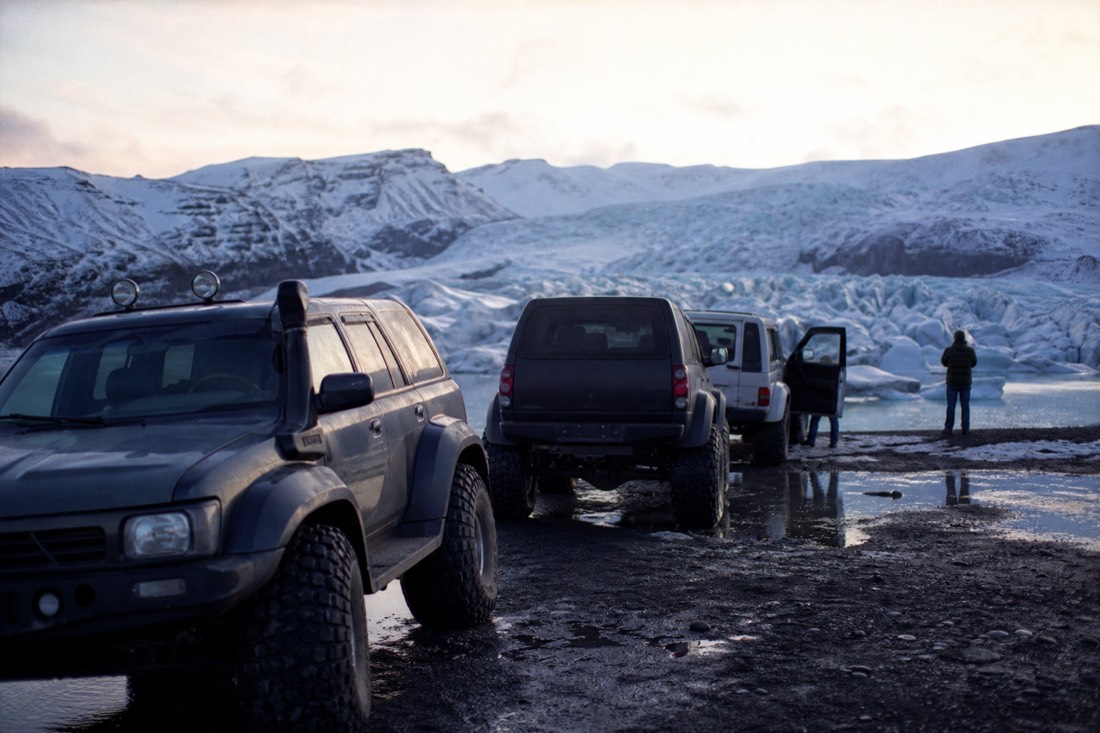
Sequence the rest around it. If the cave day is fixed, the South Coast stops slot in on the way out or back, the Golden Circle fills a day when the eastern forecast is poor, and the aurora attempts go on whichever nights the cloud allows, which is not a thing you can decide in advance from home anyway.
So if the cave is the reason you are coming, book the Jökulsárlón one properly rather than hoping for a walk-up: the Vatnajökull ice cave tours page compares all four we track, and the highest-volume of them, at 4.2 across 2,171 GetYourGuide reviews, is available to check for your dates on GetYourGuide.
For what the inside of one of those caves is genuinely like, including the parts that are less photogenic than the marketing, inside a Vatnajökull crystal ice cave is the first-hand version.
What is Þorrablót, and can a visitor actually go to one?
Þorri is the old Norse midwinter month, beginning on the Friday that falls between 19 and 25 January and running into February. Þorrablót is the feast held during it, built around preserved foods from the era before refrigeration. Most are private or community events, but Reykjavík restaurants put on their own versions and anyone can book those.
This is the piece of January that no daylight table captures and that most visitors miss entirely, usually because they never hear it mentioned. The month opens with bóndadagur, Husband's Day, on the first day of Þorri, and from there the country spends several weeks eating things that were designed to survive a winter without a fridge. Sheep were pickled in whey, fish was hung to dry in the wind, and shark was buried and fermented until it stopped being poisonous. That last sentence is not a joke, it is the actual preparation method.
| On the table | What it is | What to expect | Worth trying? |
|---|---|---|---|
| Hákarl | Fermented Greenland shark | Ammonia on the nose, small cubes, served with a shot | Once, for the story, and nobody minds if you stop |
| Harðfiskur | Wind-dried fish, torn into strips | Salty, chewy, eaten with butter | Genuinely good, and sold in every supermarket |
| Hangikjöt | Smoked lamb | Closer to a Christmas ham than to anything alarming | Yes, without hesitation |
| Svið | Singed sheep's head, halved | Confronting to look at, mild to eat | Depends entirely on how you feel about eye contact |
| Rúgbrauð | Dense dark rye, traditionally baked using geothermal heat | Sweet, moist, heavy | Yes, and take a loaf home |
| Brennivín | Caraway schnapps, the customary chaser | Cold, hard, effective | It is the point of the hákarl, not an accompaniment |
Do not build a January trip around getting into a private Þorrablót, because they are exactly what they sound like: a village hall, a workplace, a family, and an evening of speeches and singing you would need the language for. What is open to a visitor is the restaurant version, which appears on menus across Reykjavík through the month and gives you the food without pretending you have been adopted.
It also solves a specific January problem. A storm day with every tour cancelled is a bad day to have nothing planned, and a long, strange, well-lubricated dinner is a considerably better use of it than another lap of the shopping street. The wider case for what Reykjavík gives you when the weather takes the country away is made in Reykjavík when your tour gets called off.
Is January genuinely the best-value month of the Icelandic winter?
On value rather than on price, yes. The holiday premium has gone by the second week, the same tours run with fewer people on them, and small-group products behave differently when they are not full. What you are getting more of is attention and flexibility, not a discount, and that is the part that changes the trip.
Value in an Icelandic winter is a strange calculation, because the headline costs barely move between the non-holiday months. A restaurant meal costs what it costs. Petrol does not care what month it is. The bill for a January week and a February week, allowing for accommodation demand, lands in a similar place, and anyone promising you a dramatically cheaper Iceland by shifting the dates by four weeks is selling something.
| What you are buying | What January gives you | What the busiest winter weeks give you |
|---|---|---|
| Seats on a fixed-capacity tour | Available closer to the date, though caves still sell out | Booked out further ahead |
| Group size on flexible products | Often smaller, so the guide has room to improvise | Full vehicles, timings held tightly |
| Guide behaviour at a stop | Longer waits, unplanned detours toward clear sky | The schedule wins the argument |
| Space at the big sites | Real. There is room in the car park at Seljalandsfoss | Coaches queued at the popular stops |
| Restaurant tables | Walk-ins work | Reserve, especially at weekends |
| The aurora window | About 18.5 hours of darkness a night | Shorter, though still far more than a tour needs |
The second and third rows are the real prize and they are invisible on any comparison site. A guide with eleven people in a minibus makes different choices from the same guide with a full coach, and in January he makes them in your favour. That is worth more than a percentage off a booking, and it is why regular visitors keep coming back to this month.
Where January genuinely does cost you is daylight, and that is a real price rather than an inconvenience. About 5.5 hours means fewer things per day and more of the country seen through a window at dusk. Whether that trade is worth it for your particular trip is exactly the comparison run in the best month to visit Iceland in winter, and the money side on its own is broken down in what an Iceland winter trip costs.
How do you read a January weather warning and decide what to do?
Treat a road listed as closed and a wind warning as two different signals. A closure is binding and final. A warning is a judgment call that the operators make for you, so the honest answer is usually to let the tour company decide and to keep your own driving plans conservative when the colour on the map goes up.
Iceland publishes more information about its own weather than most visitors know what to do with, and the trap is reading it as a forecast rather than as an instruction. The alerts on vedur.is escalate through yellow, orange and red, and the road picture on road.is is separate from them, updated constantly and answerable by phone on 1777. Both matter. Neither replaces the operator's call on the morning.
| What you are seeing | What it actually means | Who makes the decision | What you do |
|---|---|---|---|
| A road shown as closed or impassable | Binding. It is not a suggestion or a difficulty rating | The road authority | Nothing to decide. That route is gone for now |
| A rising wind warning for your region | Conditions are heading toward dangerous, timing uncertain | The operator, on the morning | Wait for their message rather than cancelling yourself |
| Your tour has not been cancelled but you are nervous | They have seen the same forecast and more of them | The operator, and they have skin in it | Go, or use the 24-hour free cancellation the day before |
| Conditions turn while you are already driving | The situation has changed, not your plan | You | Stop somewhere safe and wait. Do not push on to make a booking |
| Anything remote or self-driven | You are outside easy help | You | Leave a travel plan on safetravel.is and carry the 112 app |
| Everything cancelled, whole day gone | A deep low is sitting on the country | Nobody. It is weather | Take the reschedule and spend the day indoors |
The row people get wrong is the third. There is a persistent instinct to cancel a booking yourself the night before because the forecast looks frightening, and it is almost always the wrong move: the person deciding at the operator's end is giving up their own day's earnings if they pull the departure, which tells you how much discretion is involved. If they are still running, they have a reason.
The row that costs people money is the fourth. A closure that appears mid-route is not an argument with your itinerary, it is the end of that leg, and the calculation that gets someone into trouble is the one that starts with the words already paid for. Nothing on this site is worth that. Every listing here cancels free up to 24 hours ahead, with the Blue Lagoon admission with transfers at two days, and Icelandic operators reschedule or refund their own weather cancellations as standard.
What goes wrong in January, and what happens when it does?
Wind and ice cancel things, and they do it at short notice, usually the evening before or the morning of. Icelandic operators reschedule or refund their own weather cancellations, and every listing on this site allows free cancellation up to 24 hours before departure, with one exception at two days. You lose the day, not the money.
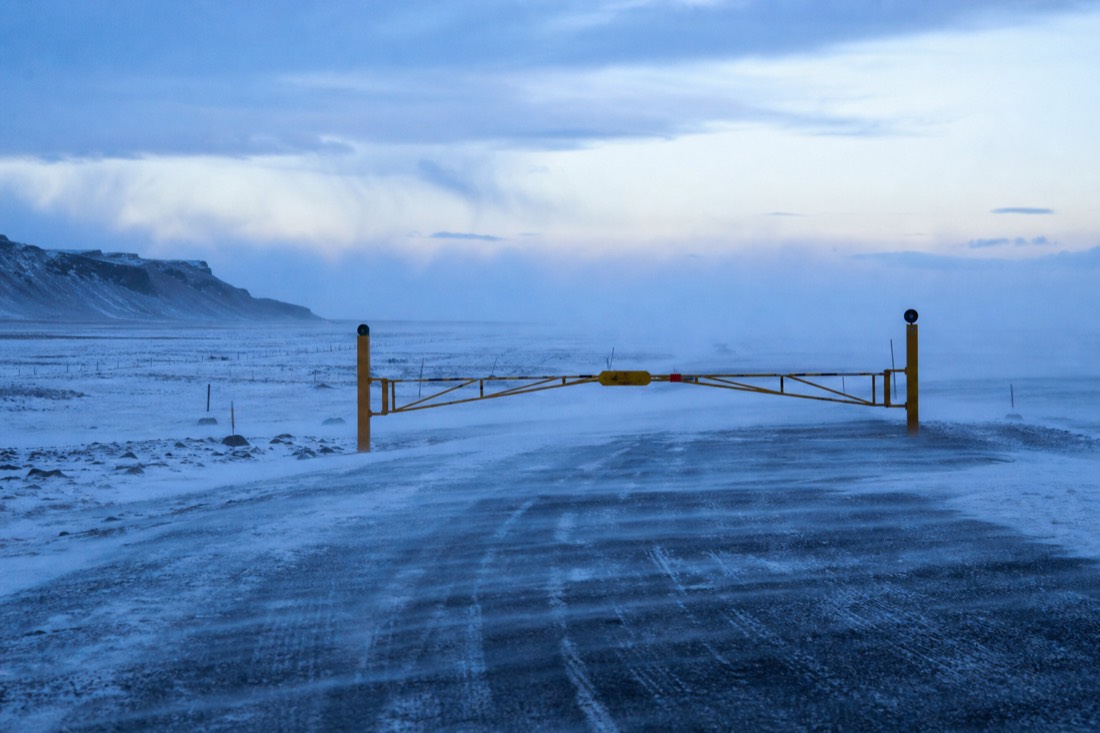
The pattern is predictable even if the individual day is not. A deep low tracks in off the Atlantic, the wind warnings go orange or red, and the South Coast road east of the Markarfljót becomes a place nobody sensible drives. The road conditions map turns from green to a set of colours you will learn to read very quickly, and safetravel.is issues the alerts that the rental companies and operators are acting on.
What separates a ruined January trip from a merely rearranged one is slack in the schedule. If your ice cave day is the last day before your flight, a cancellation is terminal. If it sits on day two of six, the operator moves you to day four and you spend the bad day in a museum or a pool with no real loss. Build the trip with one spare day and the whole month becomes low-risk.
The one thing not to do is argue with the call. A guide cancelling a January departure is giving up his own day's earnings, which should tell you how little discretion is involved. When the wind is strong enough to open a car door into a passing vehicle, and it regularly is, the tour is not going. Somebody in Reykjavík has already looked at the same forecast you have and reached a more experienced conclusion.
Jökulsárlón: Vatnajökull Ice Cave Guided Tour
If January is your month, check the cave dates before anything else: it is the booking with the hard seasonal window, the fixed super-jeep capacity and the 380 km meeting point, and it cancels free up to 24 hours out.
2.5 to 3 hours · English
Check travel dates with GetYourGuide below.
None of these experiences matches that choice. Adjust your preference or reset to the general recommendation.
Compare Options And Plan Your Trip
- The natural ice cave above all
- The season's most stable month for the flagship Jökulsárlón cave.
- Aurora with the longest nights
- 18.5 hours of dark and the free retry on the most-reviewed run.
- Quiet trails and small groups
- The small-group South Coast day behaves differently in January's quiet.
- The full winter week, east included
- Three days with the cave, the lagoon and the beds handled.
Before Booking