Black Sand Beaches in a Snowstorm
Reynisfjara sits 190 km from Reykjavík and has killed visitors. What a February snowstorm on the black sand is really like, and why the safety talk matters.
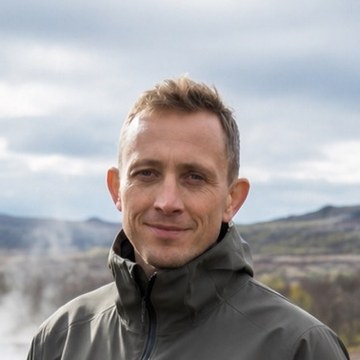 By Björn Einarsson, Icelandic guide & winter tour specialist
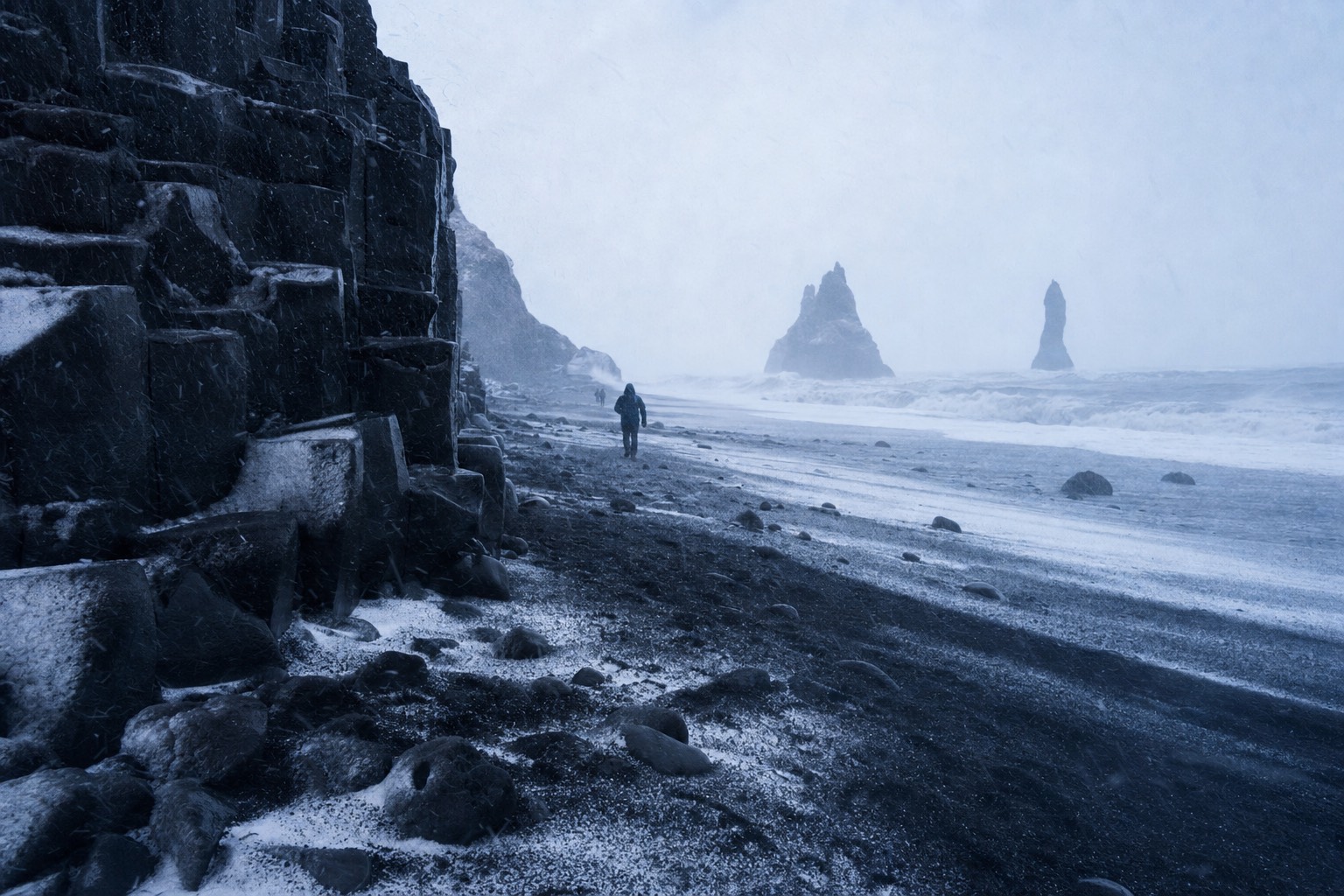
TL;DR. Reynisfjara in February is the most physically impressive half hour on the Icelandic South Coast and the most dangerous place a coach will put you all winter. The sand is black, the columns are hexagonal, the wind comes off open Atlantic with nothing in its way, and the waves do not behave like waves anywhere else you have stood. People have died here. Go, absolutely go, but go understanding that the rope of orange cones and the guide repeating himself in the car park are not decoration.
What is Reynisfjara like in a February snowstorm?
Violent and beautiful in the same breath. Snow moves horizontally rather than falling, the black sand shows through it in patches, and the noise is constant: surf, wind and the rattle of grit against your hood. You will not hear the person next to you unless they shout.
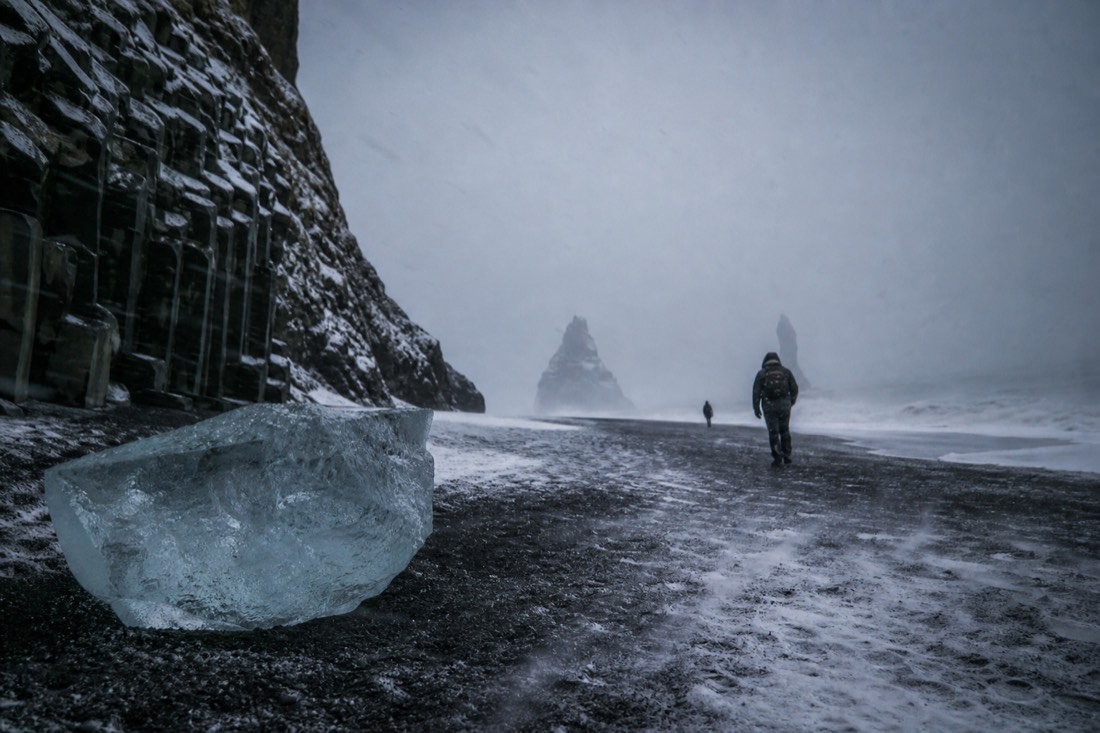
I have stood on that beach in every kind of February the country produces, and the storm version is the one visitors remember. The colour contrast alone does something to people. Black basalt sand, white snow drifting across it, grey-green water throwing itself at the shore, and the sea stacks of Reynisdrangar standing offshore like something left over.
The strange part is how quickly it changes. I have watched a group walk down in near-calm and walk back twenty minutes later leaning into a wind that had arrived from nothing. That is not unusual on this coast. It is the normal behaviour of weather that has crossed a lot of open water and then hit land.
What nobody tells you: the sand gets everywhere. Into your camera, your hood, your teeth. Do not put a lens change anywhere in your plan.
Why is Reynisfjara actually dangerous?
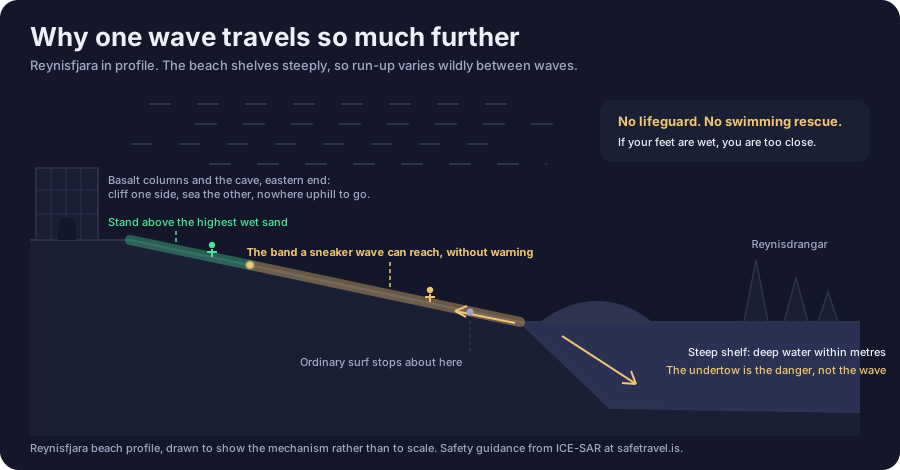
Because of sneaker waves. The beach shelves steeply, so an ordinary run of surf can suddenly send one wave far higher up the sand than the previous twenty, with no warning and no sound to distinguish it. It then pulls back hard into cold, deep water. This beach has killed visitors.
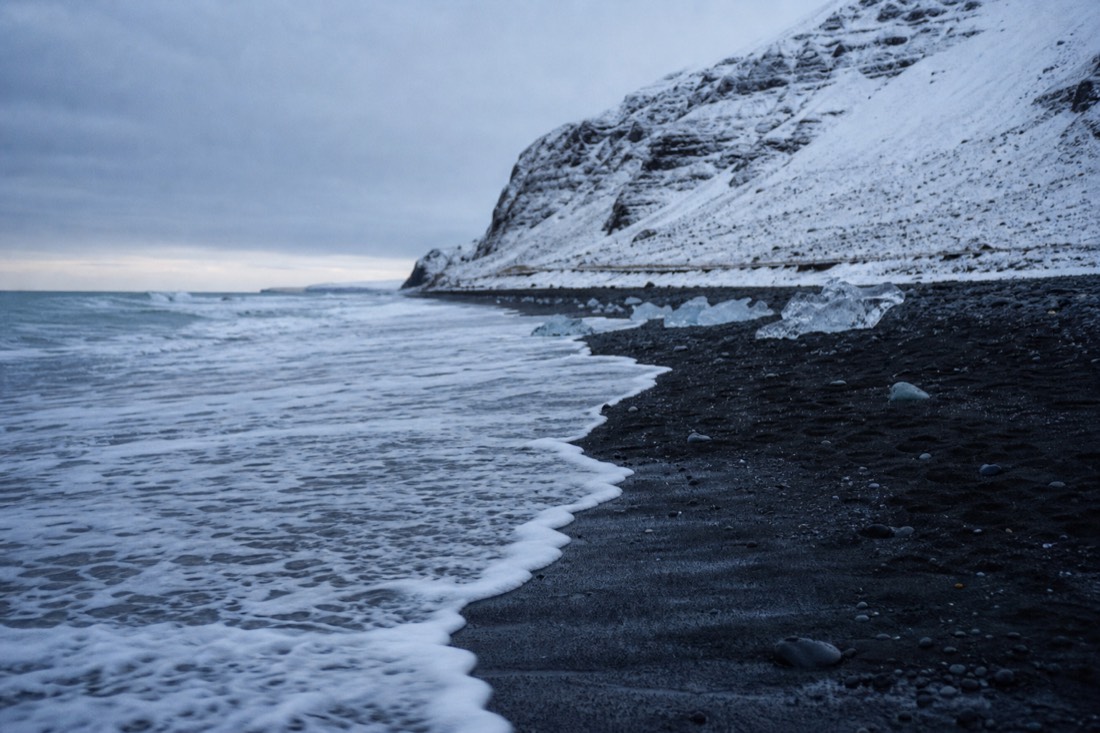
I want to write that part without drama, because drama is what makes people tune it out. The mechanism is simple. Wave sets arriving from deep Atlantic water combine irregularly. Every so often the combination produces one that runs dramatically further up the slope than its neighbours. If it catches you, the problem is not the water hitting you. It is the undertow taking you back down a steep beach into water that is a few degrees above freezing, in winter clothing.
There is no lifeguard. There is no realistic swimming rescue. The official Icelandic advice on this coast, published by ICE-SAR at safetravel.is, is blunt about it, and so is every guide I know.
The rule I give every group and the one I would give you: never turn your back on the sea, and stay far higher up the beach than feels necessary. If your feet are wet, you are already too close.
Is the guide's safety talk theatre?
No. It is the single most useful thing the driver says all day, and it is repeated because it works. A good guide gives you a specific line on the sand you must not cross, tells you the wave mechanism rather than just saying "be careful", and then walks down to watch the group rather than sitting in the coach.
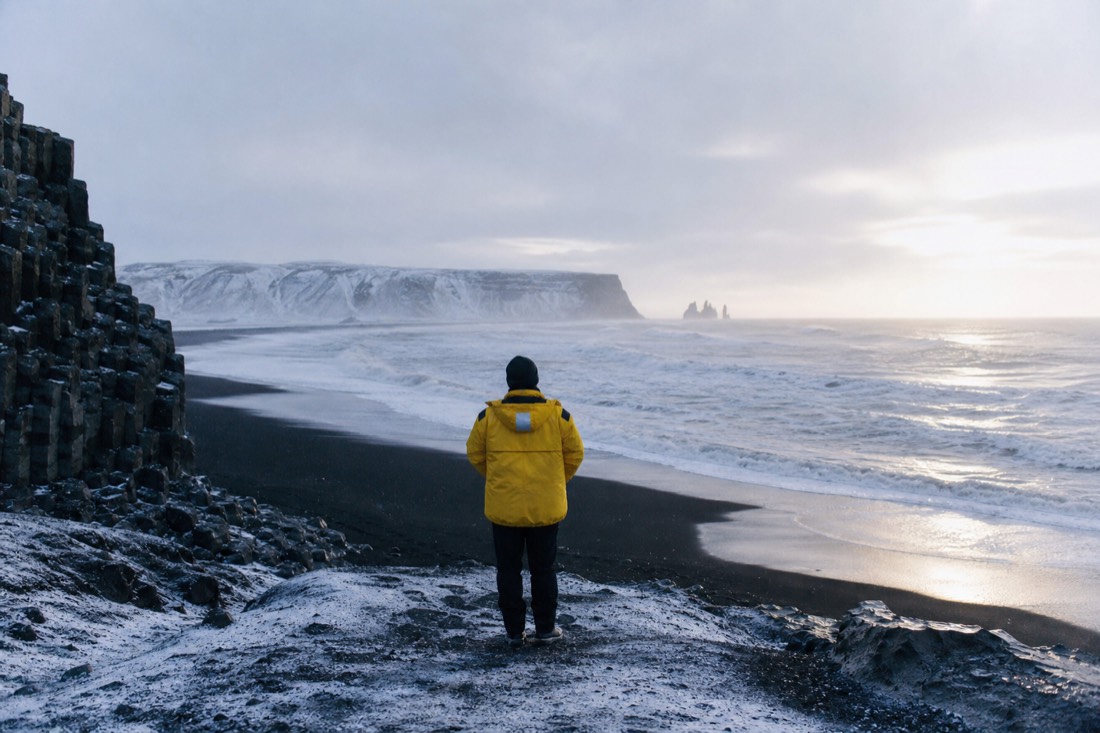
You can judge an operator on this in about ninety seconds. Weak version: "the beach can be dangerous, be back at half past." Strong version: an explanation of why the water behaves as it does, a named boundary, and a guide physically present at the top of the sand for the whole stop.
That difference is one of the reasons I keep recommending the bus over the rental car for this particular stop, and not because the driving is hard. It is because a stranger whose job is watching the water changes the odds. The way I judge operators generally is set out in who actually runs these Iceland tours.
The other thing a guide does is decide not to stop. In a bad enough storm the answer at Reynisfjara is to drive past it, and the operators who do that are the ones worth booking.
| South Coast winter stop | What it is | The winter risk | How long you get |
|---|---|---|---|
| Seljalandsfoss | Waterfall you can walk behind in summer | Ice on the path, the walk-behind often roped off | 30 to 40 min |
| Skógafoss | Wide curtain waterfall, flat gravel approach | Spray freezes on stairs and cameras | 30 to 45 min |
| Sólheimajökull | Glacier tongue, short walk from the car park | Do not walk on ice without a guide and crampons | 45 min or a 3 h hike |
| Reynisfjara | Black sand beach, basalt columns, sea stacks | Sneaker waves, this is the serious one | 40 min to 1 h |
| Dyrhólaey | Arch and headland above the beach | Road sometimes closed in wind, gates shut | 20 to 30 min |
| Vík | Village, food, fuel, red-roofed church | Nothing, this is the warm-up stop | 40 min to 1 h |
What are the basalt columns and Reynisdrangar?
The columns are hexagonal pillars of cooled lava, packed together in a cliff face at the eastern end of the beach, with a shallow cave behind them. Reynisdrangar are the sea stacks standing offshore. Icelandic folklore says they are trolls caught by the sunrise while dragging a ship to land.
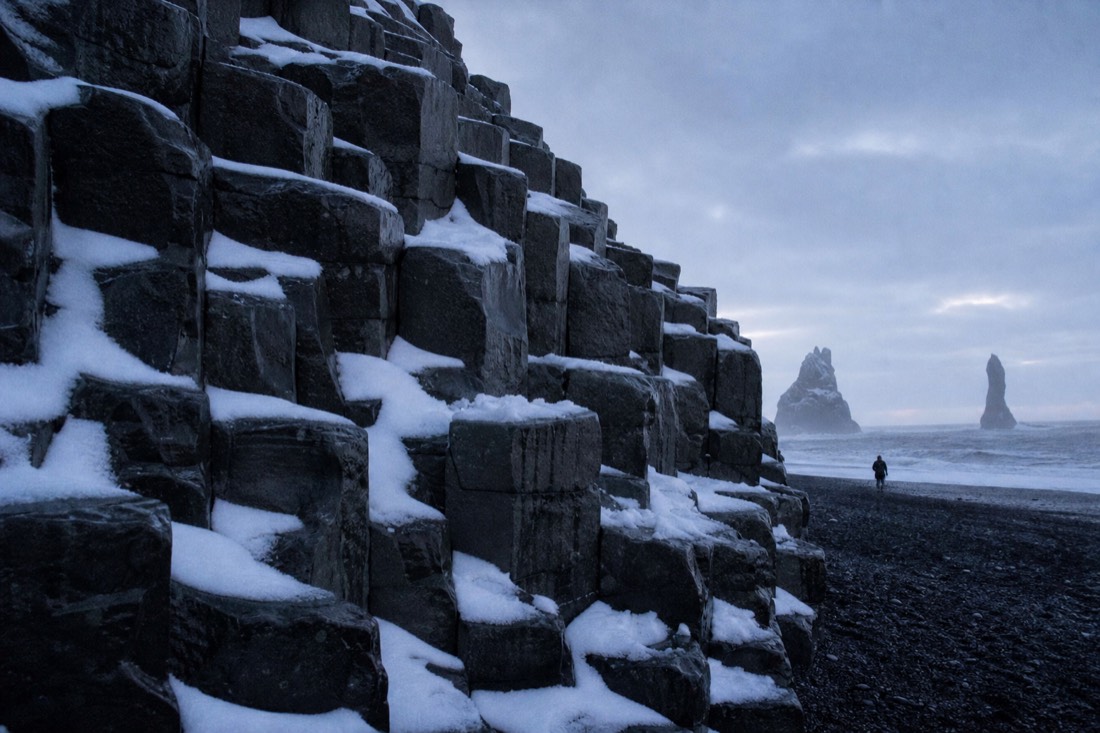
Geologically they are the same phenomenon you get at the Giant's Causeway: lava that cooled slowly and cracked into columns as it contracted. Standing under them is the photograph everybody comes for, and it is genuinely worth the trip.
It is also where the risk concentrates, because people walk east along the sand towards the cave, which puts the sea on one side and a cliff on the other. That is the geometry you do not want when a big wave arrives, since there is nowhere uphill to go quickly.
In a snowstorm the columns look better than in any other weather, which is unhelpful of them. Snow catches on the horizontal fractures and picks out the hexagons. Take the photo from a distance, not from the base.
How do you dress for a beach where the wind decides everything?
Windproof outer shell, hood that fits over a hat, gloves you can keep on, and boots with grip. Reykjavík averages about half a degree above freezing in January, which sounds mild and is entirely beside the point. The wind is what hurts, and on this beach it arrives loaded with wet sand.
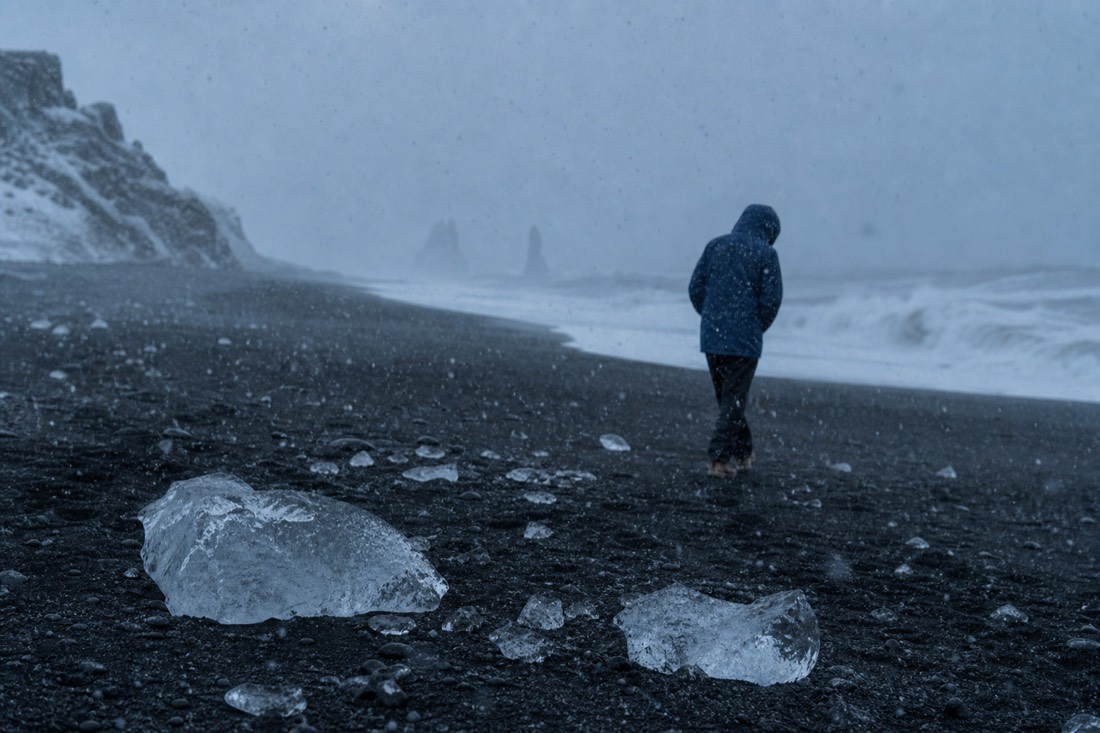
The failure I see most is the good winter coat with no hood, worn with a scarf that blows loose. The second most common is jeans, which soak, hold water against your legs and never dry, and which I have gone on about at length in why nobody wears jeans in Iceland.
| The thing | What fails at Reynisfjara | What works |
|---|---|---|
| Jacket | Any shell without a proper hood | Windproof hardshell, hood with a drawcord |
| Legs | Jeans, cotton trousers | Waterproof overtrousers or lined hiking trousers |
| Feet | Trainers, fashion boots | Grippy waterproof boots, ideally over the ankle |
| Hands | Bare hands for photos | Liner gloves inside mitts |
| Face | Nothing | Buff or balaclava, the sand is abrasive |
| Camera | Changing lenses on the beach | One lens, kept covered until you shoot |
Full layering logic, including the bits people over-buy and under-use, sits in what to pack for Iceland in winter.
Should you drive to Reynisfjara yourself in winter?
You can. Vík is about 190 km from Reykjavík on the main ring road, and it is a straightforward drive in good conditions. In poor conditions it is a long exposed run in the dark at both ends, and the honest question is whether you will cancel your own plan when the road board tells you to.
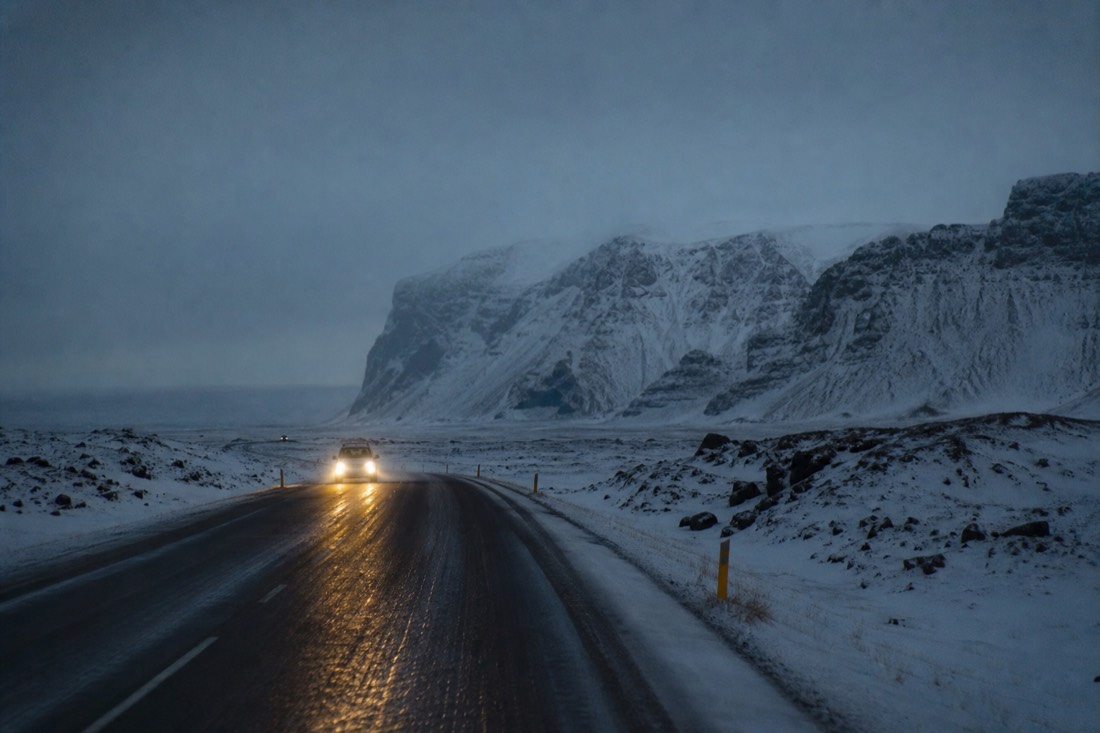
Studded tyres are legal here from 1 November to 15 April, and every serious winter rental has them. Check road.is on the morning of the drive rather than the night before, because the South Coast wind warnings change fast and a closed road at Vík is not negotiable.
| Self-drive | Guided day tour | |
|---|---|---|
| Time from Reykjavík | About 190 km each way, longer in weather | 10 to 12 hours door to door |
| Who watches the sea at the beach | You | A guide whose job it is |
| If the weather turns | Your call, your risk | The operator reschedules or refunds |
| Stops you can add | Anything, if the road allows | Fixed itinerary, more stops than most people manage alone |
| Cost shape | Rental, fuel, insurance, parking fees | One price per seat |
| Best for | Confident winter drivers with spare days | First trips, short trips, dark months |
The full argument, including the insurance details people miss, is in self-drive versus guided tours in winter.
Does the beach need a whole day?
It gets forty minutes, and it should. Reynisfjara is one stop on a corridor that also holds two major waterfalls, a glacier tongue and a village, and the standard winter day tour strings them together in 10 to 12 hours. Going for the beach alone is a poor use of about eleven hours of driving.
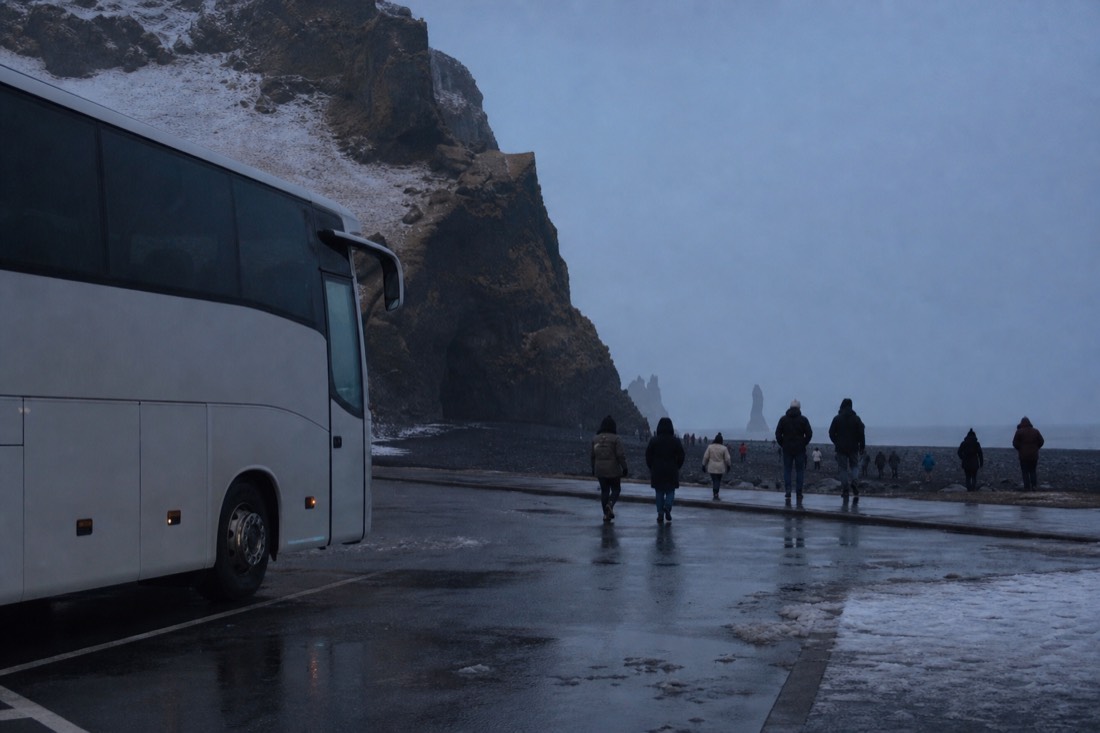
That is the practical case for the bus. In January you have roughly five and a half hours of daylight, so a self-planned trip that stops at four places will run out of light before Vík. A tour driver has done the sequencing hundreds of times and starts in the dark on purpose.
If the black sand is the image in your head, book the day that contains it properly: the South Coast day tours page compares the full-size coach against the small-group minibus, and the most-reviewed of them, run by BusTravel Iceland, is available to check for your dates on GetYourGuide at 4.8 across 12,306 reviews.
Some versions of the day add a Katla ice cave under Mýrdalsjökull, which is a proper winter-only extra and sits further east again, so if you want a cave on the same trip the ice cave tours page is where the comparison actually lives.
When is the beach actually closed, and who decides?
Rarely the beach itself. What closes is the road to it, or the driver's willingness to stop. A ring road closure east of Hvolsvöllur ends the day before it starts, while a bad sea on an open road means the coach arrives, the guide looks at the water, and the stop quietly becomes a longer break in Vík.
Visitors expect a gate and a sign. That is not how this works. There is no barrier at the top of Reynisfjara that swings shut when the surf gets serious, and that absence is exactly why the judgement of whoever brought you matters so much.
| What you might run into | What it actually means | What happens to your day |
|---|---|---|
| Route 1 closed east of the capital | Absolute. No tour vehicle and no hire car goes through | The whole tour is cancelled, then rescheduled or refunded |
| Wind warning, road still open | Marginal, and it becomes a judgement call at the car park | The coach runs, and the beach stop may not |
| The guide declines the beach | The sea state was read as unsafe for a group that size | Longer at Vík or Dyrhólaey instead, and no argument about it |
| Gates shut at Dyrhólaey | The headland road closes in high wind | The arch is off, the beach below may still be on |
| Sand and grit in the air | Abrasive, and it gets into eyes and paintwork alike | Stay in the lee of the vehicles, and this is why sand and ash cover exists on hire cars |
The unpopular version of this is the day the guide says no and the sun is out. I have made that call and been argued with by someone holding a camera, standing on a beach where the water was doing something they could not read and I could. Nobody has ever thanked me for it. That is the job.
Whether a closure is coming is knowable in advance more often than people think. road.is shows the state of the ring road, and the Icelandic Met Office at vedur.is posts the wind warnings that decide it, usually before the road board catches up.
What is the light like on the beach in winter?
Extraordinary, and short. The winter sun barely climbs, so what you get on the South Coast is a low, raking light that behaves like sunrise for the whole of a four to six hour day. On black sand under snow that is the best light in the country, and the trade is how little of it there is.
Photographers work this out fast and everyone else works it out at Reynisfjara. The sun sits so low that the basalt columns hold shadow all day, the wet sand mirrors the sky rather than reflecting a glare, and the sea stacks read as silhouettes against something pink for hours rather than minutes. In June you would be shooting the same beach under flat overhead light at three in the afternoon.
| Month | Daylight in Reykjavík | What the light does on the beach | The catch |
|---|---|---|---|
| November | About 6.5 hours | Low sun, long shadows, colour early and late | Storm season is properly underway |
| December | About 4 hours | Barely a day, but what there is arrives gold | A tour leaves and returns in the dark |
| January | About 5.5 hours | The classic low winter light, snow most likely on the sand | Coldest, and the most cancellations |
| February | About 8.5 hours | Light back to something workable, storms still dramatic | Busier: 147,000 arrivals in February 2026 against 119,000 in January |
| March | About 11.5 hours | Enough day to add stops, softer weather | Less snow on the sand, and less drama with it |
That table is really an argument for February, which is the month I send people to when they want the winter version of this coast without spending the whole trip in the dark. The month-by-month detail sits in Iceland in February, and how little you actually get in midwinter is laid out in the daylight hours guide.
How do people actually get into trouble at Reynisfjara?
Not by swimming. By standing with their back to the sea, by walking east under the cliff where there is nowhere uphill to go, by kneeling for a photograph, and by chasing something the wind took. The last one is the saddest, because it is always an object and never worth it.
Every account of a bad day on this beach comes back to the same handful of ordinary decisions. None of them look reckless in the moment. That is the point, and it is why the guide's talk is specific about behaviour rather than vague about danger.
| The behaviour | Why it goes wrong here | What to do instead |
|---|---|---|
| Turning your back to pose for a photo | You do not see the set arrive, and there is no sound cue | Face the water and shoot over your shoulder |
| Standing on wet sand | Wet sand marks where the last big wave reached, and the next one goes further | Stay well above the wet line, further than feels silly |
| Walking east towards the cave under the cliff | Sea one side, rock the other, nowhere uphill to run | Photograph the columns from back up the beach |
| Kneeling or sitting for a low angle | You cannot get up and move from a kneel in the time you have | Shoot standing, every time |
| Chasing a hat, a lens cap, a phone | People have gone into the water for objects | Let it go. It is a hat |
| Going in after someone who is caught | The rescuer becomes the second casualty | Call 112, throw anything that floats, stay out of the water |
If the worst happens, the emergency number is 112, and the 112 Iceland app shares your GPS position with the responders, which is one of several things the official ICE-SAR advice asks visitors to set up in advance, which matters on a coastline where "the black beach" describes a lot of kilometres. Have it installed before you leave Reykjavík, not while you are standing on the sand.
Is Vík worth more than a toilet stop?
More than most itineraries give it. Vík is the only real service point on this stretch: fuel, a hot meal, a shop, and a church on the hill with the best overview of the whole black coast. On a 10 to 12 hour winter day it is also the only warm indoor hour you get.
Coach itineraries treat Vík as the pause between the beach and the drive home, and passengers treat it as a queue for a sandwich. Both are underselling it. Walk up to the church if the wind lets you, because from there the sea stacks, the beach, the cliffs and the glacier behind the village all line up in one view, and you finally understand the geography you have been driven through all day.
| What Vík gives you | Why it matters in winter | Rough cost |
|---|---|---|
| Fuel | The last dependable stop before the long eastern run | Petrol runs roughly 250 to 300 ISK a litre |
| A hot meal indoors | Often the only warm hour on a 10 to 12 hour day | A restaurant meal runs roughly 3,000 to 5,000 ISK |
| Toilets and a shop | Every coach schedule is quietly built around these | Small change, and cards work everywhere anyway |
| The church on the hill | The single best overview of this coast, and it is free | Nothing but ten minutes and a headwind |
| A bed for the night | Puts the glacier lagoon in reach the next morning | Budget for it: Reykjavík nights run 25,000 to 40,000 ISK |
Staying out here rather than driving back is the single change that improves a South Coast trip most, and it is the same logic that makes the multi-day winter packages better value than three long day trips from the capital. Where to base yourself for a winter week is worked through in where to stay in Iceland in winter.
Is Reynisfjara worth it in winter?
Yes, more so than in summer. Snow on black sand is a thing you will not see anywhere else, the crowds thin out, and the sea is at its most theatrical. The condition is that you treat the water with more respect than the setting invites.
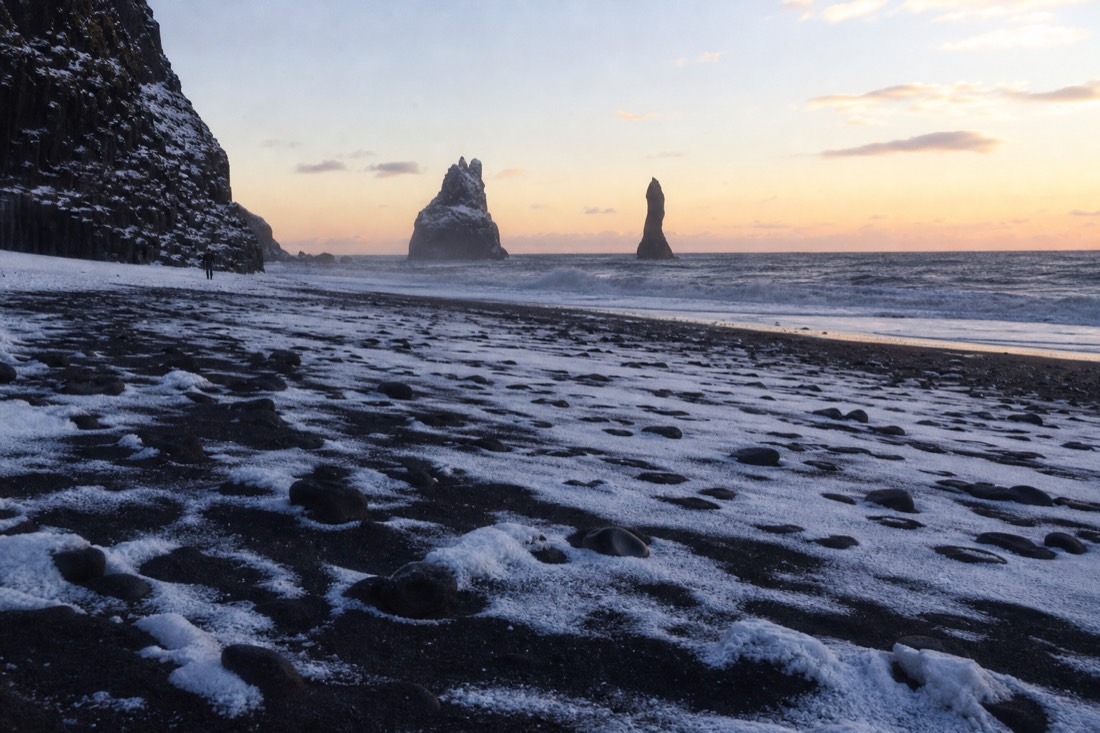
Go in February if you can, when the light has come back to about eight and a half hours and the storms are still doing interesting things, and the month-specific detail is in Iceland in February. Go in a group, stay well up the sand, and let the guide be tedious about it.
And if the day gets cancelled, take that as the system working rather than failing. Operators here call off South Coast runs several times a winter, which is a story in itself, told in the day the weather cancelled everything. Anything else you are wondering about winter stops and conditions is probably answered on the questions page.
From Reykjavík: South Coast Waterfalls, Glacier and Black Beach Day Tour
February is the month this article sends you to, and the day containing the beach is the booking to make first: the most-reviewed South Coast run cancels free up to 24 hours out, which is the system working when the coast goes red.
10 to 12 hours · English
Check travel dates with GetYourGuide below.
None of these experiences matches that choice. Adjust your preference or reset to the general recommendation.
Compare Options And Plan Your Trip
- The full corridor day
- Waterfalls, black sand and the glacier tongue in one 10 to 12 hour run.
- A small-group version
- 4.8 across 6,418 Viator reviews, minibus pacing.
- The beach plus a Katla cave
- The corridor day with the winter-only cave added.
- A shorter waterfalls run
- 4.6 across 1,812 reviews, for tighter days.
- The overnight version
- Sleep past Vík and reach the lagoon country next morning.
Before Booking