Iceland in February 2027: The Month That Does Both
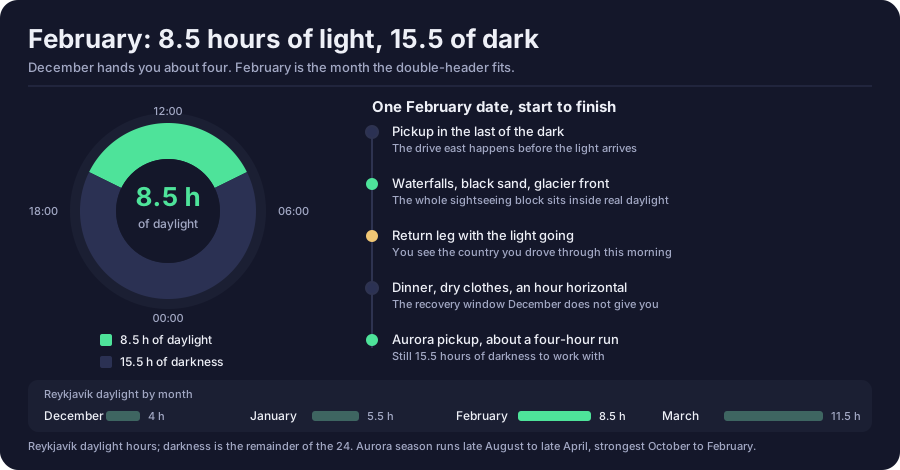
About 8.5 hours of daylight and 15.5 of dark. February is the one winter month where a full day tour and a night of aurora hunting fit on the same date.
 Written with Björn Einarsson, Icelandic guide & winter tour specialist
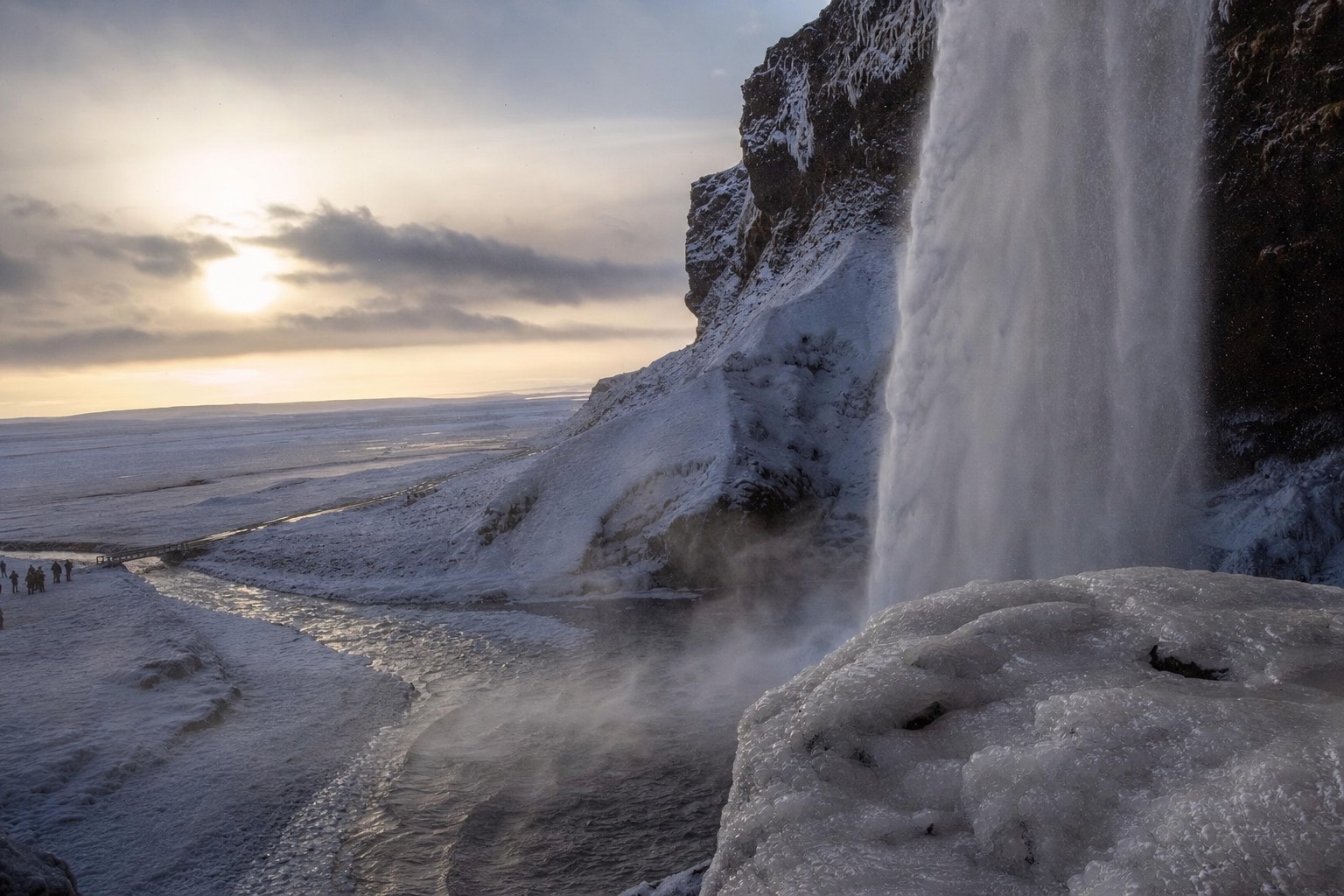
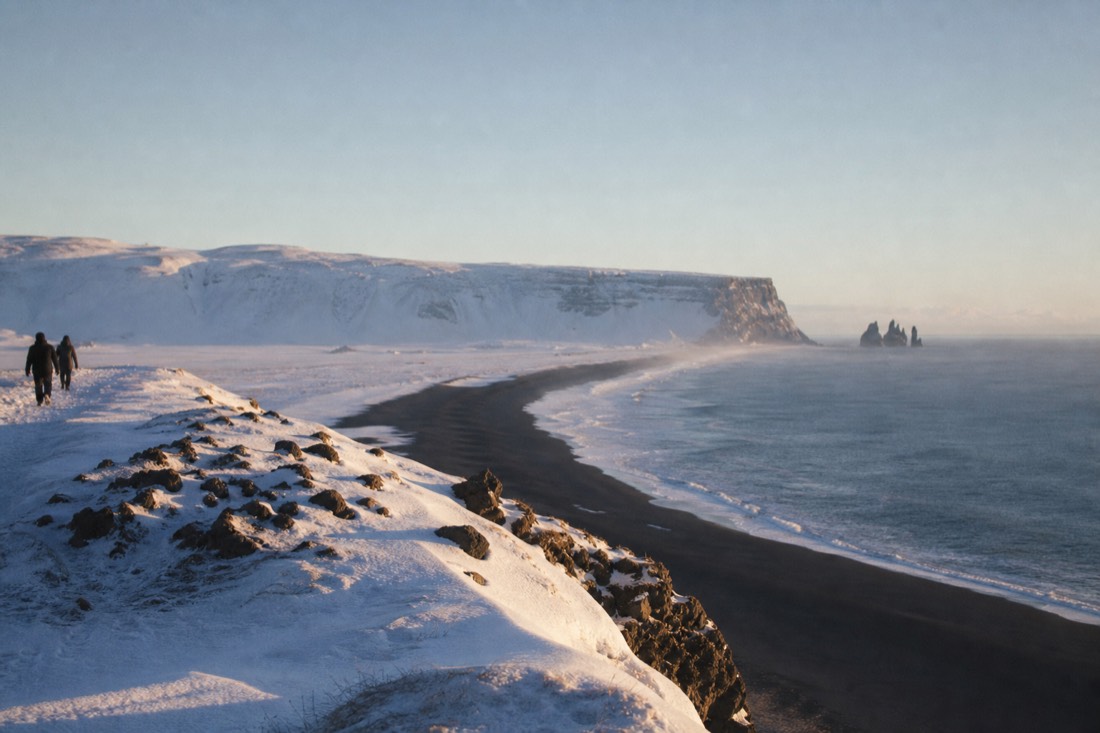
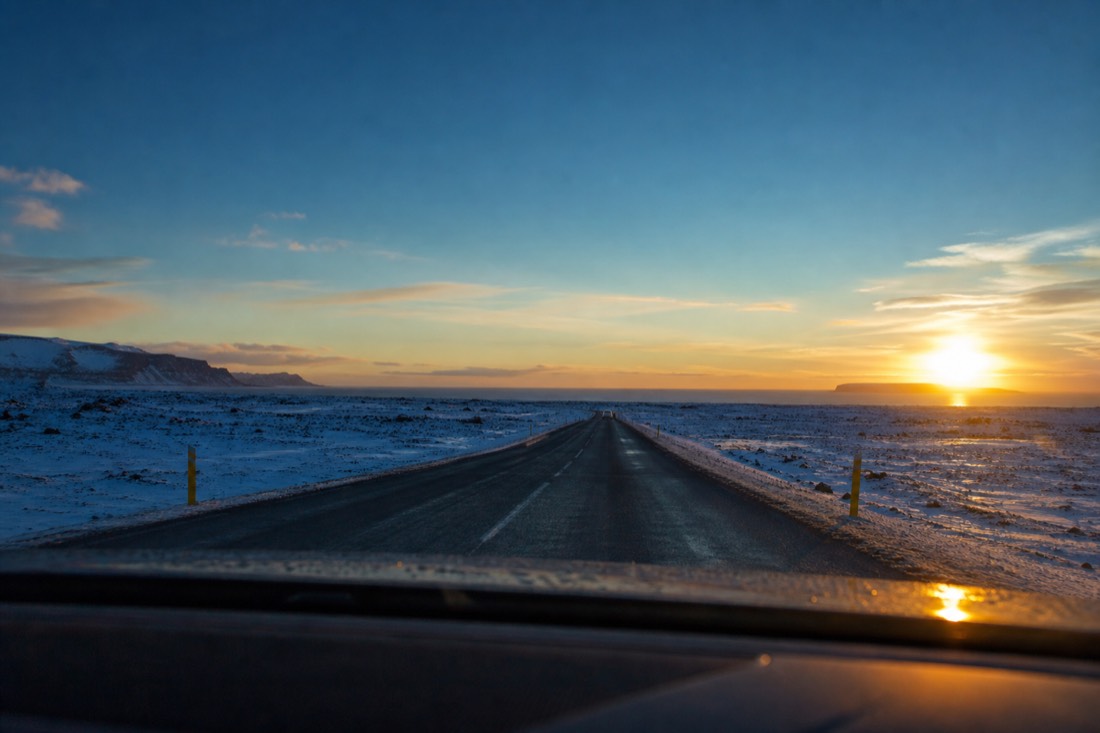
The giveaway that the winter has turned is a small one. Some time in early February you come back down the South Coast road and the cliffs above Vík are still visible in the mirror, properly visible, not a grey suggestion. Two months earlier that same drive was two hours of headlights and reflective posts. Nothing about the weather has improved. There is simply more of the day, and it changes what you are allowed to attempt.
TL;DR. February gives Reykjavík about 8.5 hours of daylight against 15.5 hours of darkness, and that balance is the whole argument for the month. A ten-hour day tour no longer eats the entire date, so a full day out and an aurora hunt at night become one plan rather than two competing ones. Natural ice caves are still running. The aurora is still inside its strongest stretch. The country is busier than in January, with 147,000 foreign visitors through Keflavík in February 2026 against 119,000 the month before, and it is still nothing like summer.
Can you do a full day tour and chase the aurora on the same February night?
Yes, and February is the first winter month where it stops being punishing. With about 8.5 hours of daylight you can take a full sightseeing day, be back in Reykjavík for an early dinner, and still make an aurora pickup a couple of hours later. In December that same pairing means fourteen hours out with almost no light in the middle.
The reason it works is that Icelandic day tours are long because of driving distances, not because of the light, so their length barely changes across the winter. What changes is how much of that length you can see out of the window and how wrecked you are at the end of it. Add four hours of daylight to a December day and the same coach ride stops feeling like an endurance event.
| Stage of a February day | What you are doing | Why February specifically allows it |
|---|---|---|
| Early morning pickup | Leaving Reykjavík in the last of the dark | The drive east is short before the light arrives |
| Mid-morning to mid-afternoon | Waterfalls, black sand, glacier front | The whole sightseeing block sits inside real daylight |
| Late afternoon return | Driving back with the light going | You see the country you drove through in the dark |
| Early evening | Dinner in town, dry clothes, an hour horizontal | The recovery window that December does not give you |
| Night pickup | Aurora hunt, roughly a four-hour run | Still 15.5 hours of darkness to work with |
The recovery hour in the middle is the part people leave out of the plan, and it is the reason the double-header collapses in December and holds in February. You are not superhuman. Coming back damp at four in the afternoon and going out again at nine is fine. Coming back damp at seven and going out again at nine is not.
If you are building the whole trip rather than one day of it, the sequencing logic lives in how many days you need for an Iceland winter trip.
What does 8.5 hours of light change about a February itinerary?
It changes the unit of planning from one activity per day to one and a half. The extra light does not add stops to a coach tour, whose route is fixed, but it lets you put something genuinely different at each end of the day, and it makes self-driving between towns a reasonable proposition again rather than a night-driving exercise.
Think of the winter light as a budget that grows every week from the solstice onwards. December hands you about four hours, January about 5.5, February about 8.5, and by March you are up to 11.5, which is more than a lot of people get at home. February is the point where the budget crosses the line into ordinary. You can have a slow breakfast and still catch the light.
The second-order effect is on where you sleep. With four hours of light there is very little point moving out of Reykjavík, because you will arrive at your countryside hotel in the dark and leave it in the dark. With 8.5 hours, a night in Vík or out east starts earning its keep: you get a morning there, a real one, and the drive back is scenery rather than a tunnel of headlights.
Costs do not move much across the winter months, and the practical constraints on a February day are the same ones the rest of the season deals with, so the recurring questions about pickups, cancellation windows and what happens when the weather turns are collected on the FAQ page.
Is February still an ice cave month?
Yes. Natural ice caves run roughly November to March, so February sits comfortably inside the season and gets caves that have had a full winter to refreeze. It is also the last month of the strongest aurora stretch, October to February, which is why the two winter-only experiences still stack neatly in the same trip.
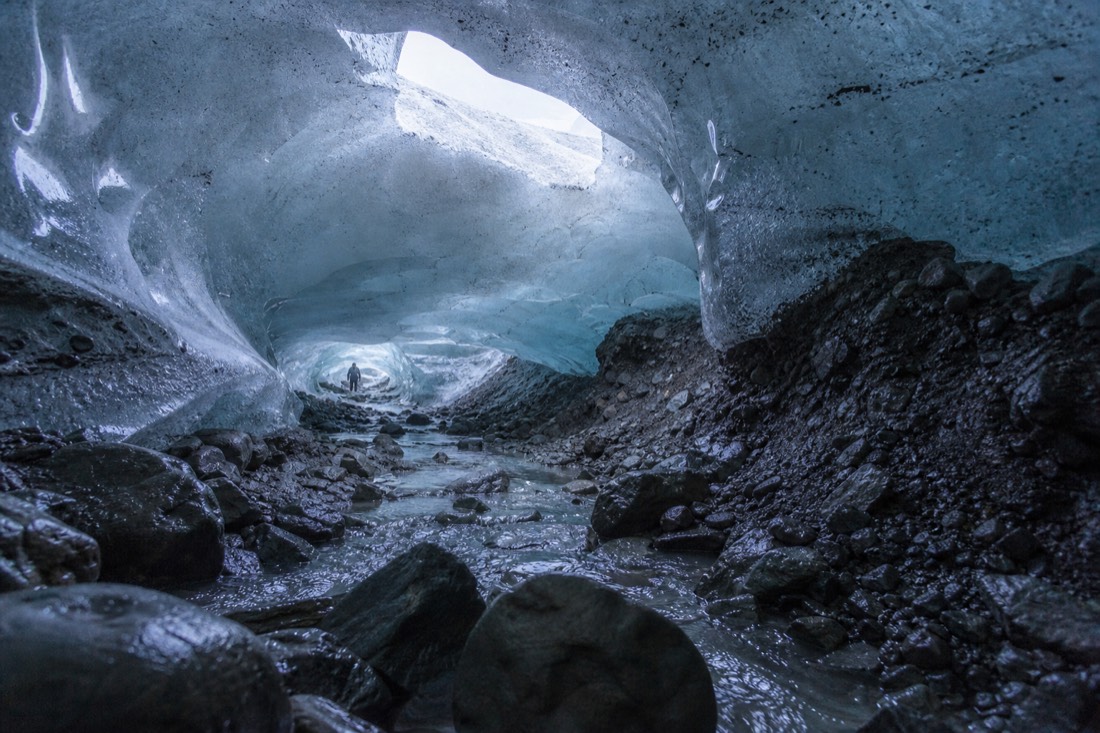
The caves are carved by meltwater and re-form each cold season, so they are never the same twice, and the guiding companies spend the autumn finding out what this particular winter has produced. By February those decisions are long settled and the routes are well worn. What you lose against the depth of winter is a little margin at the end of the season, since the caves close as the melt starts, and nobody can tell you in advance exactly when that will be in any given year.
| Winter-only thing | Its season | Where February sits in it |
|---|---|---|
| Natural ice caves | Roughly November to March | Inside the season, with settled routes |
| Strongest aurora stretch | October to February | The last month of the peak; the season itself runs to late April |
| Hours of darkness | About 15.5 in February | Down from 18.5 in January, still plenty for a night hunt |
| Daylight recovery | About 8.5 hours, rising to 11.5 by March | The last month where the dark is still an asset |
Read the second row carefully, because it is the one that gets misquoted. The aurora season does not stop at the end of February. It runs from late August to late April, and people see the lights in April every year. What ends is the peak, the stretch where the nights are long enough that a single evening gives you a wide window rather than a narrow one.
The practical consequence for a February booking is that the cave should still go in the diary first, since its season is the tighter of the two: the ice cave tours page sets out which glacier each product actually goes to, which matters far more than whose photograph is bluest.
And if the choice between February and one of the darker months is still open, the best month to visit Iceland in winter weighs them against each other properly instead of selling you the one you are already reading about.
How busy is Iceland in February compared to the depth of winter?
Busier than January, quieter than anything you would recognise as high season. 147,000 foreign visitors came through Keflavík in February 2026, against 119,000 in January. The difference is real but modest, and it shows up as fuller departures rather than as queues at the sites themselves.
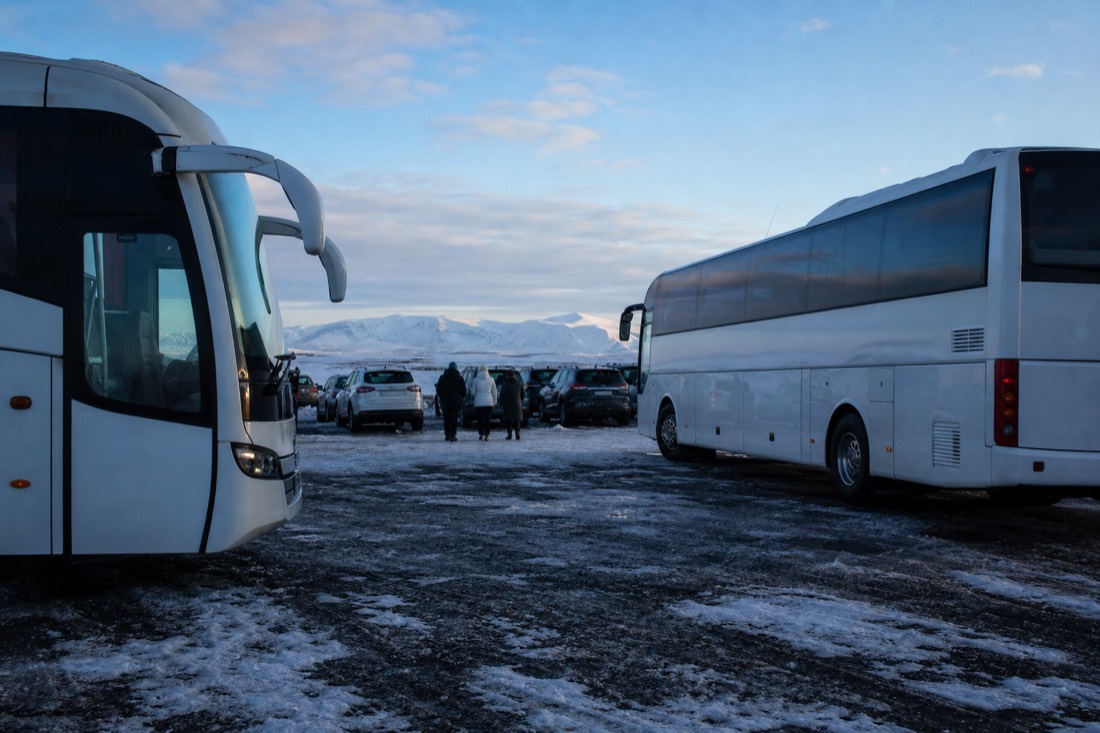
That extra 28,000 people is spread across a whole country over a whole month, so the crowding effect is concentrated exactly where you would expect: the popular Reykjavík departures, the small-group products with fixed capacity, and hotel availability at weekends. The waterfalls themselves do not feel crowded in February in the way they do in July.
The volcanic question comes up on every February enquiry I get, so here is the plain version. The activity is on the Reykjanes peninsula, southwest of the capital, and it has been going in episodes since December 2023. Flights have kept running. The official status is published at safetravel.is, and the lagoon's own operating position is at bluelagoon.com. Those two pages settle the question faster than any news article will.
How often does February weather cancel things, and what happens to your money?
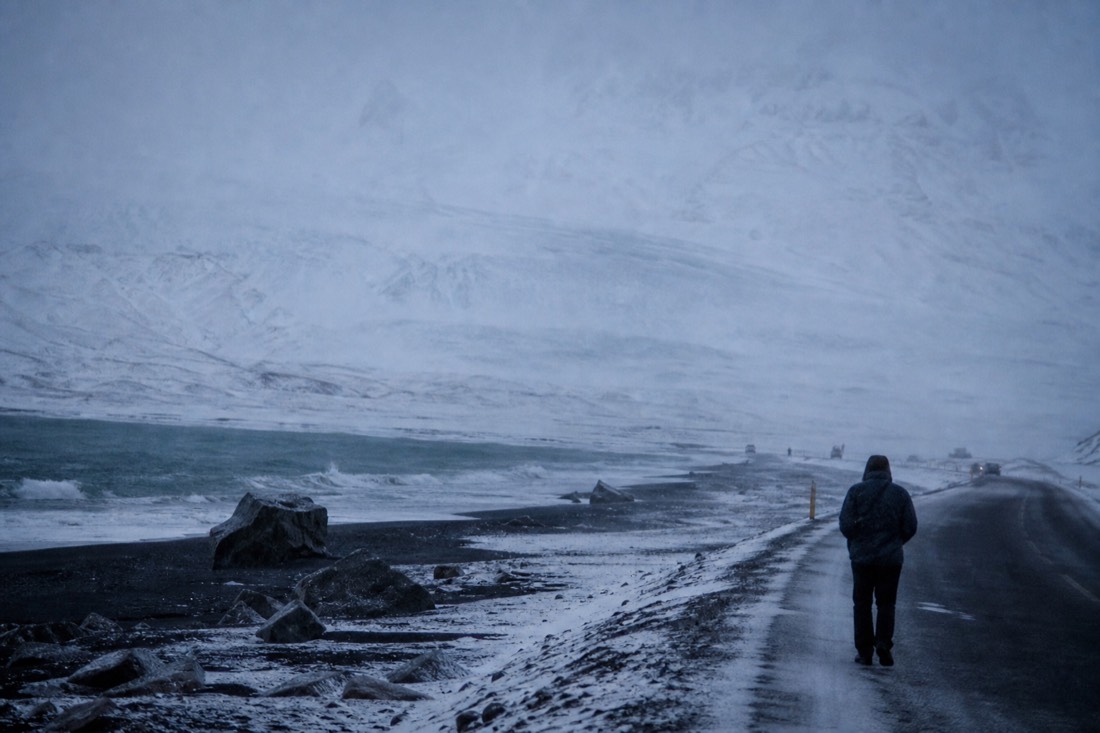
Often enough to plan for, and the money is not the part that hurts. Icelandic operators reschedule or refund their own weather cancellations, and every listing on this site allows free cancellation up to 24 hours before departure, with one exception at two days. What you actually lose is the date, which is why slack in the itinerary matters more than insurance.
| What goes wrong | What the operator does | What you should do |
|---|---|---|
| Operator cancels for wind or ice | Reschedules you or refunds it | Take the reschedule if you have a spare day |
| You need to pull out yourself | Free cancellation up to 24 hours ahead | The exception is Blue Lagoon admission with transfers, at two days |
| Aurora tour runs, sky stays shut | Listing terms give a free retry night | Use it; it is the whole reason to book a guided run |
| Road closed on the morning | Departure is pulled before pickup | Check road conditions yourself before you set out |
| Precautionary Blue Lagoon closure | Rebooking handled by the venue | Check the seismic status page the day before |
None of this works if your one attempt at the thing you came for is on the final morning. A February week with a spare day absorbs a cancellation without drama. A February long weekend with three fixed bookings and a flight home does not, and that is a planning failure rather than a weather one.
For an honest account of a day when the wind took every booking off the board at once, and what you do with the hours that follow, the day the weather cancelled everything is worth ten minutes before you build a tight schedule.
What is the strongest February pairing to book first?
A full South Coast day and a guided aurora run on the same date. The South Coast holds the waterfalls, the black sand beach and a glacier front in one route, and in February you see almost all of it in daylight instead of guessing at it. Book that pairing, then fill the remaining days around it.
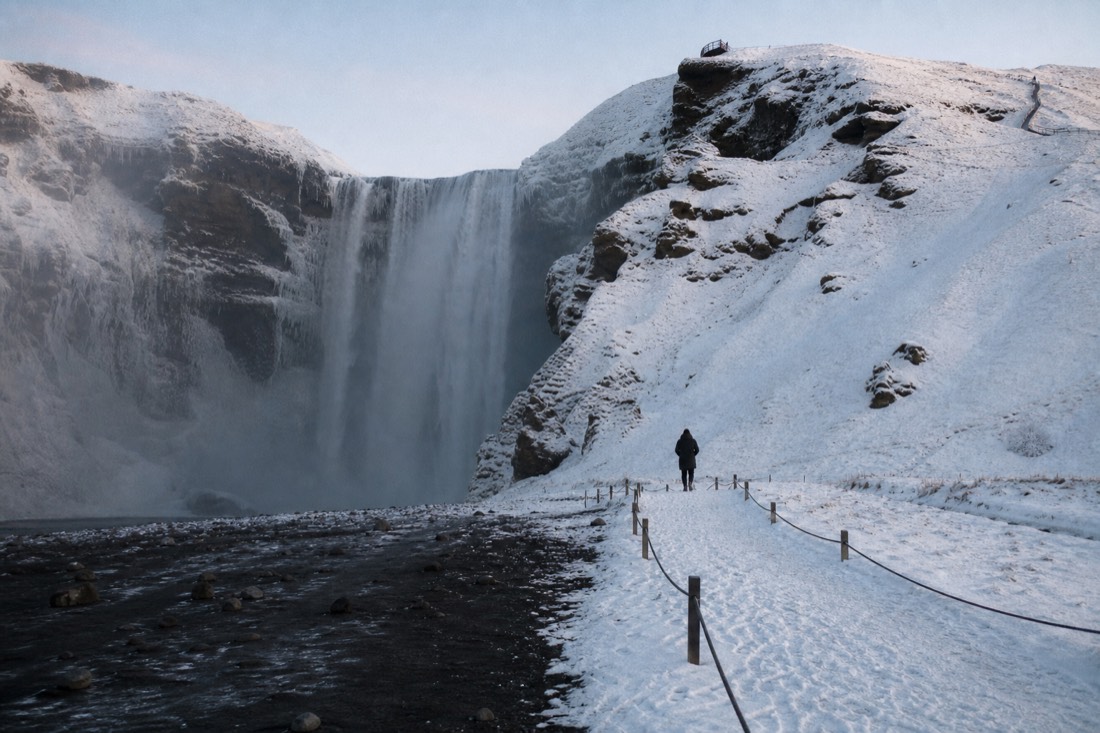
The South Coast is the day that most rewards the extra light, because it is a long, linear route with the good material spread along it. In December a lot of that route passes in the dark and you are essentially paying for three stops. In February you get the country in between as well: the cliffs, the fields, the glaciers hanging above the road, all the things that explain why the stops look the way they do.
So if you are booking one full day in February, make it that one: the South Coast tours page compares the four we track, and the most-reviewed day tour in the whole set, at 4.8 across 12,306 GetYourGuide reviews, is available to check for your dates on GetYourGuide.
Pair it with the night. The northern lights tours page compares the aurora runs on their retry terms rather than their photography, and the retry is the part that decides whether one booking becomes one attempt or three.
Does half-term change what you can book in February?
Yes, in the middle of the month. British and Irish school half-term usually lands in mid-February, and the American Presidents' Day holiday falls on the third Monday, so two large travelling populations overlap for roughly a fortnight. It shows up as family-sized rooms and small-group tours going first, not as crowds at the sites.
This is the single most underrated planning fact about the month, and it explains why February can feel calm on one week and tight on the next. The February visitor total, 147,000 foreign arrivals through Keflavík in 2026 against 119,000 in January, is not spread evenly across four weeks. It clusters, and it clusters around school holidays in the countries that send the most winter visitors.
| Who is travelling | Roughly when | What it puts pressure on | What to do about it |
|---|---|---|---|
| UK and Irish families, school half-term | Usually mid-February, and dates vary by region | Family rooms, triples, anything sleeping four | Book accommodation before tours |
| US visitors over Presidents' Day | The third Monday of February and the weekend around it | Long-weekend departures out of Reykjavík | Avoid putting your one big tour on that Saturday |
| Couples and photographers | Spread across the whole month | Small-group and photo-led products | Book the small-group version early or take the coach |
| Everybody, at weekends | Every Friday and Saturday | Reykjavík rooms and restaurant tables | Put your countryside night on a weekday |
| Nobody in particular | The first and last weeks | Very little | This is where the quiet February hides |
If your dates are fixed by a school calendar, the move is not to fight it, it is to reverse your booking order. In an ordinary February you book the ice cave first because its season is tighter than anything else. In half-term you book where you are sleeping first, because a family room in Reykjavík mid-February is a scarcer object than a seat on a super jeep, then you fit the tours around it. Everything else about travelling with children in an Icelandic winter, including what to do with them on a written-off day, is in Iceland with kids in winter.
If your dates are not fixed, the first week of February and the last are noticeably easier, and they still give you the daylight that made you choose the month. That is the closest thing to a free upgrade available in the whole winter calendar.
How do you build a February week that survives a storm?
Put your least reschedulable booking early, keep one day genuinely empty, and hold two short Reykjavík-area options in reserve. Iceland's winter roads close often for snow and wind, and February is no exception. The itinerary that breaks is the one with something unmissable on the final morning.
The mistake is not underestimating Icelandic weather, most people arrive respectful of it. The mistake is building a week where every day carries a fixed booking, so a single storm does not cost you one day, it costs you the ability to move anything at all. Slack is the only real insurance, and it is free.
| What you have booked | How exposed it is to a storm | How easily it moves | Where it belongs in the week |
|---|---|---|---|
| Ice cave at Jökulsárlón | High. A long eastern drive plus glacier access | Hard, the season and the capacity are both tight | Day two or three, never the last day |
| Full South Coast day | High. It is the road that closes most visibly | Moderate, they run most days | Early, with a spare day behind it |
| Golden Circle | Moderate. Shorter, closer, more often drivable | Easy, it runs constantly | The natural substitute when the east is off |
| Northern lights run | Weather-dependent by definition | Easy, the retry night exists for this | Any clear night, starting with your first |
| Blue Lagoon or Sky Lagoon | Low. Short transfer, and better in bad weather | Easy, though the lagoon needs two days' notice to cancel | The reserve card for a ruined afternoon |
| Whale watching or Silfra | Low to moderate, and short either way | Easy | Held back deliberately, bookable at short notice |
Read the last column as the actual instruction. Front-load the fragile things, keep the resilient ones in your back pocket, and leave one day with nothing on it at all. A February week built that way absorbs a full storm day without losing anything you came for. A February long weekend with three fixed bookings and a flight home cannot absorb anything, which is a planning failure rather than bad luck.
The reserve options matter more than people expect, because they turn a lost day into a different one. A lagoon in falling snow is better than a lagoon in still air, and a Silfra drysuit snorkel is indifferent to the air temperature entirely. Both run on days when the eastern road is shut, and both can be picked up at short notice when the morning message arrives cancelling something bigger.
What changes between early and late February?
The light, mostly. February opens closer to January's 5.5 hours and ends closer to March's 11.5, so the same month gives an early visitor a winter trip and a late visitor something noticeably longer. The ice cave season is still solid throughout, and the aurora's strongest stretch runs to the end of the month.
People treat February as one thing, and by the last week it has become a different month from the first. Nothing on the calendar marks the change. You simply notice that the drive back from Vík happens in daylight, that the glacier is visible from the road rather than implied by it, and that the aurora pickup no longer feels like it is starting immediately after dinner.
| The decision | Early February | Late February |
|---|---|---|
| Daylight to work with | Closer to the January end of the range | Closer to the March end, and climbing weekly |
| Realistic reach in a day | The classic South Coast run, well within the light | Longer linear routes, with the return leg still visible |
| Ice caves | Settled, mid-season, routes well worn | Still running, though the season's end is ahead |
| Aurora window | Long nights, still deep in the strong stretch | Shorter nights, still inside the peak until month end |
| Crowds | The quiet first week | Half-term traffic easing off again at the very end |
| A night outside Reykjavík | Worth it | Worth considerably more, because you get a real morning |
The row that should move a booking is the last one. With the shorter early-February day, staying out east buys you a cave morning and not much else. By the end of the month it buys you a morning, a drive you can see, and an afternoon on the way back, which is when a two or three-day package stops being a way to avoid night driving and starts being a way to see more country.
The row that should not move a booking is the cave. It is tempting to read late February as risky because the caves close eventually, and it is not: the season runs roughly November to March, and nobody can tell you in advance where within March a particular winter will end it. Late February sits comfortably inside that. What genuinely runs out at the end of the month is the peak of the aurora stretch, October to February, and even that is a change in window length rather than an off switch, since the season itself runs to late April. The month-by-month version of that argument is laid out in the best month to visit Iceland in winter.
What Björn books differently once March is in sight?
He stops protecting the winter-only things and starts using the daylight. Once the light is back past about ten hours, the argument for basing yourself in Reykjavík and radiating outward weakens, and moving along the coast with an overnight in the middle gives you more of the country for the same number of days.
Björn has guided professionally since 2020 and has worked the South Coast and glacier country since 2022, and by his own count has taken more than a thousand international travellers through this part of the season. He does not drive any of the departures listed on this site. What follows is how he sequences a late-winter week when somebody asks, not a claim about anybody's product.
His first change is to the booking order. Through the depth of winter the cave goes in the diary first and everything else arranges itself around that date. From the back end of February he flips it: the overnight out east goes in first, because that is what unlocks the daylight, and the cave slots into the morning it makes available. Same two bookings, better week, entirely because the light finally supports moving rather than commuting.
The second change is what he stops recommending. He steers late-winter visitors away from stacking two long day tours back to back out of Reykjavík, which is a sensible plan in January and a wasteful one in late February, since you are spending the newly returned daylight driving the same first eighty kilometres twice. The glacier hikes are the clearest example: they get better as the light comes back, and they are the thing people skip in the dark months and then regret.
The third is a warning rather than a recommendation. Lengthening days do not mean settling weather, and the storms of late February and March are not smaller than January's. What changes is that you can see them coming across the flats, which is worth something psychologically and nothing at all practically. The road still closes at the same wind speeds, the operator still makes the same call, and the morning check on road.is still outranks whatever the sky looked like when you went to bed.
What runs year-round that February is the right time to book?
The products that ignore the season entirely: whale watching out of Reykjavík's old harbour, which operates all year in Faxaflói Bay, and Silfra snorkelling, which is done in a drysuit in water that sits at the same temperature every month of the year. February gives you enough daylight to fit either around a bigger day.
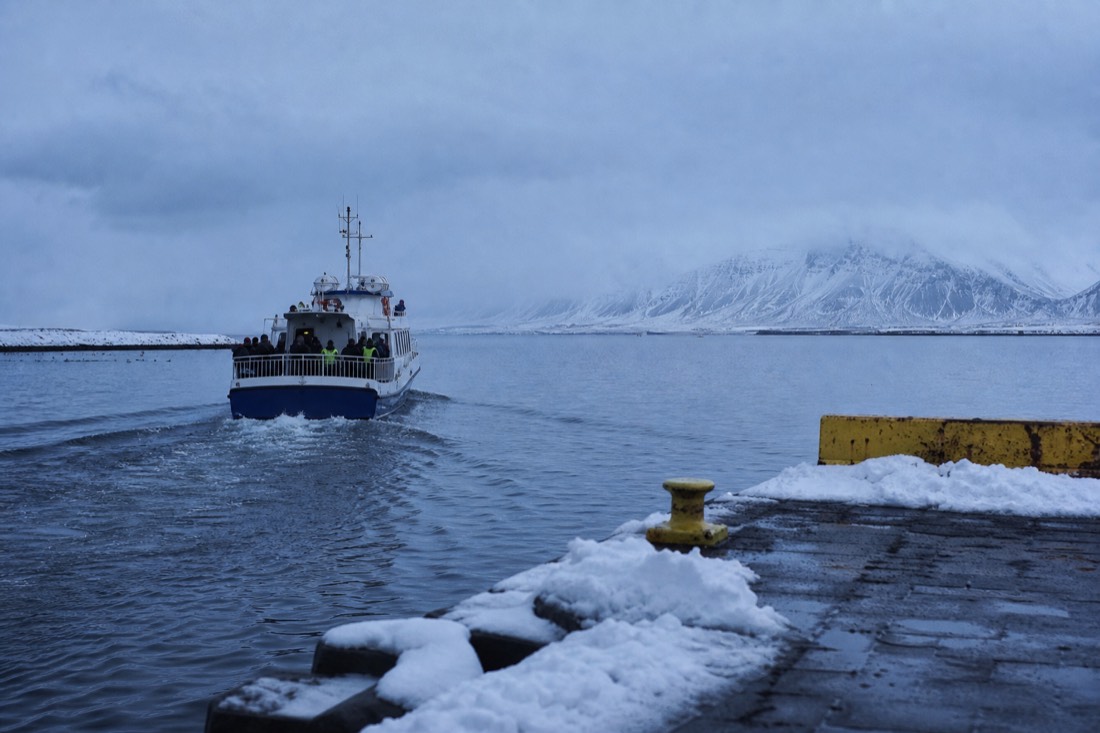
These are the fillers that make a February week feel full rather than padded. Silfra is the highest-rated experience on this entire site and it is genuinely strange: glacial meltwater filtered through lava until it goes clear beyond any sensible distance, a fissure between two continental plates, and a drysuit doing all the work while your face registers the cold and the rest of you does not. The Silfra snorkelling tours and whale watching tours pages both compare the operators on the terms that matter, and both products run on days when the long eastern drives are off the table.
Winter whale watching is more honest than its summer counterpart in one respect. Húsavík, the northern operation everyone photographs, is a summer business, so anything you book in February is out of Reykjavík into Faxaflói Bay, where the operators publish their own see-them-again guarantee on the listing. Expect a cold boat, a hot chocolate and a real chance of not much. Expect also that a February bay in flat light is a beautiful place to spend three hours regardless of what surfaces.
The practical case for keeping one or two of these in reserve is simple. February hands you a workable amount of daylight but no guarantee about the wind, and a short harbour departure survives conditions that stop a ten-hour drive east. Having something bookable at 24 hours' notice is how a cancelled day becomes a different day rather than a lost one.
From Reykjavík: South Coast Waterfalls, Glacier and Black Beach Day Tour
Book the pairing before the month fills its middle: the South Coast day early in the week, the aurora night on your first clear-skied evening, and a spare day behind both. The day tour cancels free up to 24 hours out.
10 to 12 hours · English
Check travel dates with GetYourGuide below.
None of these experiences matches that choice. Adjust your preference or reset to the general recommendation.
Compare Options And Plan Your Trip
- The big day plus an aurora night
- The double-header February makes possible.
- The settled ice cave
- Mid-season routes, well-worn access, still fully inside the season.
- A half-term family week
- Fixed-capacity small-group seats go first when schools are out.
- A storm-proof reserve day
- The drysuit snorkel runs whatever the wind does to the east.
- Late-February country-seeing
- The package that spends the returning light moving along the coast.
Before Booking