Where to stay in Iceland in winter: the best base towns
Almost every winter tour picks up in Reykjavik, but Jokulsarlon is 380 km away. Here is which base town unlocks which tours, and when to move east.
 Written with Björn Einarsson, Icelandic guide & winter tour specialist
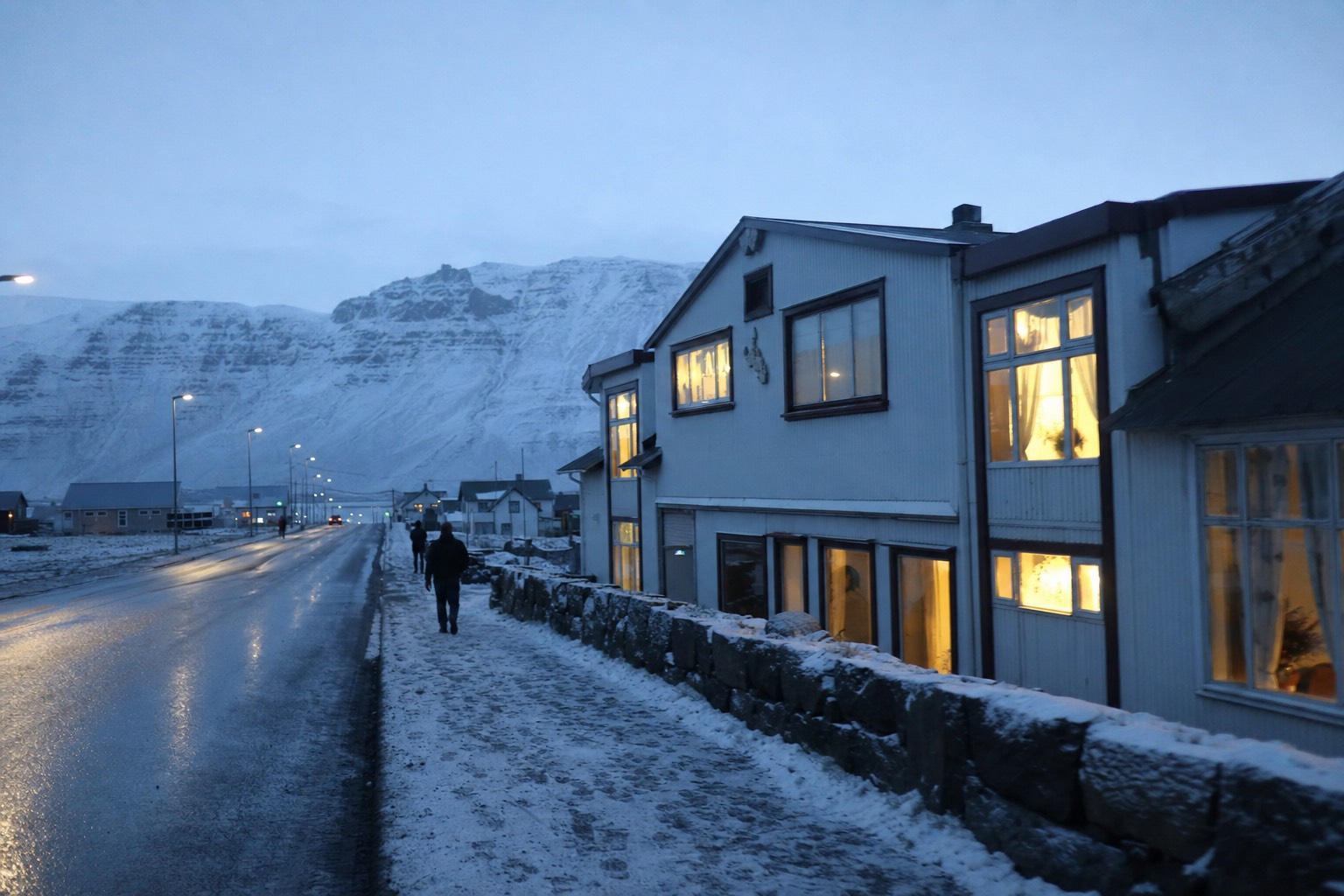
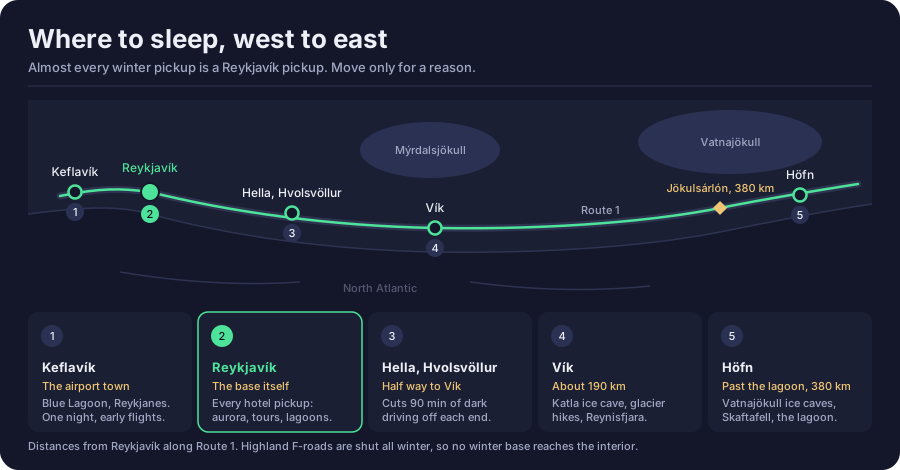
At about half seven on a January morning, the car park of a guesthouse near Hvolsvöllur is a good place to understand Icelandic winter logistics. Everyone is scraping. The coach from Reykjavík has not arrived yet, because it left an hour and a half ago in the dark and is still coming. The people staying here are already fifteen minutes from the first waterfall. That gap, ninety minutes at the start and ninety at the end, is what choosing a base town actually buys you.
TL;DR. Stay in Reykjavík. Almost every winter day tour picks up there, the food and pools are there, and the aurora coaches leave from there. Move only for a reason: Vík or Hella and Hvolsvöllur to shorten the South Coast, and Höfn if you want Jökulsárlón and a Vatnajökull ice cave without a ten-hour driving day. Keflavík is for a genuinely early flight and almost nothing else.
Which part of Iceland is best to stay in for a winter trip?
The south-west, meaning Reykjavík, for most of your nights. Every category of winter day tour picks up there. Then add one or two nights further east along Route 1 if the glacier lagoon and the natural ice caves matter to you, because those are too far from the capital to reach and enjoy in a single winter day.
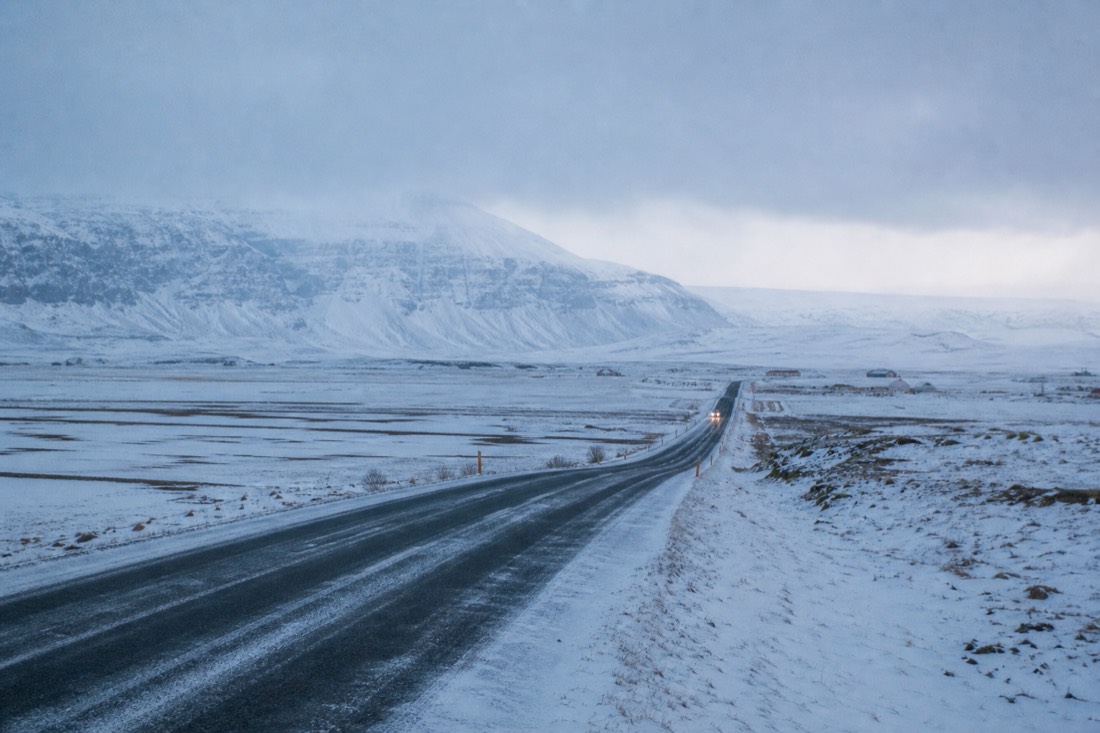
Iceland in winter is not a country you tour in a loop. The highland F-roads are shut for the whole season, the north takes a long time to reach, and the sensible winter map is a line: Reykjavík at the western end, the South Coast running east, the glacier country at the far end of it. Where you sleep decides how much of that line you can reach before the light goes.
| Base | What it is near | From Reykjavík | Tours it unlocks | Who it suits |
|---|---|---|---|---|
| Reykjavík | Golden Circle, Reykjanes, the old harbour, Þingvellir | The base itself | Everything with a hotel pickup: aurora, Golden Circle, South Coast, Silfra, whale watching, lagoons | Almost everyone, and every first trip |
| Keflavík | Keflavík airport, the Reykjanes peninsula, the Blue Lagoon | A short transfer west of the city | Blue Lagoon and Reykjanes, little else without going back into town | Very early departures and very late arrivals only |
| Hella and Hvolsvöllur | Seljalandsfoss, Skógafoss, the mid South Coast | On Route 1 roughly half way to Vík | South Coast stops, a shorter run to the glacier tongues | Self-drivers who want an early start without going all the way to Vík |
| Vík | Reynisfjara, Dyrhólaey, Mýrdalsjökull, the Katla ice cave | About 190 km | Katla ice cave, glacier hikes, black sand beaches at first light | Anyone doing the South Coast at their own pace |
| Höfn | Jökulsárlón, Diamond Beach, Vatnajökull, Skaftafell | Past Jökulsárlón, itself about 380 km and roughly five hours | Vatnajökull ice caves, Skaftafell glacier hikes, the lagoon in daylight | The ice cave trip, and only that |
The honest summary is that Reykjavík wins by default and everything else is a deliberate exception. If you want the whole planning picture rather than just the beds, the winter itinerary guide sets out how three, five and seven-day trips actually break down against these distances.
Why is Reykjavík the default winter base?
Because the tour industry is built around it. Aurora coaches, Golden Circle loops, South Coast day trips, Silfra transfers and lagoon shuttles all collect from Reykjavík hotels or the city bus stops. Staying anywhere else means either driving yourself or making your own way back into town for every pickup.
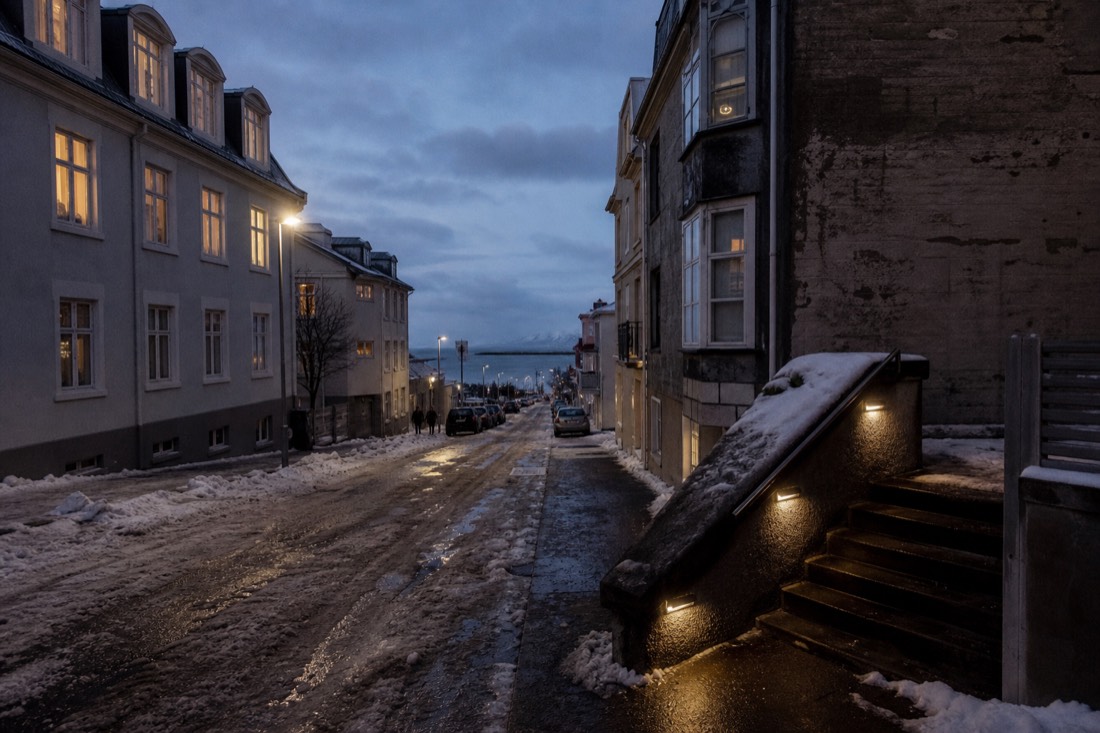
This is not marketing, it is infrastructure. A guest in a Reykjavík hotel can book nine different categories of winter experience and be collected for all of them without owning a car. Move an hour out of the city and most of that disappears.
There are two secondary reasons that matter more in winter than in summer. The first is that when weather cancels a tour, and it will at some point, a city gives you somewhere to be. Pools, museums, food, all of it walkable in bad weather. The account in Reykjavík when your tour gets called off is the honest version of that day. The second is that Reykjavík is where the operators are. Rebooking a cancelled departure is much easier when you are still in the city the operator runs from.
The one thing Reykjavík does not give you is dark sky. City light pollution is real, which is precisely why the aurora coaches drive you out of it rather than parking on a hill above town.
Where in the city, though. This is the question I get asked most, and the answer is the 101 postcode or the near edge of 105, because that is the area the pickup vans and the bus stops actually serve. 101 Hotel is the top end of it, a small design hotel a minute off Laugavegur. Below that I am happy to name four. Alda Hotel Reykjavik and Center Hotel Laugavegur both sit on Laugavegur itself, which is about as central as the city gets. Hotel Reykjavik Centrum occupies an old building by Austurvöllur square and is walkable to the harbour meeting points, where whale watching and a few other departures collect. Fosshotel Reykjavik is the big one, same central strip, more rooms and more facilities behind them. Any of the five means you walk to your tour rather than working out a taxi at seven in the morning, and in a February sleet shower that is worth more than the room.
Is it better to stay in Keflavík or Reykjavík?
Reykjavík, unless you have a very early departure or a very late arrival. Keflavík is the airport town. It has hotels, a harbour and the Reykjanes peninsula, but the tour pickups are not there, and staying out by the airport for your whole trip means paying a transfer to reach everything you came for.
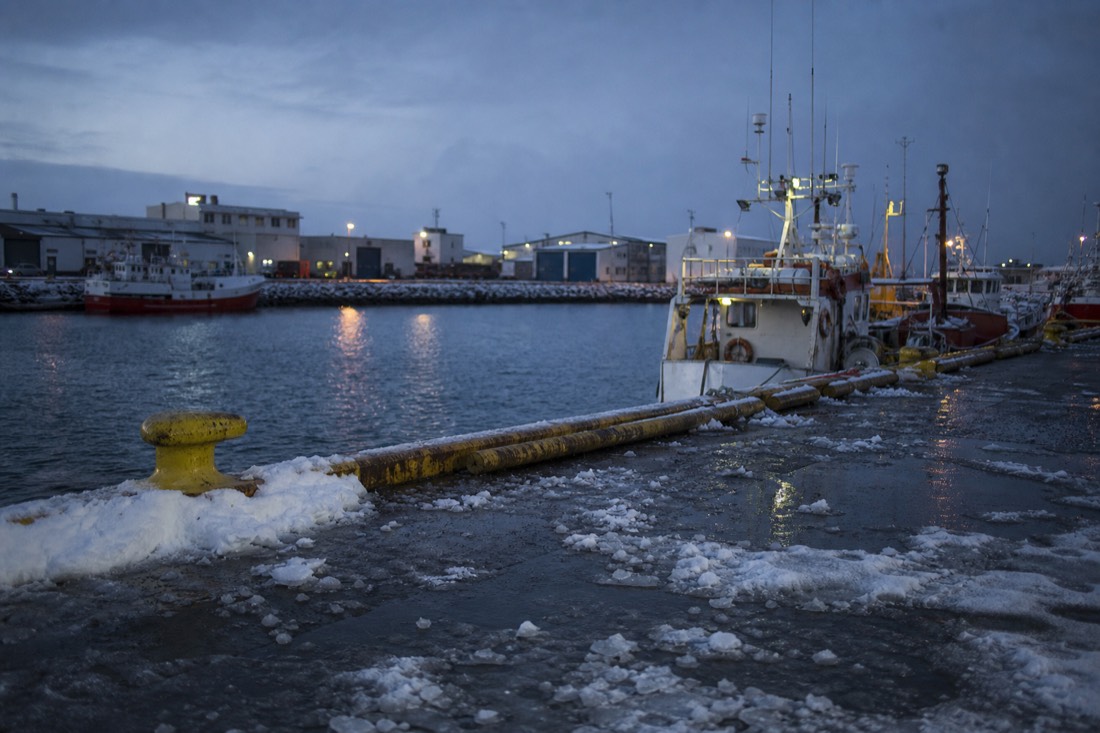
The case for one night in Keflavík is genuinely good and worth stating clearly. If your flight leaves at an hour that would mean a coach through the dark from the city, sleeping near the airport removes real stress from the last morning. The same applies to a late landing when you would rather not do a transfer at midnight in a storm.
The case against staying there for the whole trip is just as clear. You would be commuting into Reykjavík for every pickup, which in winter means doing that commute twice a day in the dark. And Reykjanes is not a sightseeing base: it is a volcanic peninsula that has had nine eruptions since December 2023, none of which closed the airport, but which does mean the area occasionally has access restrictions. Current status is published on safetravel.is.
The Blue Lagoon complicates this slightly, since it sits on the peninsula rather than in the city, and it does take occasional precautionary closures tied to that same activity. Most visitors solve it by booking the lagoon on an arrival or departure day with transfers included, which removes the question of where you sleep entirely.
When does it make sense to sleep in Vík?
When you want the South Coast at your own pace rather than on a coach clock. Vík is about 190 km from Reykjavík, sits beside Reynisfjara, and puts you within reach of Mýrdalsjökull and the Katla ice cave. Waking up there means being on a black sand beach at first light instead of arriving at midday with everyone else.
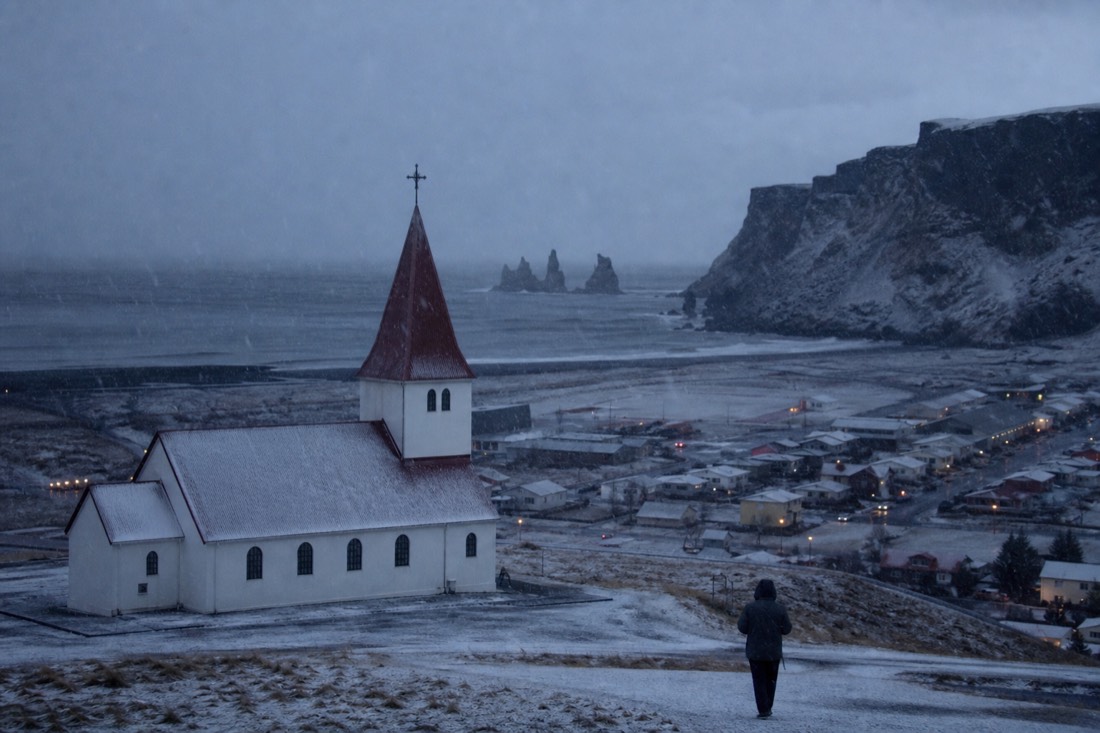
Vík is small. That is the point of it. A church on a hill, a couple of streets, the sea on one side and a glacier behind, and in winter a genuine sense of being somewhere remote without having driven all day to get there.
What a night in Vík actually changes is the first hour of the following day. The South Coast stops get busy in the middle of the day in winter because that is when the coaches from Reykjavík arrive, funnelled by the same short daylight window everybody else is working with. Staying locally lets you be at Reynisfjara in the blue twilight before that happens, which is when the beach is at its most extraordinary and, incidentally, at its most dangerous. The sneaker waves there are lethal and the warning signs are not decorative.
Vík also puts the Katla ice cave within easy reach, since that trip runs out of the Vík area rather than from the capital, and it shortens the run to the glacier tongues near Sólheimajökull. If you are weighing whether to drive yourself at all, self-drive versus guided tours in winter is the honest comparison, and either way you should be reading road.is at breakfast.
Three places in Vík are worth naming. Hotel Vík í Mýrdal is the family-run one in the village, with a restaurant and windows facing the sea and the cliffs. Hotel Kría is the newer build, sitting just off the Ring Road in the middle of the village with its own restaurant and bar. Hotel Katla is the one people get caught out by: it is a short drive east of the village rather than in it, out towards the black sand, which is a perfectly good position if you have a car and an annoying one if you were counting on walking to dinner. All three stay open through the winter, which in a village this size is not a given.
Do Hella and Hvolsvöllur work as a mid-South-Coast base?
Yes, and they are underrated. Both sit on Route 1 roughly half way between Reykjavík and Vík, close to Seljalandsfoss and Skógafoss. They cost you the city's restaurants and its tour pickups, but they remove around ninety minutes of dark driving from each end of a South Coast day.
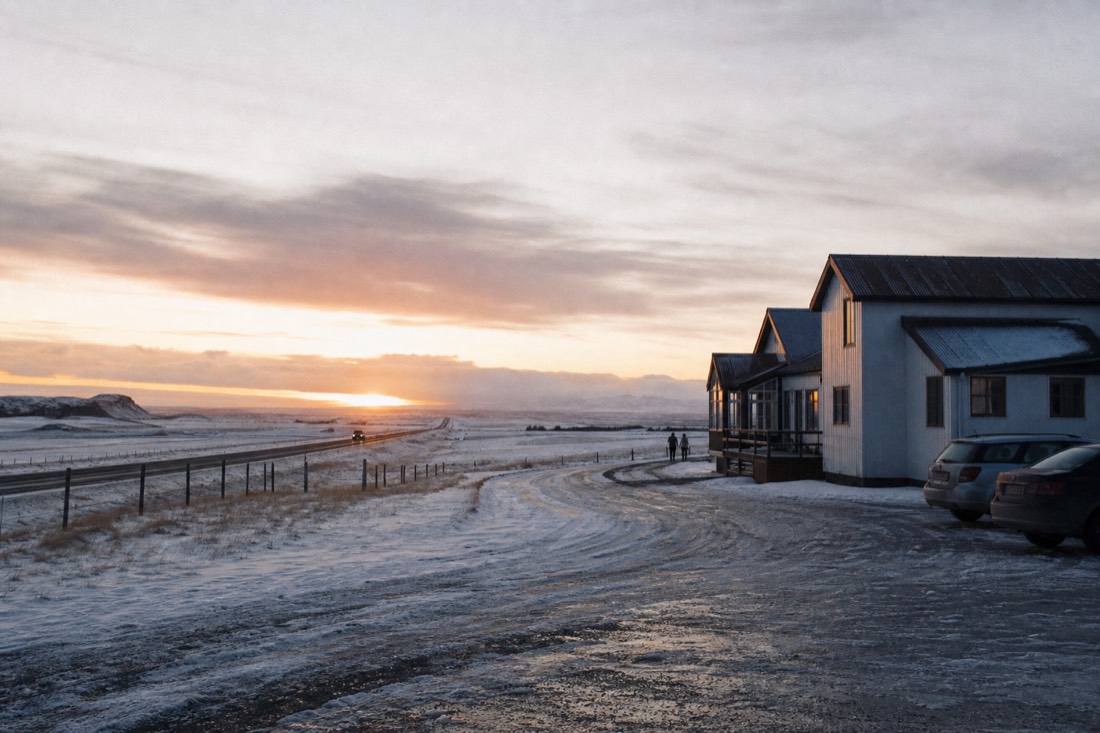
These two farming towns are where a lot of self-drivers should be staying and are not. They are unglamorous, which is why they get skipped, and they are practical, which is why guides use them. The maths is simple: the waterfalls that everybody wants are the ones the Reykjavík coaches reach after their longest driving leg, and from Hella or Hvolsvöllur you are already there.
They also work as the middle night of a trip that is heading further east. Rather than a single brutal push from the capital to the glacier lagoon, splitting the journey here turns the drive into two ordinary legs and leaves you with daylight at both ends.
The trade-off is honest and worth stating. There are fewer places to eat, most tours will not collect you, and if the weather closes in you have far less to do than you would in the city. So this is a base for people with a car and a plan, not for people relying on coach pickups.
Since nobody arrives knowing what is here, the names. Midgard Base Camp in Hvolsvöllur is the one guides themselves use, part hotel and part hostel, with a restaurant downstairs and a rooftop hot tub and sauna that sound like a novelty until you have spent a day in horizontal rain. Hótel Lóa is the recent arrival in the same town, plain Nordic rooms right off the Ring Road, and it opened in 2025 so it is still unknown to most itineraries. Down the road in Hella, Hotel Hella is the budget answer: simple, unfussy, and positioned just off Route 1 where you want to be at eight in the morning. None of these will impress anyone at home. All three will have you at Seljalandsfoss before the first coach clears the city.
Is Höfn worth it for Jökulsárlón and the ice caves?
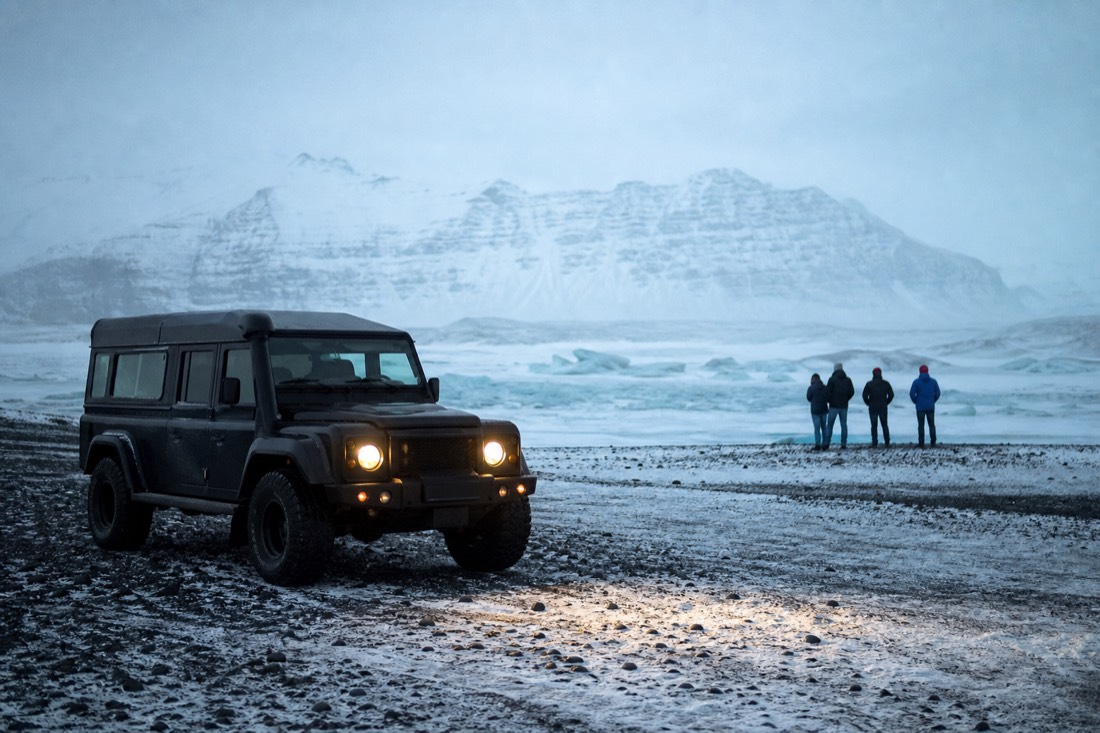
Yes, and this is the one place where moving your base is not a preference but the difference between a good day and a miserable one. Jökulsárlón is about 380 km from Reykjavík, roughly five hours each way. Sleeping out east turns a ten-hour driving day into a normal morning with time at the lagoon.
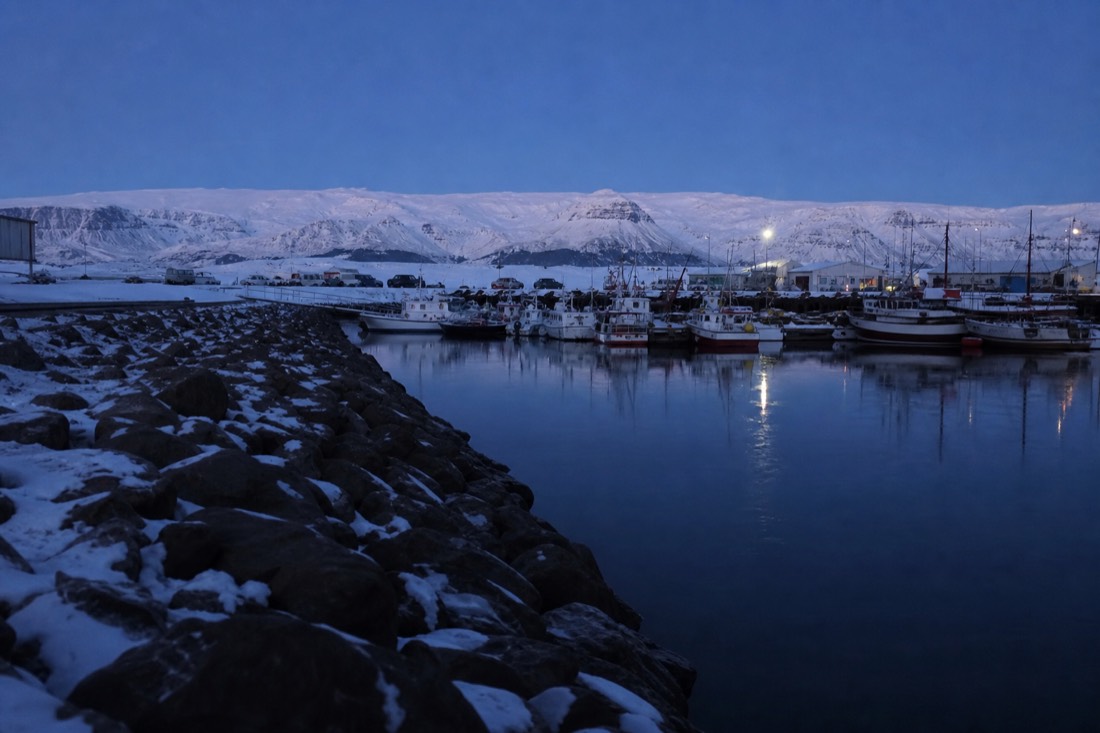
I will be blunt about this, because it is the single most common mistake in winter planning. People try to do Jökulsárlón as a day trip from the capital in January. Ten hours of driving wrapped around five hours of daylight leaves perhaps an hour at the lagoon, most of the journey in darkness, and the whole thing hostage to Route 1 staying open east of Vík.
The natural ice caves make the case even stronger. They exist under Vatnajökull from roughly November to March, they are carved by meltwater and refreeze each cold season so the specific caves change year to year, and the meeting points are out there rather than in Reykjavík. Around 30 companies hold permits to run them, which is why the same stretch of ice appears under many different listing names. The ice cave tours page sorts out which departures meet at the lagoon and which meet nearer Vík, and that distinction is exactly what decides where you sleep the night before.
So if the cave is the reason you are coming, book it as a trip rather than a day out: the multi-day winter packages page compares the two and three-day options that include the eastern nights, and the strongest of them, Troll Expeditions' three-day ice cave, South Coast, Golden Circle and northern lights run at 4.9 across 677 Viator reviews, is available to check for your dates on Viator. Booking the accommodation into the tour removes the hardest part of the planning, which is finding beds out east in the cave season.
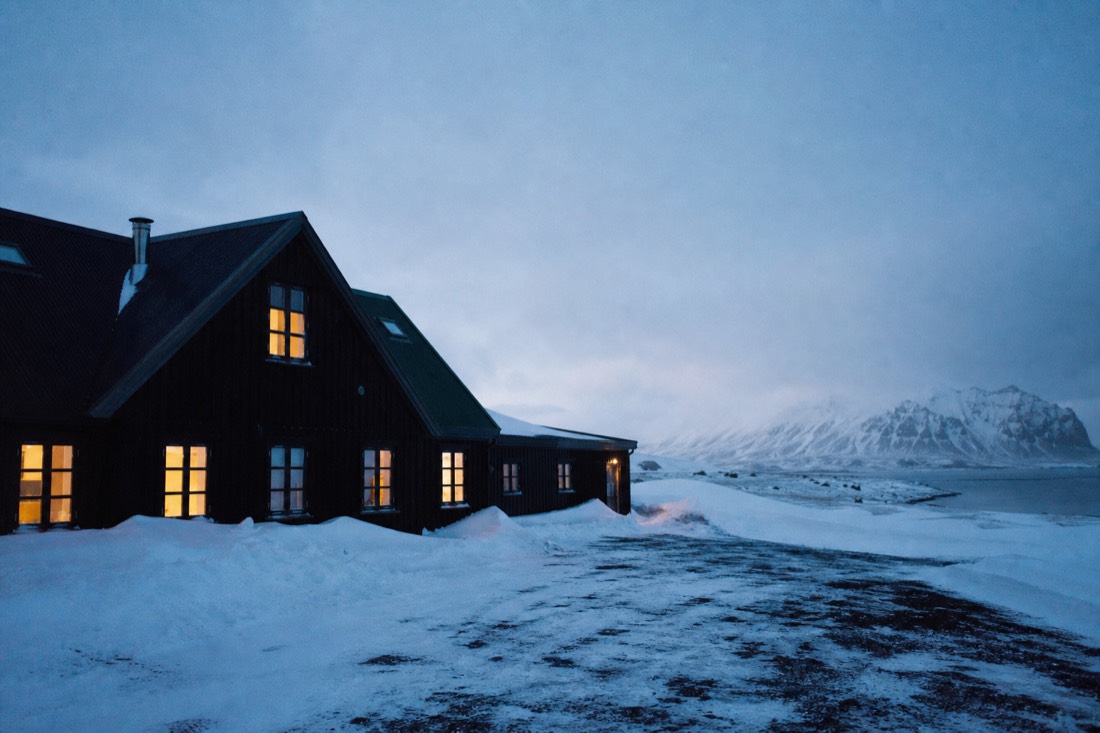
If you would rather arrange the beds yourself, understand first that "staying at Jökulsárlón" mostly means staying on a farm. The nearest thing to a proper hotel is Fosshotel Glacier Lagoon, at Hnappavellir between Skaftafell and the lagoon, with a spa and a restaurant and a price that reflects both. Hali Country Hotel is about 12 km from Jökulsárlón, family-run, with a restaurant and a small cultural centre attached to it. Hotel Smyrlabjorg is another family farm hotel, straight on Route 1 roughly halfway between the lagoon and Höfn, and it cooks its own food, which out there is not a small thing in January. Gerði Guesthouse is the guesthouse of the group, about 10 to 13 km from the lagoon, open year round, rooms with private bathrooms and a restaurant on site. Notice that none of them is in Höfn itself. They sit west of the town, nearer the lagoon, which is exactly where the ice cave meeting points are.
Which specific places are worth booking in each base?
Fifteen that are real, currently trading and open through the winter. Reykjavík has the density and the walkable pickups. Vík has three in and around the village. Hella and Hvolsvöllur have three between them. The glacier country has farms and roadside hotels rather than a town, and those are the ones sitting near the ice cave meeting points.
Price bands below are relative to Iceland, not to anywhere else, so read "budget" as cheaper than its neighbours rather than cheap. Rates move a long way between December and March. None of these are large properties by mainland standards either, which is why the eastern ones are the first thing I tell people to sort out.
| Property | Town or spot | Type | Price band | What it puts you within reach of |
|---|---|---|---|---|
| 101 Hotel | Reykjavík, 101 | Hotel | Upper | Every city pickup on foot, Laugavegur at the door |
| Alda Hotel Reykjavik | Reykjavík, on Laugavegur | Hotel | Mid | Aurora coaches, Golden Circle and South Coast pickups |
| Center Hotel Laugavegur | Reykjavík, on Laugavegur | Hotel | Mid | The same central pickup network, plus the city bus stops |
| Hotel Reykjavik Centrum | Reykjavík, by Austurvöllur | Hotel | Mid | City pickups and a walk to the old harbour departures |
| Fosshotel Reykjavik | Reykjavík, central | Hotel | Mid | City pickups, with more rooms when the small places fill |
| Hotel Vík í Mýrdal | Vík village | Hotel | Mid | Reynisfjara at first light, the Katla ice cave, Dyrhólaey |
| Hotel Kría | Vík village, off Route 1 | Hotel | Mid | The same South Coast stops, with food and a bar on site |
| Hotel Katla | Short drive east of Vík | Hotel | Mid | Black sand and the Katla cave, assuming you are driving |
| Midgard Base Camp | Hvolsvöllur | Hotel and hostel | Mid | Seljalandsfoss and Skógafoss before the coaches, sauna after |
| Hótel Lóa | Hvolsvöllur, off Route 1 | Hotel | Mid | The mid South Coast, and a shorter push east the next day |
| Hotel Hella | Hella, off Route 1 | Hotel | Budget | The same waterfalls at the lowest cost of the three |
| Fosshotel Glacier Lagoon | Hnappavellir, between Skaftafell and the lagoon | Hotel | Upper | Skaftafell glacier hikes and the Vatnajökull ice caves |
| Hali Country Hotel | About 12 km from Jökulsárlón | Hotel | Mid | Lagoon meeting points, Diamond Beach in daylight |
| Hotel Smyrlabjorg | Route 1, half way between Jökulsárlón and Höfn | Hotel | Mid | The lagoon one way, Höfn and its restaurants the other |
| Gerði Guesthouse | About 10 to 13 km from Jökulsárlón | Guesthouse | Mid | Early ice cave departures without a pre-dawn drive |
Two things fall out of that table. In Reykjavík the choice barely matters, because everything listed sits inside the pickup zone and you are really only choosing a price. Out east it matters enormously, since a bed at the wrong end of the region turns an eight o'clock meeting point at the lagoon into an hour of driving in the dark before the day has even started.
Which tours can you actually join from outside Reykjavík?
Most cannot be joined from outside the capital, because the pickup network is a Reykjavík one. The exceptions are the trips whose meeting point is already out in the country: the Vatnajökull ice caves at the lagoon, the Skaftafell glacier hike, the Katla cave near Vík, and anything you drive to yourself.
This table is the practical reason base towns matter, and it is the thing most itineraries get wrong.
| Experience | Where it starts | Joinable from an eastern base? |
|---|---|---|
| Northern lights bus | Reykjavík hotel pickup or a city bus stop | No, book an aurora option local to where you sleep |
| South Coast day tour | Reykjavík pickup | No, it is designed as an out-and-back from town |
| Golden Circle | Reykjavík pickup | No |
| Silfra snorkelling | Reykjavík pickup, with the listing setting any on-site meeting option | Usually no |
| Whale watching | Reykjavík old harbour, make your own way | Only if you are in the city |
| Blue Lagoon with transfers | Reykjavík transfer | No, but easy on an arrival or departure day |
| Snowmobiling on Langjökull | Meeting point at Gullfoss, with a separate pickup version listed | Yes if you are driving |
| Glacier hike, Sólheimajökull | Meeting point at the glacier on most listings | Yes, and Vík or Hvolsvöllur make it easy |
| Glacier hike, Skaftafell | Meeting point at Skaftafell, no Reykjavík pickup | Only from an eastern base |
| Vatnajökull ice cave | Meeting point at Jökulsárlón | Only from an eastern base or a package |
| Katla ice cave | Meeting point near Vík | Yes, this is Vík's tour |
| Multi-day package | Reykjavík start, accommodation included | It solves the problem for you |
Should you stay in one base or move as you go?
One base for anything under five days, because in winter every move costs you a morning. Move only when the thing you came for is out of reach from where you are sleeping, which in practice means the glacier lagoon and the Vatnajökull ice caves. Two nights east, not one.
The instinct to keep moving is a summer instinct, and it does not survive contact with a December afternoon. Packing, checking out, driving in the dark and checking in again eats the usable part of a short winter day, and the usable part is roughly four hours around the solstice. Every relocation is a sight you did not see. On a three-day trip that arithmetic is brutal enough that the answer is simply Reykjavík, all three nights, no exceptions.
Once you are past five days the calculation flips, but only in one direction. Going east is the move that repays itself, because it converts a ten-hour driving day into a normal morning at the lagoon. Going north or west does not repay itself in winter at all. And when you do go east, go for two nights rather than one, since a single night out there means you arrive in the dark, sleep, and leave in the dark, which is a bed with a view you never saw.
There is a version of this decision that removes it entirely. A package that includes the eastern nights books the scarce beds for you and puts the driving in the right order, which is why the multi-day winter packages page exists and why it is the answer most first-timers should take. If you would rather keep control of your own calendar, the winter itinerary guide sets out how the days break down either way.
| Trip length | Nights in Reykjavík | Nights on the mid South Coast or in Vík | Nights in the glacier country | Number of moves |
|---|---|---|---|---|
| 3 days | All of them | None | None | None, and do not be tempted |
| 4 to 5 days | All, or all but one | One, only if you are driving and want the waterfalls early | None | Nought or one |
| 5 days with the ice cave as the priority | 2 to 3 | Inside the package | Inside the package | Handled for you |
| 6 to 7 days | 4 to 5 | Optional, one on the way out | 2 | One or two |
| 7 days in December | 5 | None, the light is too short to enjoy the drive | 2 | One |
| 7 days in February or March | 4 | One | 2 | Two, comfortably |
| Travelling with children | All of them | None | None | None, use day tours and the pools |
What is a rural winter stay in Iceland actually like?
Darker, quieter and more self-contained than visitors picture. Dinner is wherever your hotel serves it or nowhere, the nearest shop may be closed by the time you arrive, and the aurora, if it comes, appears over the car park rather than out of a coach window. Bring the evening's supplies with you.
The thing nobody tells you about a farm hotel on Route 1 in January is how complete the dark is. Not dim. Dark, in a way that city people have usually never stood in, with the wind doing most of the talking and the nearest lit window a kilometre away. It is the best possible place to be when the sky decides to perform, and there is no need to book a northern lights excursion at all if you are already sleeping under an unlit sky. Step outside, look up, and go back in when your fingers stop working.
The practical side is less romantic. Rural properties are small, kitchens close early, and the assumption that you will find somewhere else to eat is the assumption that goes wrong. Restaurants out there are the hotel restaurants. Petrol stations double as the shop and they are not open late. If you land at a farm at seven on a February evening having eaten nothing since the coach stop, your options are what the hotel is still serving and what is in your bag, which is why experienced travellers arrive with bread, skyr and something to drink already bought in town.
Weather changes character out of the city too. In Reykjavík a bad day is an inconvenience with a swimming pool in it. On Route 1 it is a road that may or may not be open, and the morning starts with road.is and vedur.is rather than with breakfast. Leave a travel plan with safetravel.is, put the 112 Iceland app on your phone, and treat both as ordinary rather than dramatic. The account in black sand beaches in a snowstorm is what the weather side of a rural stay feels like from inside it.
| What changes out of the city | The practical version | What to do about it |
|---|---|---|
| Dinner | The hotel restaurant, or nothing within reach | Check the kitchen's hours when you book, not when you arrive |
| Shops | The petrol station is the shop, and it closes | Buy the evening's food before you leave town |
| Dark sky | The aurora is over the car park, not down a coach ride | Keep coats by the door and check outside every hour |
| Roads | Your morning depends on whether Route 1 is open | Read road.is and vedur.is before you commit to a drive |
| Tour pickups | Most Reykjavík pickups do not reach you | Book departures with a country meeting point you can drive to |
| A cancelled day | There is no museum or pool to fall back on | Bring a book, and treat the hotel's hot tub as the plan |
| Fuel | Stations are far apart and unstaffed at night | Fill up in daylight and never run below half a tank |
| Phone and help | Signal is patchy in the valleys | The 112 app shares your GPS, install it before you drive |
| Wind | Car doors, and the walk from the car park | Park nose into the wind and hold the door with both hands |
When should you book winter accommodation?
In this order: the eastern glacier-country beds first, Christmas and New Year in Reykjavík just as early, Vík next, then everything else. Beds near Jökulsárlón are the scarcest thing in Icelandic winter travel, because ice cave season concentrates every visitor who wants a cave into the same handful of farm hotels.
Nobody thinks about this until it is too late, and the failure mode is always the same: the tours are booked, the flights are booked, and then the traveller discovers there is nowhere to sleep within an hour of the ice cave meeting point. The stock out east is not a city's worth of hotels. It is a small number of family farms and roadside properties, most of them modest in size, serving everyone who wants a cave between roughly November and March.
Reykjavík behaves differently and more forgivingly, with one glaring exception. Christmas and New Year are the peak weeks of the whole winter and behave like a summer weekend. January, by contrast, is genuinely the quiet month: 119,000 foreign visitors came through Keflavík in January 2026 against 147,000 in February, and the room market follows demand. A January booking made a few weeks out is usually fine. The same booking for 30 December is not.
There is one honest shortcut through all of it. Booking a package with the nights included means somebody who does this professionally has already secured the hard beds, which is worth more in February than the difference between two room rates. Whatever you choose, the cost guide shows how far the accommodation line dominates a winter budget, and the best month to visit Iceland in winter explains why the same room is a different price in three different months.
| What you are booking | Where it goes in the queue | Why |
|---|---|---|
| Beds near Jökulsárlón in cave season | First, before the tours | A handful of farm hotels serve the whole ice cave season |
| Reykjavík over Christmas and New Year | First, alongside the eastern nights | The peak weeks of the winter, and priced like it |
| A multi-day package with nights included | First, and it settles both of the above | The operator has already held the scarce beds |
| Vík in winter | Early | A village, not a town, with limited stock that stays open |
| Hella or Hvolsvöllur | Middle | More rooms than Vík, and fewer people looking for them |
| Reykjavík in January | Relaxed | The quietest month of deep winter, 119,000 arrivals against February's 147,000 |
| Reykjavík in February or March | Middle | Busier than January, and the good central rooms go first |
| One night in Keflavík for an early flight | Last | A one-night utility booking, and there is always something |
What does a winter night in Iceland cost?
A Reykjavík hotel night runs roughly 25,000 to 40,000 ISK, a restaurant meal roughly 3,000 to 5,000, and a beer roughly 1,200 to 1,500. Cards work everywhere, tap water is excellent and free, and tipping is not expected. Add the accommodation tax reintroduced in 2024 and parking charges at some natural sites.
Nobody comes to Iceland for the prices, so it is better to plan honestly than to be surprised at the till.
| What | Rough range | Note |
|---|---|---|
| Reykjavík hotel night | 25,000 to 40,000 ISK | Varies hard by month and by how early you book |
| Restaurant meal | 3,000 to 5,000 ISK | Soup and bread is the local budget answer |
| Beer | 1,200 to 1,500 ISK | Happy hours are a genuine institution here |
| Petrol, per litre | 250 to 300 ISK | Relevant if you are self-driving between bases |
| City bus fare | 500 to 1,000 ISK | Reykjavík is walkable, so most visitors barely use it |
| Accommodation and tourist tax | Added on top | Reintroduced in 2024 |
| Parking at some natural sites | Charged | Increasingly common at popular stops |
A few practical notes that save money without much effort. Currency is the króna, cards and tap-to-pay work essentially everywhere, and there is no reason to carry cash. Tap water is some of the best in the world, so buying bottled water here is money set on fire. Tipping is not expected in restaurants or on tours.
One planning point that costs nothing: how many hours of light your money is buying changes hugely across the season, and it is worth reading the daylight hours guide before you commit to a base out east, because a night in Höfn is worth much more in February than at the December solstice. If you have questions about pickups, cancellation windows or how we choose what to recommend, the FAQ covers them.
3-Day Ice Cave, South Coast, Golden Circle and Northern Lights
If the glacier country is in your plan, settle the eastern beds first: either book the package that already holds them, or lock the lagoon-side nights before the tours. The package cancels free up to 24 hours out.
72h · en · Hotel pickup offered; details on the listing
Scheduled departure dates. Availability and final price are confirmed on Viator.
None of these experiences matches that choice. Adjust your preference or reset to the general recommendation.
Compare Options And Plan Your Trip
- East for the cave and lagoon
- The Jökulsárlón meeting point only works with a bed near it.
- Reykjavík, all pickups on foot
- The city default; every coach collects you.
- A night in Vík
- Vík's own tour meets in the village.
- Let a package handle the beds
- The eastern nights are included and already secured.
- A Keflavík arrival night
- The lagoon with transfers solves the airport peninsula.
Before Booking
The Northern Lights are a natural phenomenon and cannot be guaranteed by the operator. The hotels are in prime locations to maximize chances of seeing them. Not included: Lunch and Dinner; Hiking Boots Rental (3,000 ISK); Waterproof Jacket Rental (1,750 ISK)